Industry
Sonilo Is Partnering with Scenario
- Written by
- Sonilo Team
- Published
There is a specific kind of unfinished feeling that shows up at the end of a video workflow.
The edit is locked. The visuals work. The pacing is clear. But the soundtrack still has to be found, tested, trimmed, cleared, and made to feel like it actually belongs to the footage.
That last step is exactly where Sonilo was built to help.
Today, we’re excited to announce that Sonilo is partnering with Scenario, bringing Sonilo’s AI soundtrack generation into a creative AI platform for production teams, developers, and AI-native creators.
This is not a new model release. It is a new access point.
Through Scenario, creators can now discover Sonilo inside a broader creative AI stack built for images, video, audio, 3D, workflows, and API-based production pipelines.
Bringing Soundtrack Generation Into Creative AI Workflows
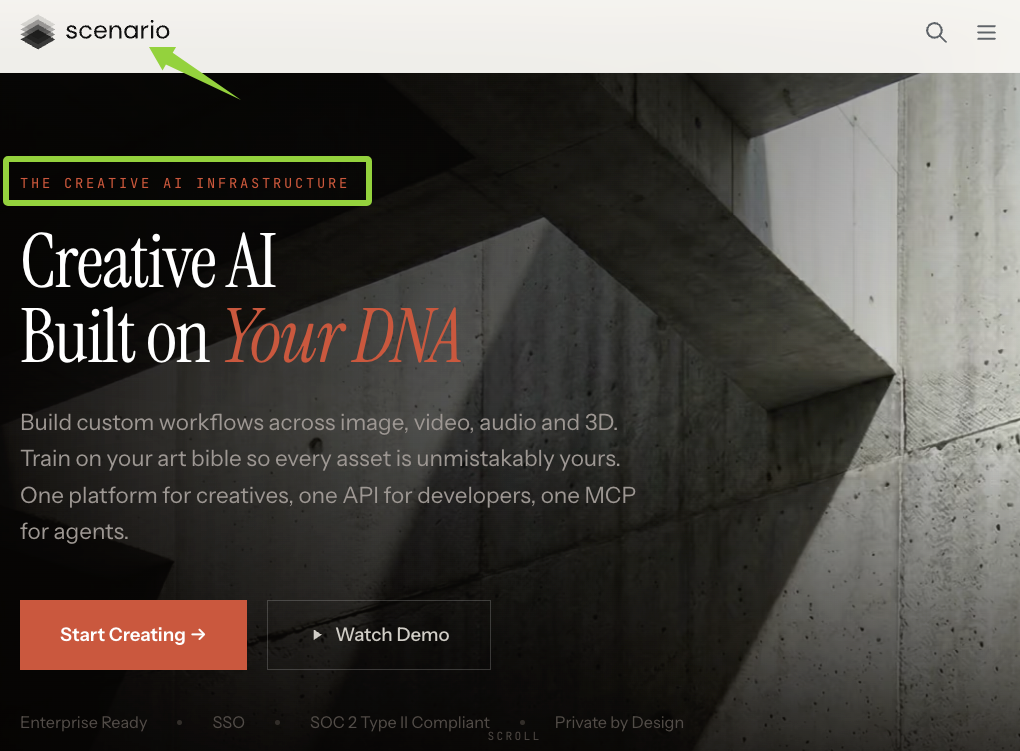
Scenario describes itself as creative AI infrastructure for teams building across image, video, audio, and 3D. Its platform is designed around custom workflows, model access, API integration, and production-scale creative output.
That matters because music is often treated as a separate layer in creative tools.
A team might generate visuals in one place, edit video somewhere else, then leave the soundtrack decision until the end. The result is familiar: search a stock library, try a track, realize the emotional tone is off, trim the ending, test another option, repeat.
Sonilo approaches that step differently.
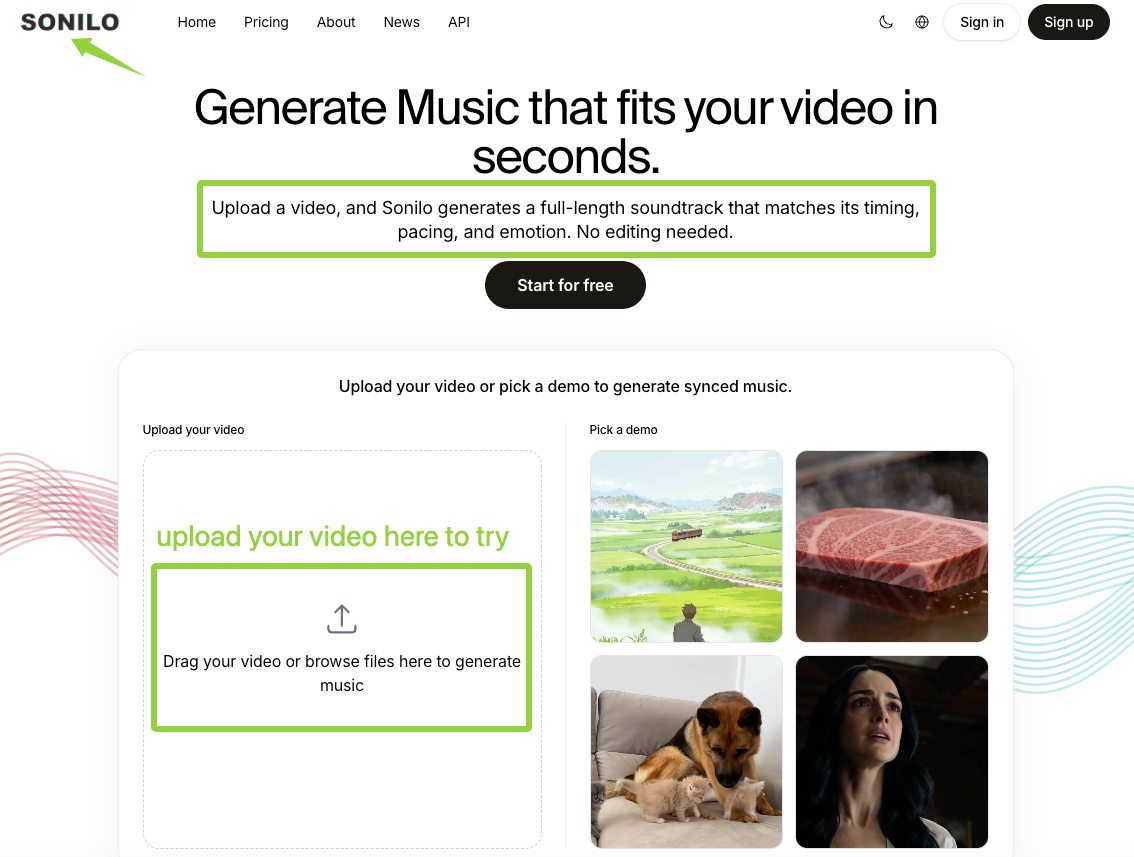
Instead of starting with a search query or a generic music prompt, Sonilo starts with the video itself. The model analyzes pacing, motion, mood, and timing, then generates an original soundtrack designed to match the edit.
Why This Partnership Matters
Creative AI is moving quickly, but the real question is not just whether a model can generate something.
The real question is whether that output fits the workflow.
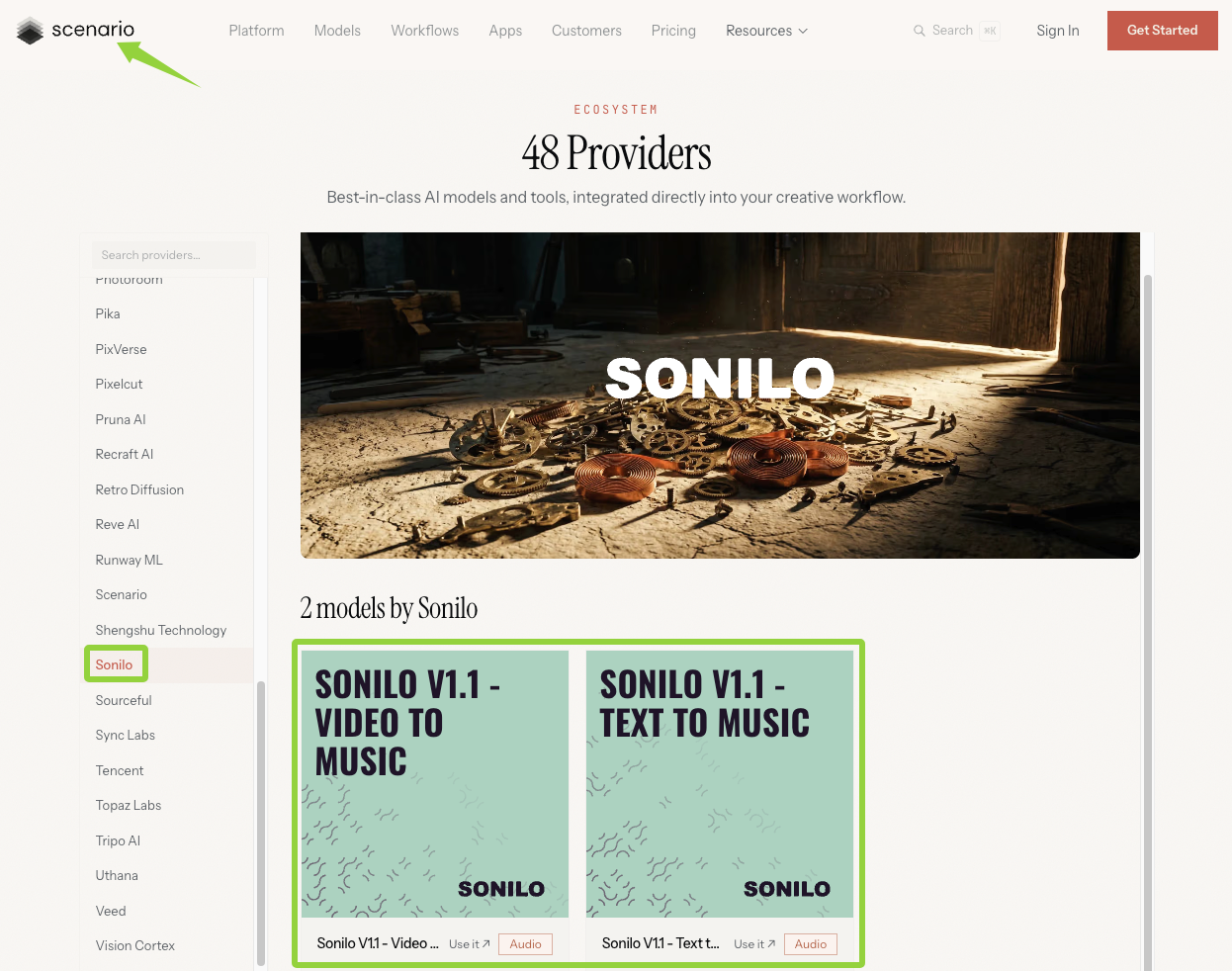
Sonilo is now listed in Scenario’s provider ecosystem, giving creators and teams another way to access video-first soundtrack generation inside the tools they already use for creative production.
For a game studio, that might mean quickly scoring a gameplay trailer or character reveal. For a marketing team, it might mean generating music for ad variations. For a creator building short-form video, it might mean testing soundtrack directions without separating music from the rest of the production flow.
The value is simple: less time searching for music, more time finishing the work.
Fully Licensed Music for Commercial Creative Work
Licensing is not a side detail in AI music. It is part of the product.
Sonilo was built around a clear belief: creative tools should be usable in real commercial workflows, not just demos. That is why Sonilo emphasizes a fully licensed foundation and commercial use rights for eligible generated music.
This matters even more inside platforms like Scenario, where users are often building production assets for games, ads, branded content, social campaigns, and client work.
Sonilo’s own pricing page identifies commercial use rights as part of its paid plans, which aligns with the way professional creators actually evaluate AI music: not only whether the track sounds right, but whether it can be used in real production work.
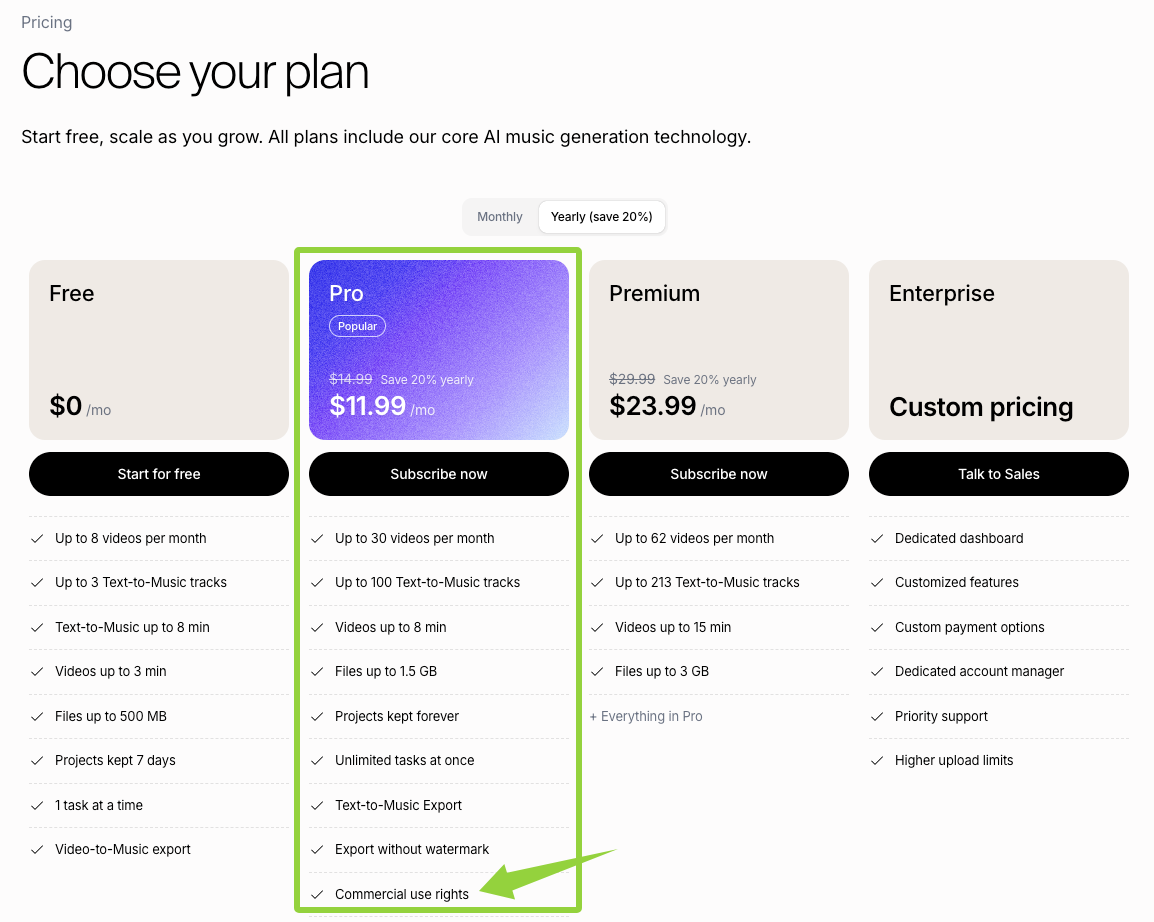
The goal is not only to generate a track that sounds good. The goal is to generate music that fits the video, supports the workflow, and comes with rights that make sense for commercial use.
Built for Video-First Creators
Sonilo is built around a video-first idea: music should support the timing, pacing, and emotional shape of the work it belongs to.
That does not mean every soundtrack has to start from a video upload.
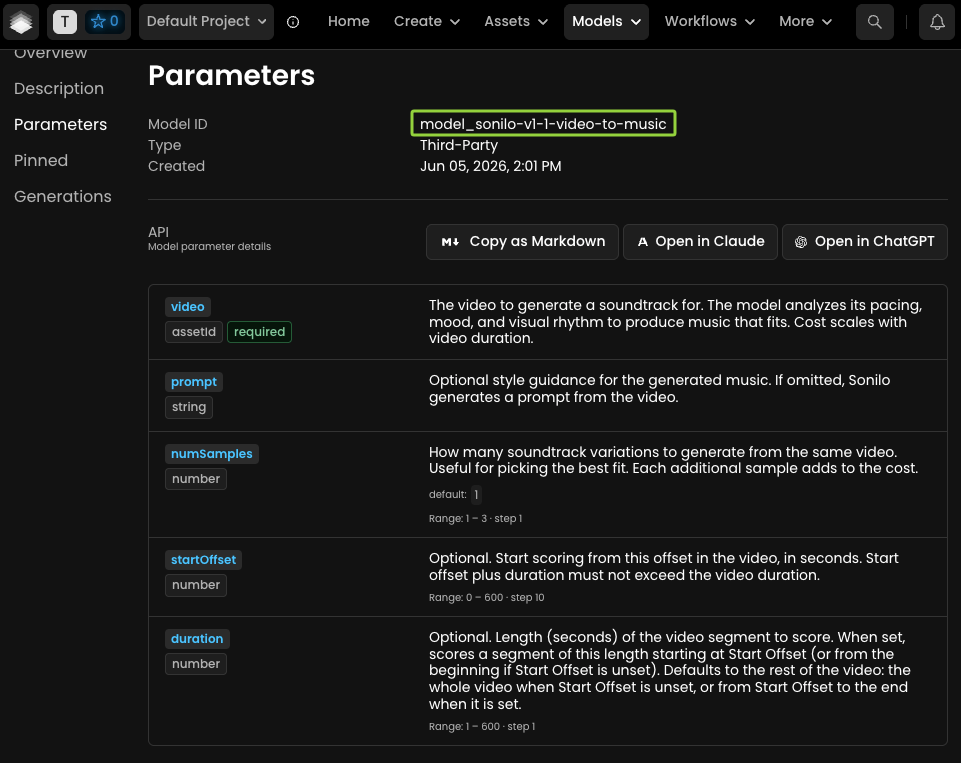
On Scenario, Sonilo currently appears with two models: Sonilo V1.1 - Video to Music and Sonilo V1.1 - Text to Music. The video-to-music workflow is the most direct Sonilo use case: upload a video, then generate an original licensed soundtrack matched to its pacing, motion, mood, and timing. The text-to-music workflow is useful when creators already know the style, mood, duration, or instrumentation they want before attaching the result to a specific edit.
The distinction is simple.
Sonilo V1.1 - Video to Music starts from the cut. Sonilo V1.1 - Text to Music starts from the creative direction.
Both can fit into a production workflow. Sonilo’s broader point is that music generation should not sit outside the creative process as a late-stage afterthought. It should be close enough to the work that creators can test, compare, and move faster.
A Better Creative Stack Needs Better Audio
AI video tools are getting stronger every month. Visual generation, editing, styling, upscaling, and 3D workflows are becoming faster and more accessible.
But audio still decides whether a video feels finished.
A strong visual clip with the wrong soundtrack can feel flat. A solid ad with generic music can lose its emotional timing. A game trailer without the right score can miss the sense of weight, tension, or momentum the visuals are trying to create.
That is why this partnership is meaningful.
Scenario brings together creative AI infrastructure. Sonilo brings soundtrack intelligence built around the video itself.
Together, they give creators another way to move from generated assets to finished media, with music that fits the timeline and is built for commercial creative work.
What Creators Can Do Now
Creators and teams using Scenario can now find Sonilo as part of Scenario’s model ecosystem.
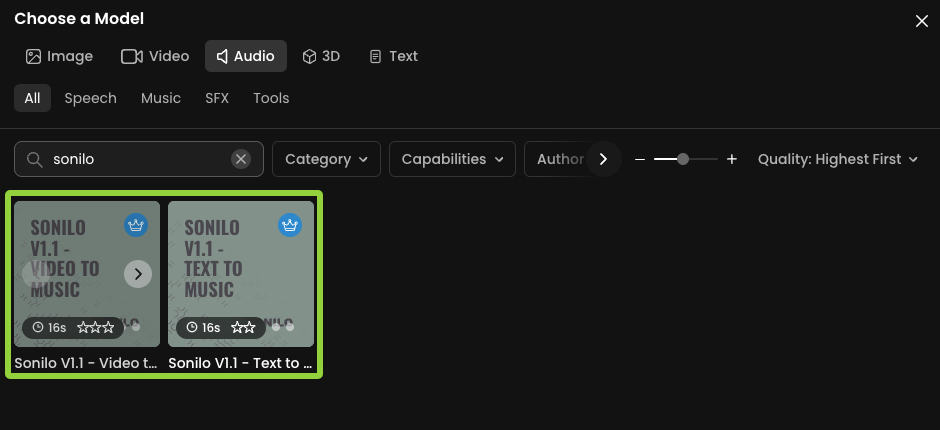
The most direct use case is simple: upload a video, generate a soundtrack, compare the result, and bring the music back into the creative flow.
For teams starting from a written brief instead of a finished cut, Sonilo’s text-to-music model offers another path: describe the mood, genre, instruments, and duration, then generate original instrumental music for the project.
That gives creators two practical entry points.
Use Sonilo V1.1 - Video to Music when the edit already exists. Use Sonilo V1.1 - Text to Music when the soundtrack direction comes first.
The Soundtrack Layer Belongs Inside the Creative Workflow
Every original video deserves music that feels made for it.
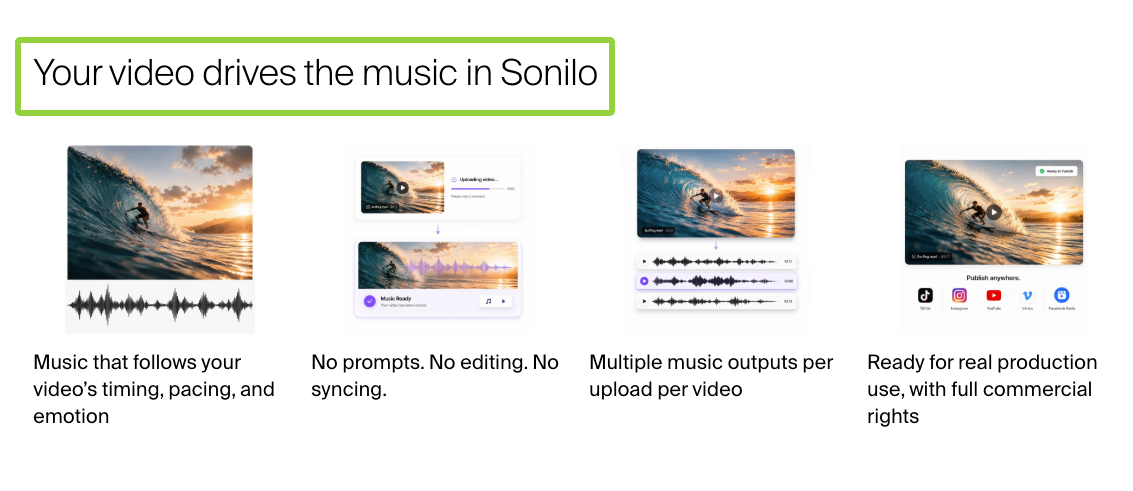
That has been Sonilo’s belief from the beginning. A soundtrack should not be something creators force into place after the edit is done. It should be generated with the video’s timing, pacing, and emotional shape in mind.
Partnering with Scenario brings that idea into a broader creative AI environment used by teams building at speed and scale.
Sonilo is now part of Scenario’s creative AI ecosystem, giving creators another way to generate fully licensed, video-first soundtracks with commercial use rights.
And for anyone who has ever watched a finished edit sit unpublished because the music still was not right, that last step just got a little easier.
Frequently Asked Questions
Is this a new Sonilo model release?
No. This partnership does not introduce a new Sonilo model update. It makes Sonilo available through Scenario as another access point for creators and teams who already build inside Scenario’s creative AI workflow.
What Sonilo models are available on Scenario?
Scenario currently lists two Sonilo models: Sonilo V1.1 - Video to Music and Sonilo V1.1 - Text to Music. Video to Music starts from an uploaded video and generates a soundtrack matched to pacing, motion, mood, and timing. Text to Music starts from a written prompt and generates original instrumental music based on genre, mood, instruments, and duration.
When should I use Sonilo V1.1 - Video to Music instead of Sonilo V1.1 - Text to Music?
Use Sonilo V1.1 - Video to Music when you already have a cut and want the soundtrack to follow the edit. Use Sonilo V1.1 - Text to Music when you already know the musical direction and want to generate a track before attaching it to a specific video.
Can music generated with Sonilo be used commercially?
Sonilo is built on a fully licensed foundation and offers commercial use rights for eligible generated music under applicable plan terms. As with any production tool, creators should review the relevant Sonilo and Scenario terms before using outputs in client, brand, game, or paid commercial work.