Guides
Is Suno AI Safe for Video Creators to Use?
- Written by
- Sonilo Marketing
- Published

Suno use is not a single safe-or-unsafe decision. Verify the official account and billing route, then match the specific track’s generation and download records to the applicable terms and destination-platform rules. Provider permission is not a guarantee against a platform claim.
That is why “Is Suno AI safe?” has no single responsible yes-or-no answer. Free tiers need the same diligence: a review of free AI music tools and safety checks should cover rights, Content ID risk, and what happens when the project leaves personal use. Account access, billing, platform claims, contractual permission, and team approval are different risk layers. Passing one layer does not clear the others.
Images below are preserved from the original article. Interface labels, prices and promotional text reflect those captures, not a guarantee of current availability, pricing, rights or performance. Check the linked current documentation and terms.
Short Answer for Video Creators
Suno is a real music-generation service with official account, billing, support, policy, and rights pages. That establishes where creators can check the provider’s stated rules. It does not establish that every account, charge, output, upload, or commercial project will be risk-free.
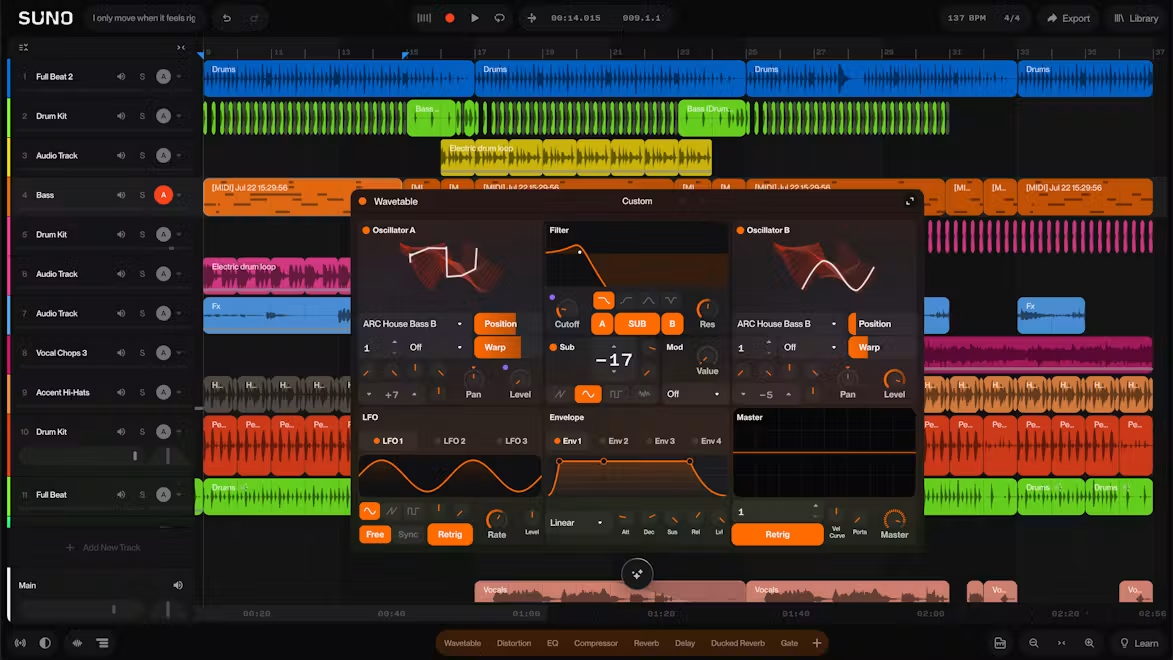
So, is Suno safe? The practical answer is conditional. A creator should control the account, understand the subscription route, retain generation records, and check the publishing platform. Client or monetized work also needs policy and internal approval review.
Disclosure: Sonilo publishes this guide and offers a separate video-first music product. This article evaluates Suno from current official sources; it is not an independent security audit.
The evidence supports different conclusions at different layers:
| Safety question | What current evidence can support | What it cannot prove | Decision owner |
|---|---|---|---|
| Can the user reach the correct account? | Official login and recovery routes exist | The account can never be compromised | Account holder |
| Can the charge be traced? | The purchase route, receipt, renewal, and cancellation record can be retained | A refund will be approved | Purchaser or finance owner |
| Can the track be published? | The provider’s current policy can be matched to the generation record | A platform will never apply a claim or restriction | Publisher |
| Is the project commercially appropriate? | The applicable provider and platform rules can be documented | Copyright protection, exclusivity, or contract compliance | Project owner and qualified adviser where needed |
| Has the team accepted the risk? | A dated approval can name the evidence reviewed | The evidence will remain current forever | Named approver |
This table is an editorial risk model, not a Suno policy or security standard. It prevents a provider login page from being treated as proof of publishing safety.
Suno's current Terms of Service were revised August 10, 2026 and took effect September 3, 2026. They are already in force, not scheduled future terms. The effective-date header and the trial and commercial-use sections were checked October 12, 2026. Match the applicable version to the generation, download, subscription, or publishing action you are reviewing. Suno Terms of Service.
Account and Payment Safety
Account and payment safety begins with traceability. Name the login owner, purchase route, and location of renewal or cancellation records. That is usually enough to recover access and explain a charge without relying on memory.
Login access
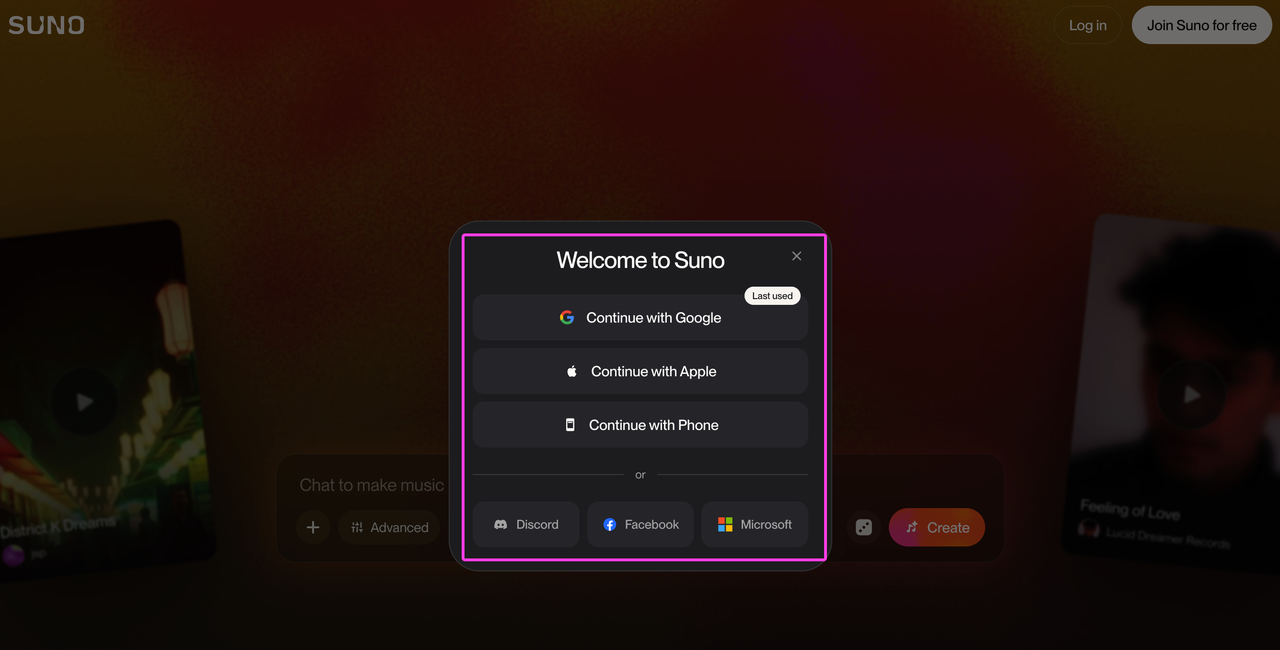
Suno’s current login guidance describes phone-number access and several single sign-on providers. A connected identity provider is part of the account chain. If access depends on Google, Apple, Microsoft, Discord, or a phone number, protect that account and recovery method as well.
Use the login method associated with the intended library and retain the official recovery route. A missing library view alone does not establish deletion; confirm the signed-in identity before drawing that conclusion. Official login guidance
For a team, do not pass verification codes or shared passwords through chat. Name the controlling account owner and record the official recovery route. Suno’s terms place responsibility for account confidentiality and activity on the account holder. Primary source
Start from suno.com or an official app listing instead of an unsolicited link. Suno lists its support routes in its support guidance; community replies are not official support decisions.
These checks do not prove Suno’s internal security architecture. A help page verifies the published login path, not an independent security assessment or incident history.
Subscription records
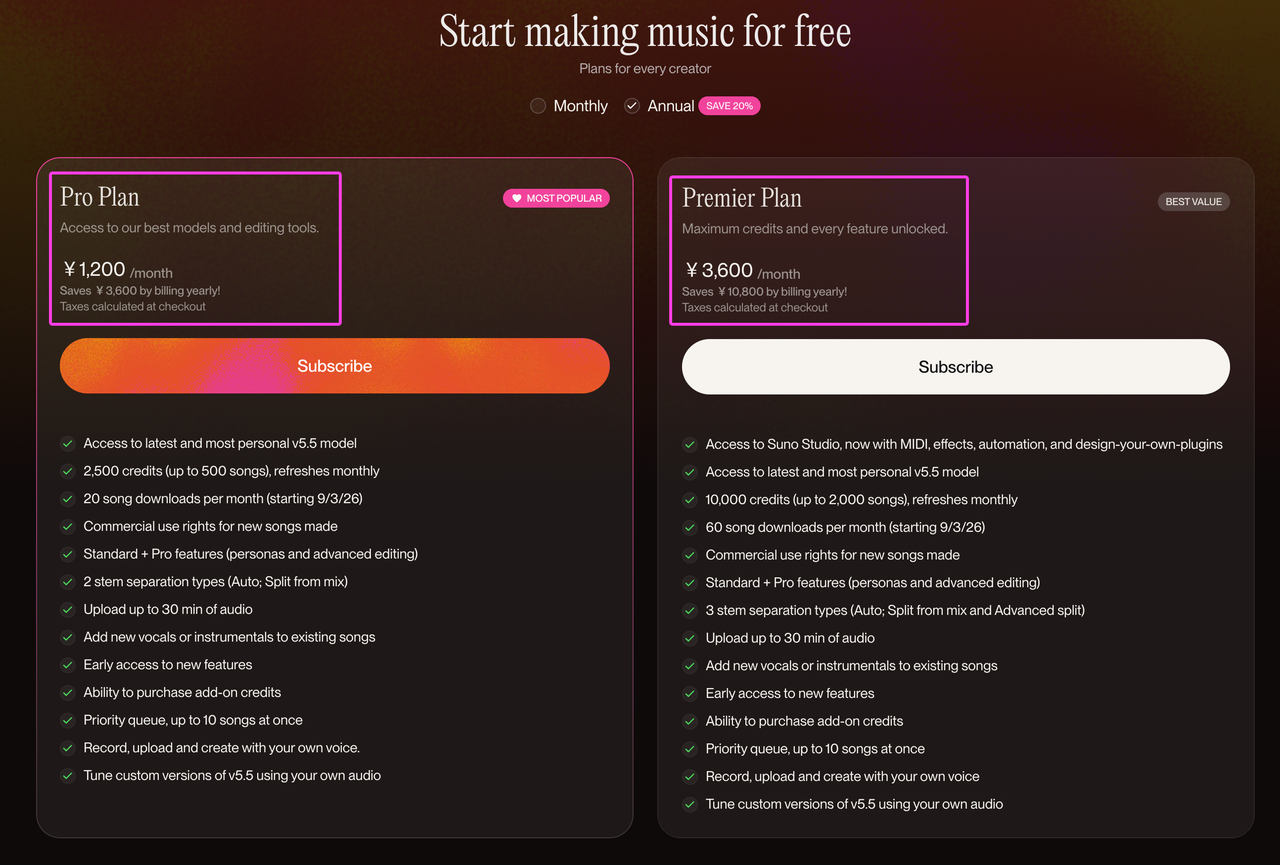
A free plan is not automatically a trial of a paid subscription. Suno's effective Terms say it may offer trials of paid tiers or features. The trial confirmation email states the duration; some trials require payment details and convert to the disclosed paid subscription unless cancelled before the trial ends. If you accept a trial, retain the offer, confirmation, conversion date, billing interval, and cancellation record. Suno Terms, Free Tier and Trials.
The purchase channel matters. Suno’s cancellation guidance separates direct purchases from App Store and Google Play subscriptions. A direct account page cannot necessarily cancel a mobile-store purchase, and the store may apply its own billing records and procedures.
Keep the purchase channel, account identity, receipt, renewal date, and cancellation confirmation together. A small team can then trace most subscription questions without a full finance SOP.
Do not infer a refund promise from a cancellation button. Suno’s current refund guidance describes case-by-case handling, while local consumer rules may differ. Check the terms effective for the charge and seek appropriate advice when the amount or dispute is consequential.
Publishing and Rights Uncertainty
The discussion below is general risk information, not legal advice. Provider policies, license language, platform treatment, and regional law can differ and change. Check the official rules in effect when the track is generated, downloaded, and published, and obtain qualified advice when a client contract or dispute requires it.
Platform claim risk
A provider’s permission and a platform’s enforcement system answer different questions. Permission may describe what the provider allows. A platform still decides how it scans, labels, monetizes, blocks, or reviews uploaded content.
YouTube explains that Content ID scans uploaded videos against reference files supplied by participating rights holders. A match can lead to tracking, monetization, or blocking, sometimes with different results by region. This means a claim can occur even when a creator believes the soundtrack use is authorized.
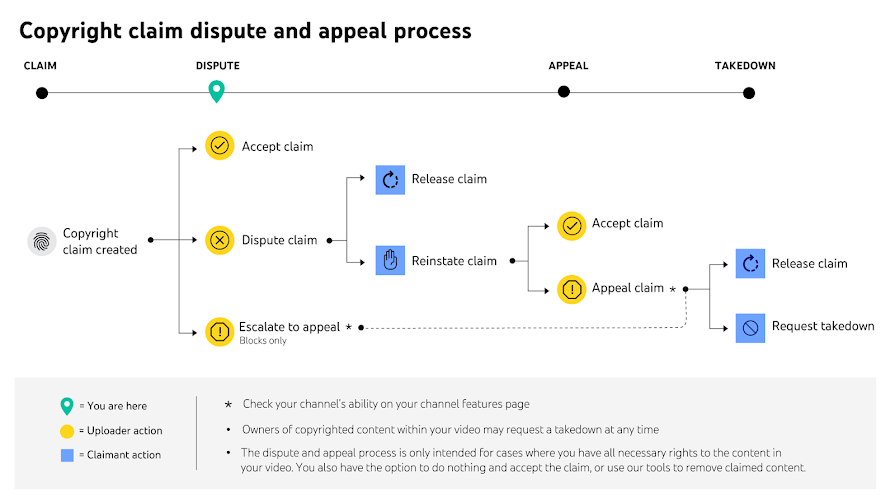
A Content ID claim is not automatically a copyright strike or proof of infringement. YouTube treats claims, takedowns, and strikes as different processes. If a claim appears, identify the claimant, matched segment, affected territories, and applied policy before choosing a response. Primary source
Only dispute when the responsible reviewer believes the team has a valid basis and the necessary evidence. YouTube’s claim dispute guidance warns that the claimant reviews the dispute and may pursue a takedown. The provider receipt alone may not explain every input, remix, lyric, or third-party element in the track.
Platform disclosure is separate again. YouTube’s current GenAI disclosure guidance lists AI-generated music among disclosure examples and specifically identifies music that is the main focus of a video. Apply the current policy to the actual upload rather than inferring a rule from the generator name alone. Other platforms, account types, regions, and content formats may apply different settings or wording, so check the destination used for the final upload.
Commercial-use policy differences
Commercial permission, ownership, copyright protection and platform acceptance are different questions. Suno’s current Terms describe qualifying downloads and plan allocations; retain both generation and download records instead of inferring rights from today’s subscription. Suno Terms
Suno’s help article describes generation-plan distinctions, while the current Terms also set conditions for qualifying downloads. Read the controlling Terms and any applicable account agreement together; this article does not resolve a conflict for a particular track. Suno copyright help Current Terms
The provider also separates commercial permission from copyright protection. Suno’s copyright guidance says copyright treatment can vary by region and may depend on human contribution. That first-party explanation supports uncertainty; it does not decide whether a particular track qualifies in a creator’s jurisdiction.
For video teams, attach evidence to the specific soundtrack. Record the account status at generation, download, policy version, source inputs, intended video, platform, and approval date. This does not guarantee an outcome, but it makes the decision reviewable after a change.
Worked example: an approval record that no longer matches
Fictional example, not a Suno customer or legal decision: the approved audio file hash is A1 and the approved video file hash is V1. A new export changes the audio file hash to A2 while leaving the video at V1. Even if the same subscription remains active, the recorded approval no longer identifies the delivered pair. Reopen the review; do not label the new pair approved.
| Check | Recorded approval | Current delivery | Result |
|---|---|---|---|
| Audio file hash | A1 | A2 | Mismatch: re-review |
| Video file hash | V1 | V1 | Same file |
| Download plan and date | Missing | Missing | Evidence gap |
| Publishing permission | Not determined | Not determined | A complete record is not legal clearance |
Reproduction: compare the approved and current file hashes and check that generation date/plan, download date/plan, terms URL/access date, intended use, platform, approver and approval date are present. Store real file hashes locally; do not publish private account, order or prompt contents. This is a record-consistency check, not a copyright or contract test.
What This Page Will Not Decide
This page cannot decide whether Suno is safe for every creator, country, client, or platform. It cannot perform a security test, interpret a contract, determine copyrightability, validate every input, or predict a claim.
It will not decide whether a team should dispute a claim. That choice depends on the claim details, the rights evidence, the platform process, and the consequences of escalation.
It will not turn provider language into independent proof. Suno’s pages document its stated policies. They cannot rule out outages, unauthorized access, billing disputes, similar outputs, platform restrictions, or legal disagreements.
A useful Suno review should therefore name the question it answered. “The official account page showed the renewal route” is supportable. “Suno is safe” is too broad to carry the same evidence.
FAQ
Can a music source note stay private within a team?
Yes. The public video description does not need to contain the team’s complete approval file unless a platform, contract, or disclosure rule requires particular information. Keep the internal note access-controlled, but make it reachable by the people responsible for publishing, claims, and later revisions.
Should official policy screenshots be saved with project files?
Save a dated screenshot or PDF when a policy materially affects publication. Include the source URL and access date so a reviewer can distinguish evidence from an isolated image. Avoid storing unnecessary account details, payment numbers, recovery codes, or personal information in the project folder.
Can reviewers give feedback without knowing the generator name?
Yes, for an initial soundtrack-fit review. A blind listen can reduce brand expectations when judging mood, narration space, and timing. Reveal the source before final approval because billing, policy, input provenance, and publishing records still depend on the actual provider and account.
Should soundtrack approvals be dated before final upload?
Yes. Record the approval date, approving person, soundtrack version, video version, destination platform, and policy sources reviewed. If the video, audio, account status, terms, or platform rules change before publication, the named owner should reopen the decision instead of relying on the old approval.
Who should update safety notes after a product change?
Assign one owner for the published article or project record. That person should verify the official change, update only the affected claim, record the new review date, and notify whoever controls pending uploads. Legal, security, or billing specialists should own changes that exceed editorial judgment.