Get Marketing Insights First
Subscribe to receive actionable strategies, growth tips, and industry insights delivered straight to your inbox.

If you’ve ever stared at a Suno-generated track wondering whether you can actually use it in a client video without getting a copyright claim three months later, keep reading.
I spent last week going through Suno’s pricing page, terms of service, and user forum threads because I needed a straight answer for a brand video project. What I found wasn’t complicated, but it also wasn’t as simple as “pay and you’re good.”
Here’s what matters if you’re producing content on a deadline and need to know whether Suno v5.5 is safe to use—and which plan you actually need.
| Dimension | Conclusion |
| Is it recommended? | Yes—if you need commercial rights |
| Core advantage | Clear licensing on paid plans |
| Biggest limitation | Free plan = personal use only |
| Best for | Creators who need original music with licensing clarity |
Evidence level: Confirmed (directly from Suno’s pricing and terms pages, March 2026)
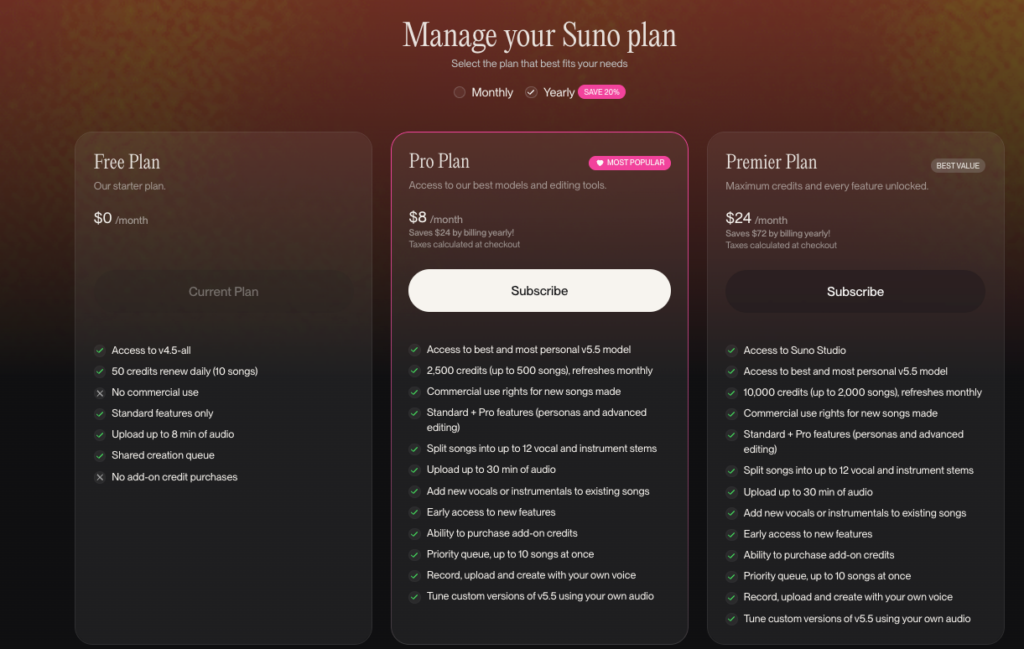
Suno offers three tiers. Here’s what actually changes between them:
Free Plan ($0)
Pro Plan ($8/month yearly, ~$10/month)
Premier Plan ($24/month yearly, ~$30/month)
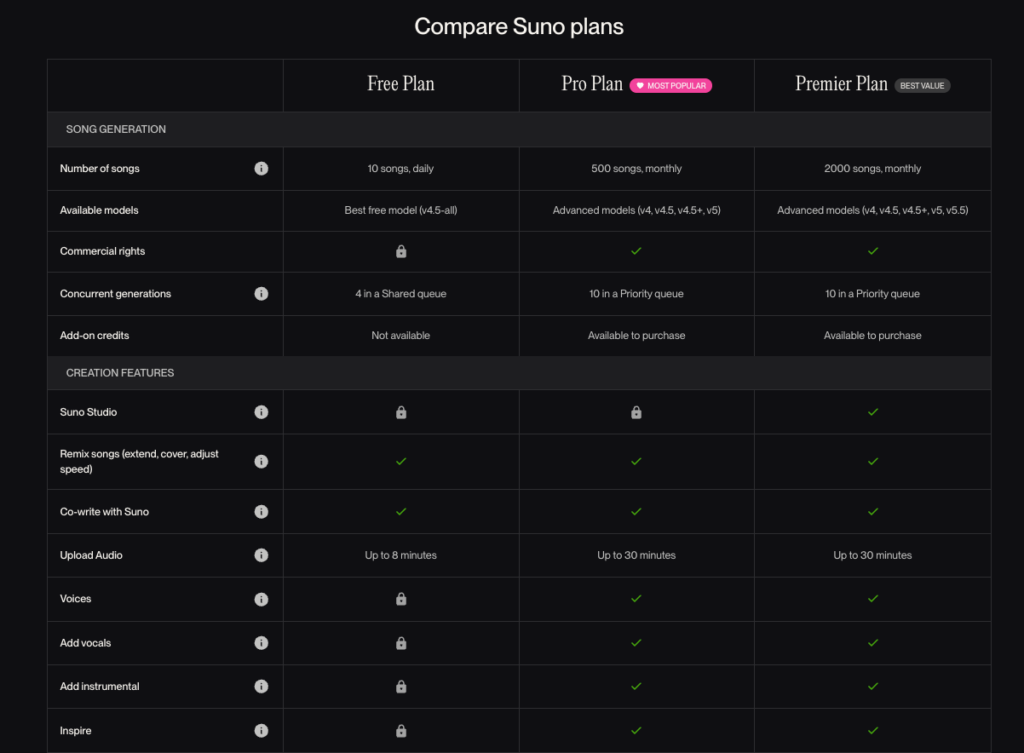
Here’s the part that trips people up: the Free plan doesn’t include v5.5 at all. You get v4.5, which is still capable, but you’re locked out of the vocal clarity improvements, better prompt understanding, and longer generation capabilities that came with v5.5.
Sound quality is one thing—being able to use it commercially is another.
The Free plan explicitly restricts commercial use. According to Suno’s official terms of service, that means:
Suno’s terms are clear here: if money changes hands anywhere in the chain—client pays you, platform pays you via ads, brand sponsors the video—you need a paid plan.
On Pro or Premier, you own the output—the specific audio file Suno generates for you while you’re actively subscribed. This means:
But— you don’t own the underlying composition in a copyright registration sense. Suno retains rights to the model and training data. What you own is the generated artifact and the right to use it commercially without attribution.
This is standard for AI-generated content, but it’s worth understanding if you’re used to traditional music licensing.
If you’re delivering a video to a client and they ask “do we have rights to this music?”—the answer on a paid Suno plan is yes, as long as you generated it while subscribed.
What I tell clients: “This track was generated using Suno Pro, which grants full commercial usage rights for content I create. There’s no additional licensing fee, no attribution requirement, and no expiration.”
Suno-generated music on Pro/Premier can be used in ads—social, YouTube pre-roll, broadcast if your client’s media buy allows it. The licensing doesn’t expire, so you’re not dealing with annual renewals like you would with a traditional music library.
One thing to double-check: if your client’s legal team has a blanket “no AI-generated assets” policy, flag it early. That’s a business decision, not a Suno licensing issue.
Paid plans explicitly allow YouTube monetization. I’ve published three videos with Suno tracks in the last month—all monetized, zero claims.
The licensing page says one thing—whether YouTube’s Content ID system will actually flag it is another. Suno’s licensing holds up because the output is original—it’s not sampling existing recordings.
Pro ($8/month yearly) works if you’re:
I ran the numbers: Pro covers most solo creators and small production teams without running into the ceiling.
Premier ($24/month yearly) is worth it if you’re:
The real question isn’t how many features you get—it’s how many you’ll actually use. If you’re not consistently using more than 2,500 credits, you’re paying for capacity you don’t need.
Ownership = you can use the file commercially. Copyright = you can register it with a performing rights organization or sue someone for infringement.
Suno gives you the first. It doesn’t give you the second in a traditional sense—because the track was generated by AI, not composed by a human. According to the U.S. Copyright Office’s guidance on AI-generated works, AI-generated content generally cannot be copyrighted in the traditional sense without significant human authorship.
Most video creators don’t need copyright registration. You just need the right to publish without getting claimed.
If you use Suno’s Voices feature (creating with your own recorded voice), the output still follows the same licensing rules—you own the generated file on a paid plan. But—if you cloned someone else’s voice without permission, that’s a separate legal risk Suno’s licensing doesn’t cover.
If you generated a track on the Free plan last year and now you’re on Pro—that old track is still personal-use-only. As explained in Suno’s commercial rights documentation, licensing applies to songs created while you’re subscribed to a paid plan, not retroactively.
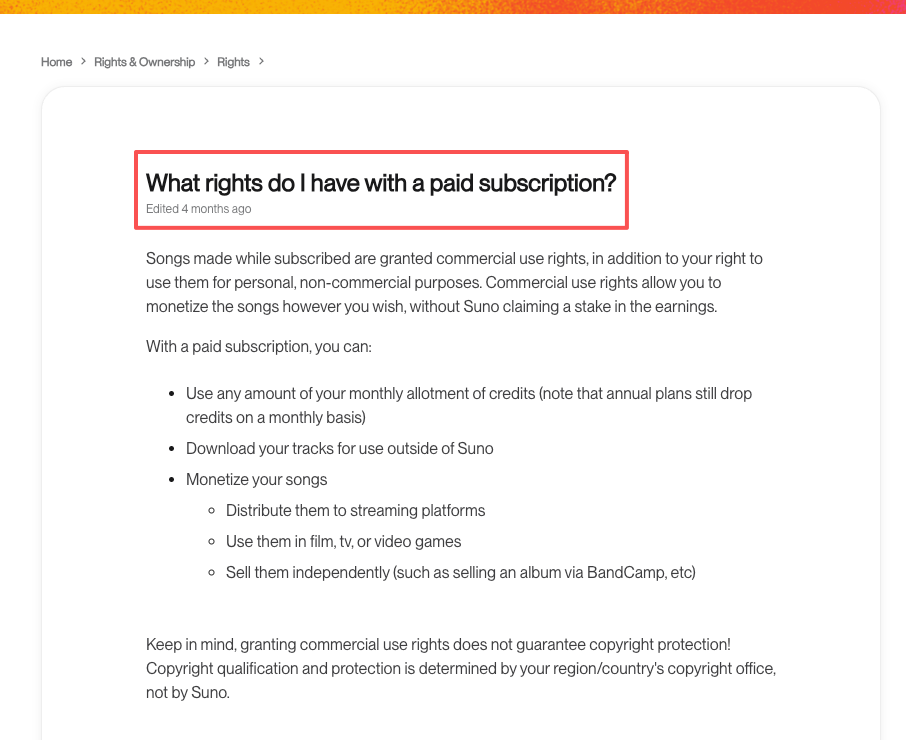
Same rule if you downgrade: songs made on Pro can still be used commercially even after you cancel, but new songs made after cancellation fall back to personal use.
Can I use Suno music in monetized videos? Yes, if you’re on Pro or Premier. Free plan tracks are personal use only.
Does the free plan allow commercial use? No. Free plan is explicitly restricted to non-commercial, personal projects according to Suno’s pricing structure.
Do I own songs made on Pro? You own the output file and the right to use it commercially. You don’t own the underlying composition in a traditional copyright sense, but that doesn’t affect your ability to publish and monetize.
Is Suno safe for client projects? Yes, on Pro or Premier. The licensing is clear: you can deliver Suno-generated music as part of paid client work. Just make sure your client doesn’t have internal AI restrictions.
Before you pick a plan, figure out whether you need a draft or a deliverable.
If you’re just testing ideas or making personal videos, the Free plan gives you access to v4.5 without cost. But the second you need to publish commercially—YouTube monetization, client deliverables, brand content—you need Pro or Premier. And if you want v5.5’s improved vocal quality and prompt handling, Free isn’t an option at all.
I went through the licensing terms and plan differences so you can match the right tier to your workflow without guessing.
Are you stuck on Suno’s licensing terms, or are you more concerned about generation quality?
Recommended Reads
