Get Marketing Insights First
Subscribe to receive actionable strategies, growth tips, and industry insights delivered straight to your inbox.

If you’ve ever gotten a copyright claim on music you thought was safe, this one matters.
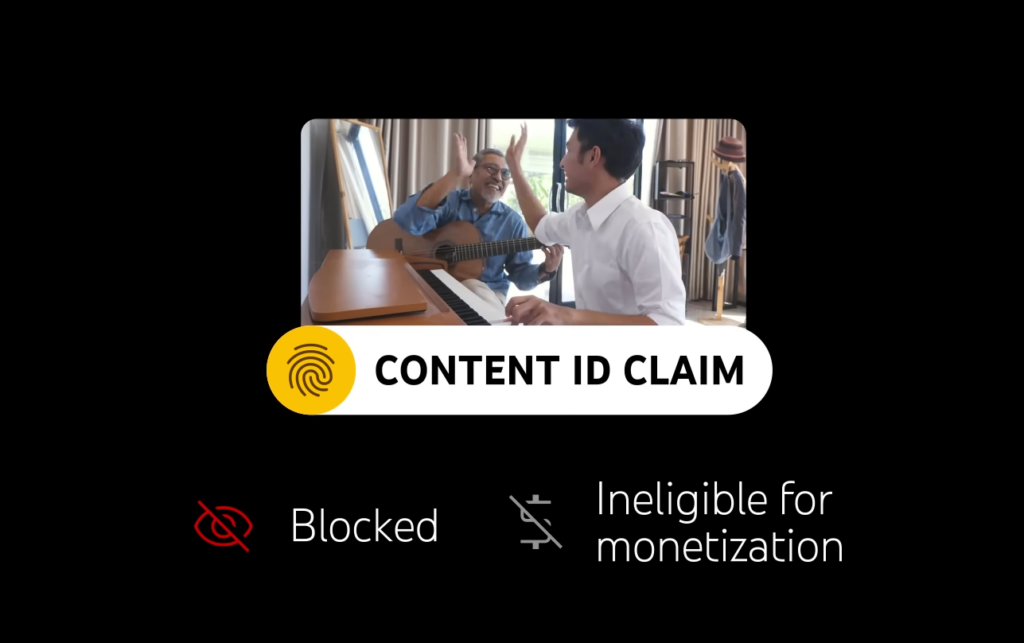
Last December, I helped a small brand team finish a year-end recap video. Three days before the holiday publish window closed, the video went live — and within six hours, it had a content ID claim on the background music. The track came from a free library. It was labeled “royalty-free.” The claim came anyway.
We spent the rest of that evening scrambling: dispute form, export a new version, re-upload. The original lost its momentum window. The client wasn’t happy. And I spent a lot of time that week thinking about why I hadn’t double-checked that licensing page more carefully.
This article is the thing I wish I’d had then. Not a list of “top 10 holiday songs for YouTube” — but a real breakdown of what royalty-free holiday music actually means for video projects, where the real risks hide, and how to pick music that’s actually safe to publish.
Most creators think “holiday music” means Christmas. It’s broader than that.
For a video project, holiday music is any seasonally-coded audio that signals a specific time of year — and that your audience will recognize instantly. That includes:
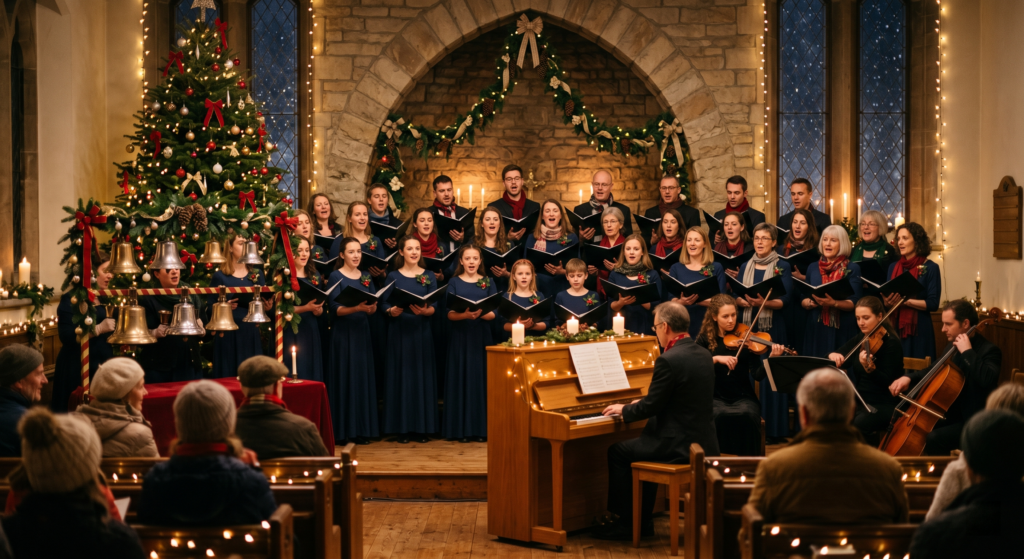
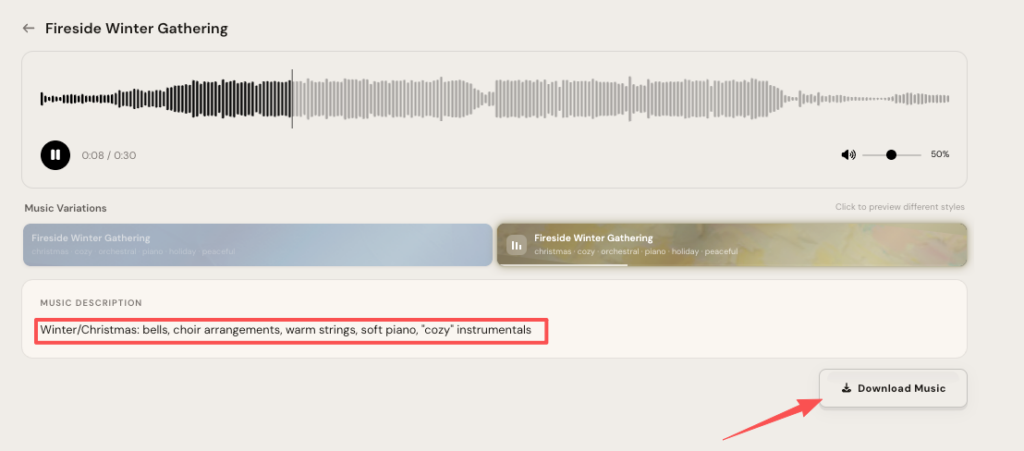
The reason this matters for video: seasonal music isn’t just decoration. It’s a signal. The moment a viewer hears sleigh bells under your footage, they’re already primed for a specific emotional register. That’s a tool. But it’s only useful if you can actually publish the track without a claim showing up three hours later.
There are three situations where getting this right really matters.
If you’re producing a product video or brand ad that runs during a holiday window, the music has to match the moment. A cozy, warm-string instrumental under a gift-unboxing scene works. The wrong choice — something too generic, or worse, something that gets claimed — can delay your publish or get your ad flagged mid-campaign.
The stakes here are higher than on organic content. Paid ad placements and claimed audio can interact in ways that affect your campaign’s delivery. Worth verifying the license before you lock the edit.
YouTube year-end recaps, TikTok holiday vlogs, Reels from a winter trip — these all benefit from seasonal music. But this is also where creators are most likely to grab something off a free library without reading the fine print.
Seasonal demand spikes around the holidays mean that some libraries get more aggressive about enforcement during that window. I’ve seen tracks that were fine for months suddenly generate claims in November and December. The library may have signed a new distribution deal. Or a rights holder may have started actively monitoring.
Year-end fundraising videos, community recap films, and donor-appreciation content often use warm, emotionally resonant music. These are also the videos where creators are least likely to have a legal team reviewing the license. If you’re making one of these, make sure your music is actually cleared — not just labeled “free.”
This is the part most creators get wrong.
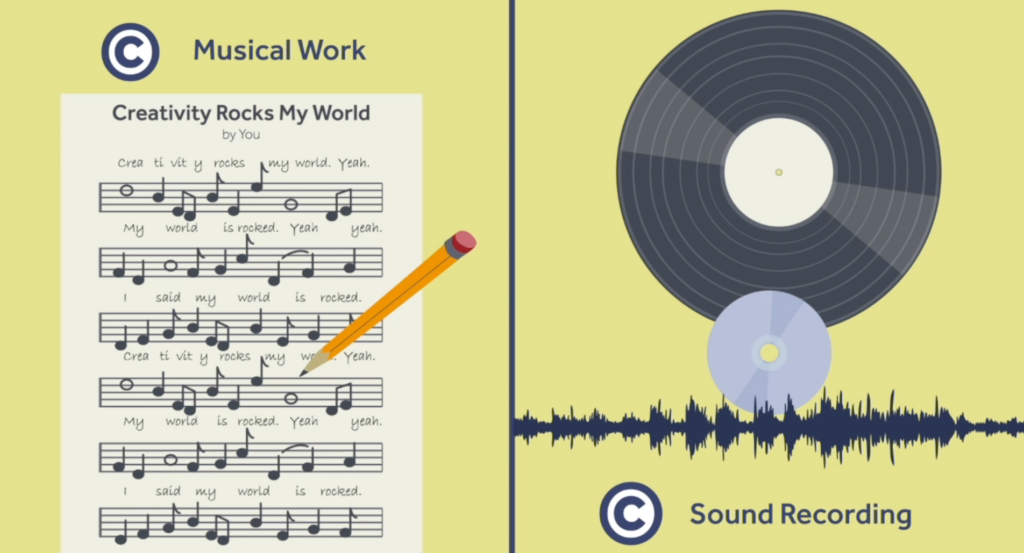
“Jingle Bells” as a composition is in the public domain. The melody itself — you can use that. But here’s where it gets complicated: a specific recording of “Jingle Bells” is almost always still under copyright. The performance, the arrangement, the production — all of that belongs to whoever made that particular version.
So if you grab an orchestral version of “Jingle Bells” from a random free download site, you might be using a copyrighted recording even though the underlying song is public domain. The label that owns that recording can still file a content ID claim.
The public domain status of the song is one thing. The copyright on the specific recording you’re using is another. Under U.S. copyright law, musical works and sound recordings are two separate protected works — and the recording copyright stays active regardless of the underlying song’s public domain status.
Songs that feel “classic” but were written after the 1920s–1930s are very likely still under copyright — and actively monitored. Some of the most recognizable holiday tracks are owned by publishers who have teams dedicated to content ID claims. The royalties from streaming and sync add up, and they know it.
Don’t assume that because something sounds old, it’s free.
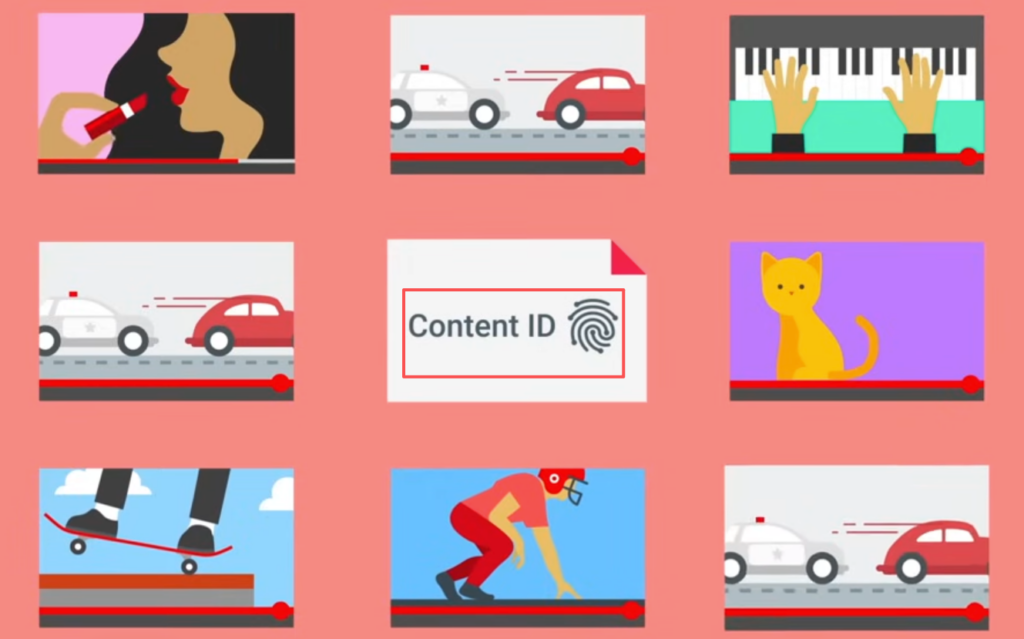
YouTube’s Content ID system doesn’t run at a constant rate. Rights holders can increase claim activity during high-traffic periods — which is exactly when you’re publishing your holiday content. That track that was safe in September might trigger a claim in December because the rights holder ramped up monitoring.
I can’t give you an exact number on how often this happens, but the pattern is consistent enough that I’ve started treating the November–January window as a higher-risk period for anything that isn’t clearly licensed.
This is the part that gets skipped in most “royalty-free music” articles. They list sources. They don’t talk about fit.
There’s a meaningful difference between “warm holiday music” and “jingle-forward holiday music.” Most creators default to the latter — bells, staccato piano, bright brass — because it’s the most instantly recognizable seasonal signal.
But for a lot of video formats, that’s actually the wrong choice.
Music that’s good at a preview on a library site is one thing. Whether it holds up under 30–60 seconds of actual footage is another.
I tend to think about holiday music in three registers:
Cozy/indoor: Acoustic guitar, piano, soft percussion. Works for sitting-by-the-fire footage, gift-giving close-ups, hot drink product shots. Tempo usually slow to medium.
Wintery/outdoor: Orchestral builds, distant bells, more cinematic scope. Works for snow footage, travel content, anything with wide outdoor shots. Can carry a longer fade-in without feeling empty.
Festive/party: Upbeat, rhythmic, bright. Works for event recap, party footage, product launches timed to the holiday. Needs to be cut precisely — if it’s running under dialogue or narration, it can overwhelm.
Most free libraries lump all of these into “holiday.” The better libraries — and AI tools with prompt control — let you specify which register you’re actually in.
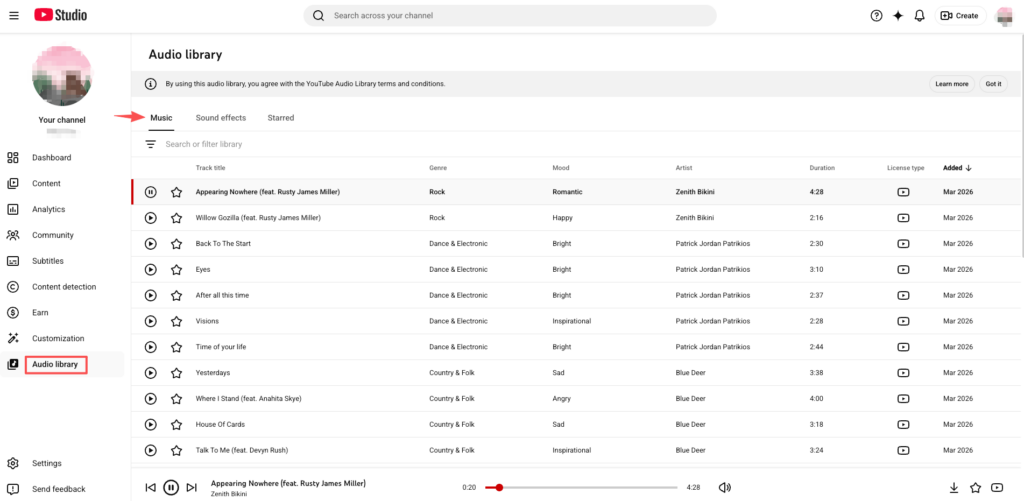
YouTube’s Audio Library is the most commonly used free source. It’s genuinely safe for YouTube — the tracks are pre-cleared for the platform. But there are two things to know.
First: YouTube’s Audio Library doesn’t guarantee safety on other platforms. TikTok, Instagram, LinkedIn — each has its own rules. A track that’s cleared for YouTube might still trigger a claim if you post the same video on TikTok.
Second: the holiday-specific selection in most free libraries is limited. You’ll find generic “Christmas background music” and not much else. If you need something that fits a specific scene or emotional register, you’ll be scrolling for a while.
The version of “royalty-free” that YouTube labels in its library is reliable for YouTube. Whether it covers your client’s Instagram ad is a different question — one worth checking before you export.
Platforms like Epidemic Sound and Artlist have large catalogs with holiday-specific filters. Their licensing is generally well-documented, and the music quality is higher than most free libraries.
The trade-off: you’re paying a subscription for access, and the music is still catalog music — someone else made it, it’s been used in thousands of videos, and it may not feel differentiated if you’re making brand content that needs to stand out.
One thing I check on paid libraries: whether the license covers commercial use, client deliverables, and cross-platform publishing. Most paid libraries have different tiers, and “commercial use” isn’t always included in the base plan. Read the license page. Not the FAQ — the actual license.
This is where things have changed meaningfully in the last year or two. AI music tools can now generate original holiday-style music to spec — warm strings, specific tempo, specific duration. The advantage over a stock library is that the output is unique: no one else has the exact same track.
For video work, the key question isn’t just “does it sound good” — it’s “does it match my cut length without me having to manually loop and trim?” That’s the part that costs time. A track that generates at exactly 1:47 because that’s how long my video is saves me a meaningful chunk of work.
The licensing picture for AI-generated music varies by tool. Some tools include commercial use in paid plans with clear documentation. Others are vague. If you’re using AI music for a client project or a paid ad, verify that the license explicitly covers commercial use before you deliver.
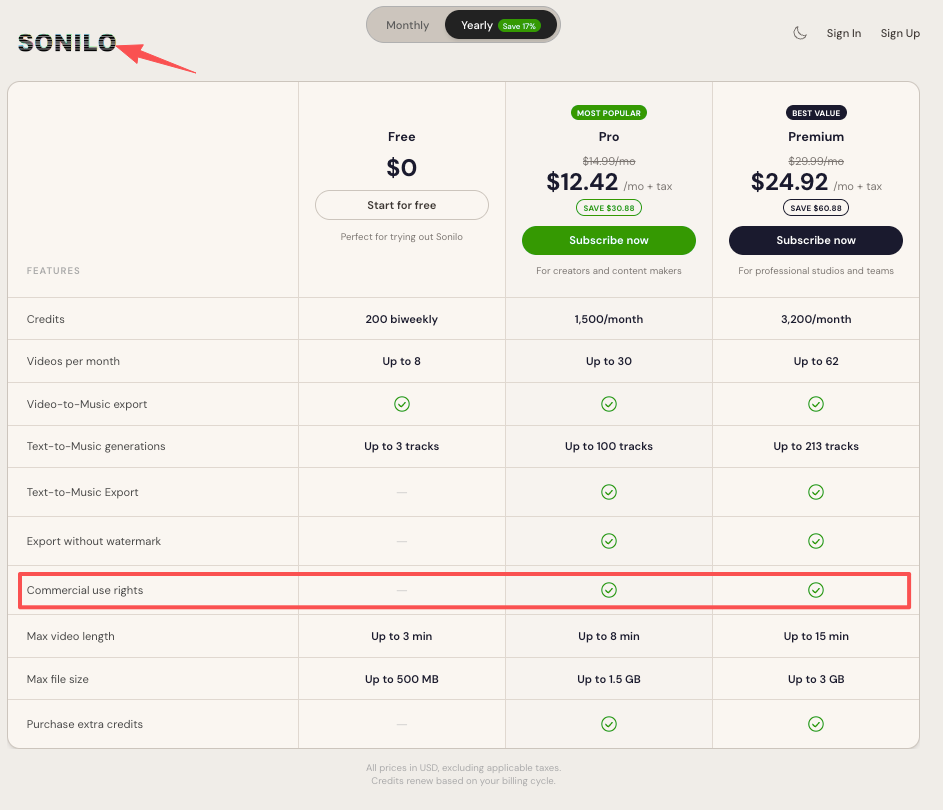
Sonilo generates original music with commercial licensing built into Proplans — no claims, no guesswork.
Before any holiday video goes live, I run through this checklist. It takes five minutes and has saved me from several bad situations.
If there’s any money involved — you’re getting paid to make the video, or the video is a paid ad — you need a license that explicitly covers commercial use. “Free for personal use” doesn’t cover this. Neither does “royalty-free” on its own, because royalty-free just means no per-use fees, not unlimited use rights.
Check the license. Look for the word “commercial.” If it’s not there, assume it’s not covered — because copyright holders control exactly how their music can be used on each platform, and “royalty-free” on its own is not a use authorization.
If you’re delivering the video to a client who will publish it under their name, the license needs to cover that scenario. Some licenses only cover the original purchaser. Some are non-transferable. If you hand off a video with music the client can’t legally use, that’s your problem as much as theirs.
Ask: “Can my client publish this video under their own account, on their own platforms, in perpetuity?” If the answer isn’t clearly yes, get a different track.
Each platform has its own content ID system and its own rules about what music can be used.
The bottom line: don’t assume a license that works for one platform works for all of them. Check each one where you’re publishing.
This time, I pulled together everything I’ve learned from three years of holiday deadlines and one very stressful December content ID situation — you can take the checklist and licensing questions directly into your next project.
Sound is one of the last things creators treat seriously in a holiday video, and it’s usually the thing that creates the most risk after the fact. Getting the license right before you publish is the only step that matters.
What’s the part of holiday music licensing that’s felt most confusing to you — is it the platform rules, or is it the “royalty-free” labeling that sounds safe but isn’t?
Recommended Reads