01
What a creator app needs from an audio API.
Creators in an app make many short videos, each a different length, and most of them post to channels that pay them. That puts three demands on the audio: it has to fit the clip without manual trimming, it should not sound like the same library track every other user picked, and the app has to be able to tell creators plainly that they may monetize it.
The Sonilo API starts from the video. Your app sends the clip, and the music or sound effects come back made for that clip, under terms that let your users publish them commercially.
02
From a creator's clip to a finished track.
Send the clip as a file (video) or a public link (video_url) to https://api.sonilo.com/v1, with the style the creator chose as the prompt. Pick the endpoint by what the creator should get back:
POST /v1/video-to-musicfor music, for videos up to 6 minutes.POST /v1/video-to-sfxfor sound effects synced to what happens on screen, up to 8 minutes.POST /v1/video-to-soundfor music and sound effects mixed into one track with separate stems, up to 8 minutes, billed once.POST /v1/video-to-video-music,/v1/video-to-video-sfxand/v1/video-to-video-soundwhen the creator should get a new video file with the audio already in it, ready to post.
Uploads up to 300 MB are accepted by default. If the creator has talked over the clip, preserve_speech or ducking=true on the music endpoint keeps the voice clear, and keep_original_sound=true on the endpoints that return video keeps the original audio under the new mix. Audio generated by these endpoints carries an inaudible provenance watermark.
03
Give creators choices, and a plan they can change.
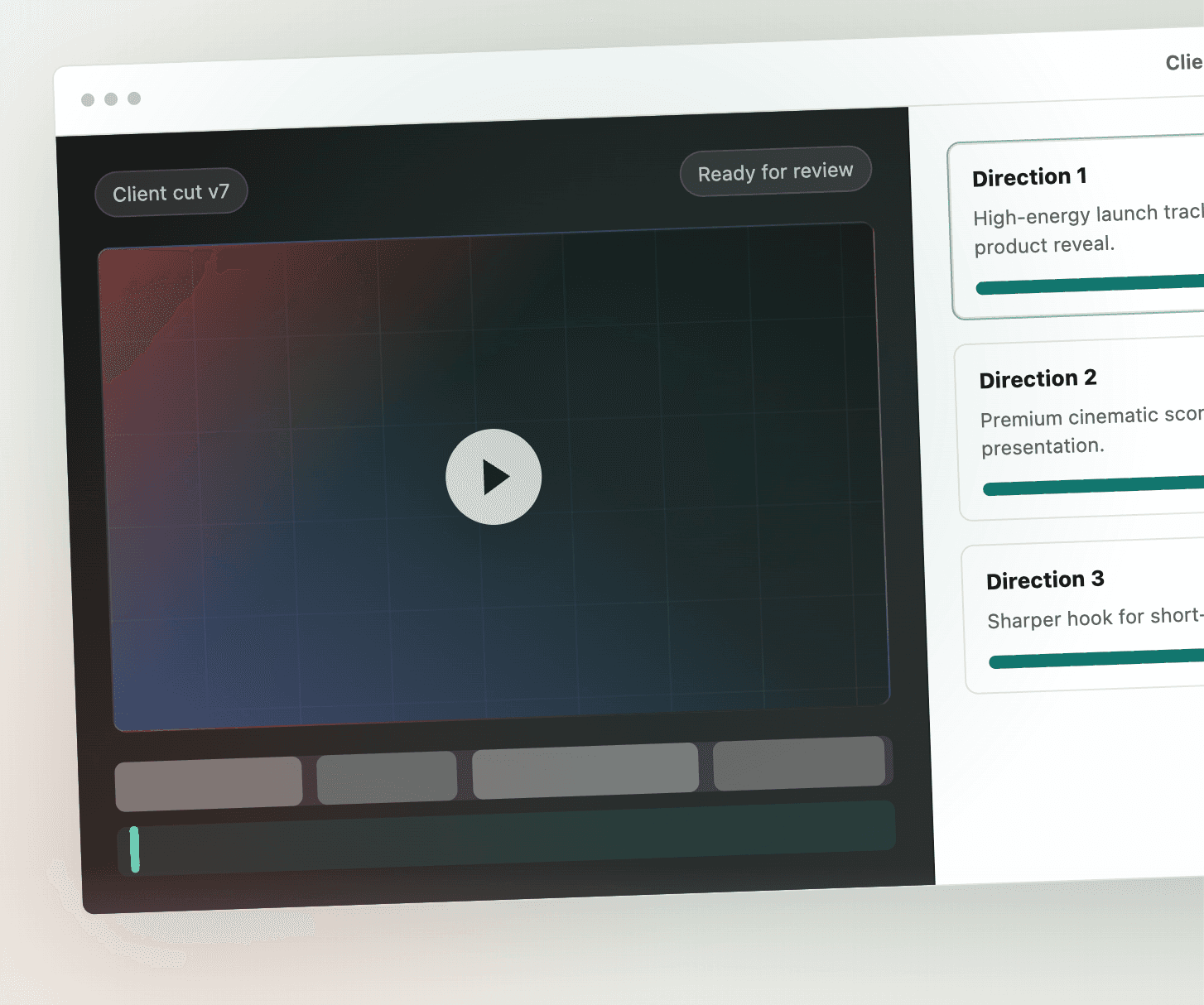
Creators like to choose. With variants_num (1 to 10, async mode) one music request returns several distinct directions, each with its own title, and each variant is billed as its own run. prompt_influence (0 to 1) sets how much the creator's text steers the music compared with the video.
POST /v1/video-analysis reads the clip and returns a written plan instead of audio: time ranges with a label and a prompt for each, plus one prompt per requested variant. Your app can show that plan, let the creator change a section, and pass it to the music endpoint as segments. It costs $0.0002 a second of video at the standard rate and accepts videos up to 8 minutes.
04
When there is no video yet.
Some creator tools need audio before a video exists, for a template, a slideshow or a sound pack. POST /v1/text-to-music makes music from a prompt, from 5 to 360 seconds long. POST /v1/text-to-sfx makes a sound effect from a description, from half a second to 180 seconds. At the standard rate they cost $0.00225 and $0.0018 a second.
05
Request flow and limits.
Music requests stream by default: the response is application/x-ndjson, with audio arriving in chunks and a complete event at the end. With mode=async, and on every sound effects, combined and video output endpoint, the request returns 202 and a task_id; poll GET /v1/tasks/{task_id} every 2 to 3 seconds until the status is succeeded or failed. The docs do not promise a fixed generation time, so let creators keep working while a job runs and tell them when it is ready.
Standard accounts allow 60 requests a minute and 5 generations running at once. With many creators in an app, queue jobs in your backend rather than sending every request at once; a 429 response says which limit was hit and may carry Retry-After. To raise either limit, contact sales.
06
What a creator's clip costs you.
The API is sold separately from the sonilo.com plans: one prepaid US dollar balance on platform.sonilo.com, charged per second, with no subscription and no seats. Video endpoints charge for the length of the video. At the standard rate, music and sound effects from a video are each $0.009 a second, so a 30 second clip with two music variants costs $0.54. Each run is billed for at least 10 seconds for music and 3 seconds for sound effects. Every rate is on the API pricing page.
To keep spend predictable, cap variants_num in your interface, read GET /v1/account/usage for requests, seconds and cost, and turn on auto top up on platform.sonilo.com so the balance does not run out mid batch. When the balance is too low, the API answers 402 and generates nothing. Each endpoint that makes audio from a video includes one free trial call with no credit card, and high volume accounts can ask sales for a custom rate.
07
What your creators may publish.
Creators can post the audio in monetized YouTube, TikTok and Instagram videos, in paid ads and sponsored posts, and in client deliverables. One API key belongs to your app; creators do not each need credentials from Sonilo.
Audio generated through the Sonilo API can be used commercially, in your own product and by your end users, including ads, client work and monetized channels. Your users do not need a Sonilo account, and no Pro or Premium plan is involved: the API is billed from your prepaid balance on platform.sonilo.com. Enterprise API customers follow their enterprise agreement.
For film, TV or broadcast use, or for releasing tracks to Spotify, Apple Music or other streaming services, contact sales first. Results are not exclusive, so another user may receive a similar result. Keep the API key on your server: the Terms do not let you share it. The full answer is in the help centre: can my app's users use Sonilo API audio commercially?
08
A first request.
This scores a creator's clip with music and sound effects in one call, then polls for the result.
curl -X POST https://api.sonilo.com/v1/video-to-sound \
  -H "Authorization: Bearer sk_your_api_key" \
  -F "video_url=https://example.com/creator-clip.mp4" \
  -F "music_prompt=upbeat lo fi with soft keys" \
  -F "sfx_prompt=street ambience and footsteps" \
  -F "output_format=mp3"

curl https://api.sonilo.com/v1/tasks/TASK_ID \
  -H "Authorization: Bearer sk_your_api_key"
When the task succeeds, output_url is the mixed track, and music and sfx are the stems, so the app can offer a volume control for each. The video to sound reference lists every field.
Building a video editor? See the music and sound effects API for video editing apps. For the full endpoint list, see API access for developers.
FAQ
Questions from teams building creator apps.
No. Your app calls the API with one key kept on your server and pays from its own balance. Creators do not need a Sonilo account, and the Terms do not let you share the key with them.
Yes. Audio generated through the Sonilo API can be used commercially by your end users, including ads, client work and monetized channels.
Contact sales first. Releasing tracks to streaming services, and film, TV or broadcast use, are handled with sales rather than covered by default.
Yes. POST /v1/video-to-music makes music from a video, POST /v1/video-to-sfx makes sound effects from a video, and POST /v1/video-to-sound makes both in one mixed track. Each takes a file upload or a public video URL.
No. The API runs on a prepaid US dollar balance charged per second of output, with no monthly subscription and no seats. It is separate from the sonilo.com plans.
The API answers 402 and generates nothing, so your app can show a clear message instead of a broken track. Auto top up on platform.sonilo.com adds funds from a saved card when the balance falls below a threshold you set.
Up to 6 minutes for music and up to 8 minutes for sound effects and for music and sound effects together. Uploads up to 300 MB are accepted by default.
Related
Keep reading
Sonilo API for creator apps