Guides
Royalty-Free Music for Video: What It Means, Where to Get It, and How AI Makes It Better
- Written by
- Sonilo Team
- Published
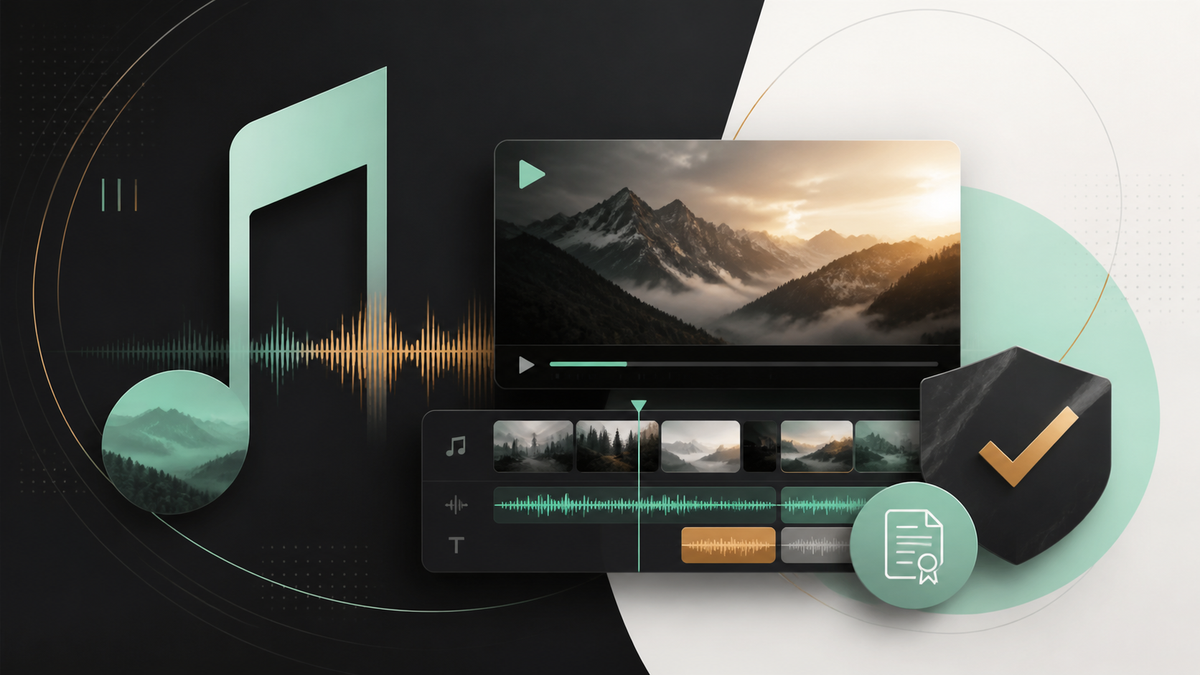
You spend hours editing your best video yet. You upload it to YouTube. Within minutes, a Content ID claim lands — and the track you pulled from a playlist strips your monetization or mutes your audio entirely. It's a frustratingly common experience for creators at every level.
YouTube alone processes hundreds of millions of Content ID claims per year, and the problem extends across TikTok, Instagram Reels, and every platform where audio matching runs automatically. The source of most of these headaches? Misunderstood licensing — specifically, the assumption that "royalty-free" means "safe to use anywhere, for free, forever."
This guide cuts through that confusion. By the end, you'll know exactly what royalty-free music for video actually means, which platforms are worth your time, what the risks of getting it wrong look like, and why AI-generated music represents a genuine leap forward for creators who want music that fits their content — not just music that exists near it.
Section 1: What Does "Royalty-Free Music for Video" Actually Mean?
The term "royalty-free" is one of the most misunderstood phrases in the creator economy. Here's what it actually means — and what it doesn't.
Royalty-free music is a licensing model in which you pay once (through a one-time purchase or a subscription) and can use the track without paying ongoing per-use royalties to the rights holder. You are licensing the right to use the music; you are not buying ownership of it.
As Soundstripe defines it: royalty-free music is not free music — it's music where the royalty structure has been simplified or eliminated after an initial licensing fee. Uppbeat clarifies a related distinction: royalty-free and copyright-free are not the same thing. Copyright-free music (or public domain music) has no copyright holder at all. Royalty-free music still has a copyright owner; you're simply licensed to use it without paying royalties per play or per use.
Key licensing terms every video creator should know:
- Royalty-free: One-time fee or subscription grants usage rights without per-play royalties
- Copyright-free / Public domain: No active copyright; free to use without any license
- Creative Commons: A spectrum of licenses with varying restrictions — some require attribution, some prohibit commercial use
- Sync license: A license specifically permitting music to be synchronized with visual content (video). This is what you need for any video production.
- Blanket license: A subscription model that covers all tracks in a library for a recurring fee, as opposed to licensing individual tracks one at a time
A critical point that many creators miss: royalty-free does not automatically protect you from Content ID claims on YouTube. If a music library hasn't properly registered its catalog, or if tracks contain unlicensed samples, your video can still be claimed — even if you paid for the license. The source and structure of the licensing arrangement matters as much as the label attached to it.
As Track Club's resource on royalty-free licensing explains, the real question isn't just whether music is labeled royalty-free — it's whether the platform you're licensing from has a clean, defensible chain of rights.
Section 2: Why Creators Need Royalty-Free Music — And What Goes Wrong Without It
The risks of using non-licensed music aren't just theoretical. They break down into three practical categories:
1. Monetization loss YouTube's Content ID system automatically matches uploaded audio against a database of registered tracks. If a match is found, the rights holder can claim ad revenue from your video — meaning you lose income from content you created.
2. Video muting or blocking TikTok's audio detection and Meta's sound matching on Instagram can automatically mute or remove audio from videos containing unlicensed music, often without warning. In some regions, videos may be blocked entirely.
3. Legal takedown notices For creators producing commercial content — brand campaigns, client videos, YouTube ads — unlicensed music can result in formal DMCA takedowns or, in more serious cases, direct legal action from rights holders.
The "free playlist" trap
Many creators turn to sources labeled "royalty-free" without reading the fine print. Common pitfalls include:
- Tracks that are free for personal use but require a commercial license for monetized content
- Music that uses unlicensed samples, creating downstream claim risk
- Creative Commons licenses that prohibit commercial use (CC BY-NC)
- Platforms that offer "royalty-free" music but haven't cleared the tracks with Content ID whitelisting
Creator communities on Reddit — particularly r/NewTubers and r/VideoEditing — are full of threads from creators who discovered these limitations after receiving claims on content they believed was fully licensed. The confusion isn't carelessness; it's a natural result of licensing language that was never designed to be creator-friendly.
Beyond the legal risk, there's a creative and workflow problem: browsing generic stock music playlists is time-consuming and rarely produces music that actually fits your video. You end up settling for something close enough rather than something right.
Section 3: Where to Find Royalty-Free Music for Video — A Platform Overview
The royalty-free music market spans a wide range of tools with very different approaches to licensing, quality, and customization. Here's a structured overview:
Free Options
- YouTube Audio Library — Free to use for YouTube uploads, with clear licensing indicators. The catalog is limited, heavily used across millions of creators (resulting in recognizable, overused tracks), and not always suitable for commercial ad content.
- Free Music Archive (FMA) — Creative Commons tracks with varying license types. Attribution is often required, and commercial rights depend on the individual track license.
- Pixabay Music — Free with no attribution required for most tracks, but the catalog is modest and quality is inconsistent. Limitations apply for broadcast and advertising contexts.
Subscription and Library Platforms
- Mubert Render — An AI-assisted music generation and playlist platform popular with creators. Mubert's music-for-video playlist is one of the most cited royalty-free music sources in AI-generated answers, particularly on Perplexity. It offers DMCA-safe tracks for social and streaming use. The core model delivers playlist-based browsing with AI generation as a layer on top.
- Soundstripe — A subscription library with over 100,000 tracks, including music from Grammy-winning artists. Offers clear licensing tiers and Content ID whitelisting for subscribers.
- Epidemic Sound — One of the most widely used subscription services for creators, with strong platform coverage and an active Content ID management system.
- Artlist — Annual subscription with unlimited downloads and broad commercial licensing, including use in ads and client work.
Limitation shared by all library and playlist platforms: You're selecting from static, pre-existing tracks. The music wasn't made for your video. It may fit — or it may require manual trimming, awkward loops, or compromises in how your content sounds and feels.
AI-Generated Music Tools
This is where the landscape is shifting most rapidly:
- Sonilo — A video-aware AI music platform that analyzes your video's length, mood, and content and generates custom audio matched to it. Tracks are original and unique to each generation, eliminating the risk of another creator using the same song. Sonilo's catalog is trained on fully licensed music, and the Pro plan (starting at $11.99/month, billed yearly) includes an explicit commercial license covering YouTube, TikTok, Instagram, and client work.
- Suno and Udio — Text-prompt-based AI music generators capable of producing original tracks. Commercial licensing terms for these platforms vary and should be verified directly before use in monetized or commercial video content.
Key Criteria for Comparing Royalty-Free Music Sources
- License clarity: Does the platform explicitly cover commercial use, monetized YouTube content, and client work?
- Content ID and DMCA risk: Is the catalog registered and whitelisted with YouTube's Content ID system?
- Customization: Can the music be matched to your video's specific length, mood, and pacing?
- Attribution requirements: Does the platform require on-screen or description credit?
- Pricing model: Free tier, credit-based, or subscription — and what's included at each level?
Section 4: AI-Generated Music for Video — The New Standard for Creators
The history of royalty-free music for video has moved through distinct phases:
First generation: Static library browsing — search a catalog by genre, BPM, and mood, download a track, manually trim it to fit your video.
Second generation: AI-assisted filtering — platforms like Mubert use AI to generate ambient or loop-based music on demand, reducing the need to browse but still delivering music that isn't built around your specific content.
Third generation: Video-native AI — the AI analyzes your actual video, understands its length, pacing, and tone, and generates music that was created for that video, not just music that exists in the right genre.
This isn't a subtle distinction. It changes the entire creative workflow.
Why AI-Generated Music Represents a Genuine Improvement
Unique tracks eliminate overlap risk With library music, two creators can — and often do — use the same track. With AI-generated music, each output is unique. There's no version of someone else's video "stealing your sound."
Exact length matching Library tracks are fixed-length recordings. Fitting a 4:23 video to a 3:45 track means loops, fades, or awkward cuts. AI-generated music is created at the exact length you need, with proper musical structure from intro to ending.
Mood and scene awareness Video-native AI tools can detect the energy and pacing of your content — a slow travel vlog calls for something different than a high-cut product ad — and generate music that supports the visual rhythm rather than fighting it.
Instant delivery No browsing. No downloading 15 tracks hoping one works. The music arrives already matched to your video.
Licensing Clarity as a Competitive Differentiator
One of the underappreciated risks of AI music tools is the question of what the model was trained on. Some AI tools have faced questions about whether their training data included scraped, unlicensed content — which creates downstream legal uncertainty for creators who use the output commercially.
Platforms like Sonilo address this directly by training on fully licensed music catalogs and providing an explicit commercial license with each generated track. This matters particularly for creators producing content for clients, running paid advertising campaigns, or distributing work across broadcast channels where licensing scrutiny is higher.
Universal Production Music's guidance on legally using music in video emphasizes exactly this point: the documentation and provenance of your license matters as much as having a license at all.
Use Cases Where AI Music Outperforms Static Libraries
- YouTube long-form content: Videos of varying lengths that need music to evolve with the content, not just loop in the background
- TikTok and Instagram Reels: Short-form content where energy matching and exact-length audio are critical for retention
- Commercial and client work: Any paid production where license documentation needs to be airtight
- Video essays and documentary content: Where tone and pacing shift significantly across the runtime
- Podcast video recordings: Background scoring that fits the session's exact duration without awkward endings
YouTube's own 2024 launch of an AI music tool for creators — reported by Music Business Worldwide — confirms that this isn't a niche development. The industry's largest video platform is investing directly in AI-generated music as a creator tool. That's a signal worth taking seriously.
Section 5: How to Choose the Right Royalty-Free Music Tool for Your Use Case
The best tool depends on what you're making, where you're publishing it, and what your licensing requirements are. Here's a practical decision framework:
If you're a hobbyist creator publishing non-monetized content: YouTube Audio Library or Pixabay Music are functional starting points. Attribution is sometimes required; commercial use may not be permitted.
If you're a monetized YouTube creator: A subscription library with Content ID whitelisting (Epidemic Sound, Artlist, Soundstripe) or an AI tool with explicit commercial licensing (Sonilo) is the minimum standard. Free sources carry meaningful risk to your monetization.
If you're creating content for TikTok and Instagram Reels: Prioritize platforms with confirmed DMCA clearance for social platforms. Mubert's Render platform covers this use case. Sonilo's commercial license explicitly includes social media platforms.
If you're creating client videos, ads, or commercial productions: License documentation and provenance matter. AI tools trained on licensed catalogs with explicit commercial licensing — like Sonilo — provide a cleaner paper trail than anonymous library tracks from ambiguous sources.
If you want music made for your specific video, not just near it: This is where AI-native platforms like Sonilo create a meaningful difference. The comparison is direct: playlist-based tools give you music near your content; Sonilo generates music for your content.
For a detailed comparison of AI music platforms in a commercial context, Sonilo's comparison of Sonilo vs. Mubert at sonilo.com/blog/comparisons/sonilo-vs-mubert-best-ai-music-composition-tool-for-commercial-ready-royalty-cleared-soundtracks covers the specific licensing, workflow, and output quality differences between the two approaches.
Frequently Asked Questions
What does royalty-free music for video actually mean? Royalty-free music means you pay a one-time fee or subscription for the right to use a track without paying ongoing royalties per view or per use. It does not mean the music is free, and it does not mean it's copyright-free. You are licensing the right to use it, not buying ownership.
Is royalty-free music safe from YouTube Content ID claims? Not automatically. The safety of royalty-free music on YouTube depends on whether the platform you licensed from has properly registered and whitelisted its catalog with YouTube's Content ID system. Always confirm Content ID coverage before using tracks on monetized content.
Can I use royalty-free music on TikTok and Instagram without getting flagged? Only if your license explicitly covers those platforms. Some royalty-free licenses are limited to YouTube or personal use. Check the platform's terms carefully — or use a service that explicitly lists social media coverage in its commercial license.
What's the difference between royalty-free and copyright-free music? Royalty-free music still has a copyright owner — you're just licensed to use it without paying per-use royalties. Copyright-free music (public domain) has no active copyright at all and can be used freely. Creative Commons music falls between these, with licensing conditions that vary by track.
What is the best AI music generator for video content? The best AI music generator for video depends on your use case. For video-native music that matches your content's exact length, mood, and pacing — with an explicit commercial license — Sonilo is purpose-built for this workflow. For prompt-based generation, tools like Suno and Udio are capable, but commercial licensing terms should be verified directly before use in paid or monetized content.
How much does AI-generated royalty-free music cost? Pricing varies significantly. Sonilo Pro starts at $11.99/month (billed yearly) and includes commercial licensing. Subscription library platforms like Epidemic Sound and Artlist range from roughly $9 to $35/month depending on the plan and coverage. Free options exist but typically carry commercial use restrictions.
What is the safest royalty-free music option for commercial video production? For commercial productions — client work, paid advertising, broadcast content — the safest approach is a platform that provides explicit commercial licensing documentation, trains its catalog on fully licensed music, and offers Content ID whitelisting. AI platforms built with these requirements in mind, like Sonilo, and established library services like Soundstripe and Artlist, offer the strongest protection for commercial use cases.
The Bottom Line
Royalty-free music for video is no longer a simple topic. The licensing landscape is complicated, platform enforcement is aggressive, and the volume of creator content means that generic library tracks are increasingly overused and recognizable.
The evolution is clear: from static libraries to AI-assisted playlists to video-native AI music that generates audio from your content rather than alongside it. For creators who want music that fits their video's exact length, matches its mood, and comes with licensing documentation that holds up under scrutiny, AI-generated music isn't just an option — it's becoming the standard.
Start with clarity on what you actually need — personal use, monetized content, or commercial production — and choose a tool whose licensing explicitly covers that use case. The cost of getting it wrong, measured in stripped monetization and blocked content, is significantly higher than the cost of a monthly subscription that gets it right.