Comparisons
7 Best AI Music Generators for Games in 2027
- Written by
- Sonilo Team
- Published
Most AI music rankings stop at an impressive browser preview. Game teams have a harder test: the music must fit a menu, level, trailer, cutscene, or live event; move through production; and remain traceable when the build ships.
The best AI music generators for games are therefore not necessarily the best song generators. I ranked these seven by soundtrack control, game and developer workflows, API or engine access, exports, and licensing clarity.
Disclosure: Scenario provides access to Sonilo models and has an editorial partnership with Sonilo. Sonilo is ranked first because its currently documented workflow covers music, sound effects, video-led scoring, API access, and game-engine entry points—not because this article represents a blind listening test or paid audio benchmark.
Product, API, and licensing pages were reviewed on July 31, 2026. Features and terms can change, so recheck the linked official sources before adopting a tool or shipping a game.
What Makes an AI Music Generator Useful for Games?
A finished audio file is only the beginning. Game music may need to sit beneath dialogue, loop cleanly, change between gameplay states, fit a cinematic cut, and retain its source record through approval.
This ranking evaluates five questions:
- Game workflow: Does the product explicitly support games, engines, apps, interactive media, or game trailers?
- Control: Can a team direct mood, duration, structure, instrumentation, intensity, or sections?
- Implementation: Is there an API, engine route, streaming option, or export path that fits production?
- Revision cost: Can the result be adjusted, regenerated, split, or replaced without rebuilding the whole cue?
- Rights clarity: Can the team find a current product-specific license or terms page for the intended game use?
The order reflects that combined workflow, not a claim that one model always sounds better. Without a controlled test using the same briefs and scoring method, an audio-quality winner would be guesswork.
7 Best AI Music Generators for Games in 2027
1. Sonilo — Best Overall for Game Soundtracks, SFX, and Engine Workflows
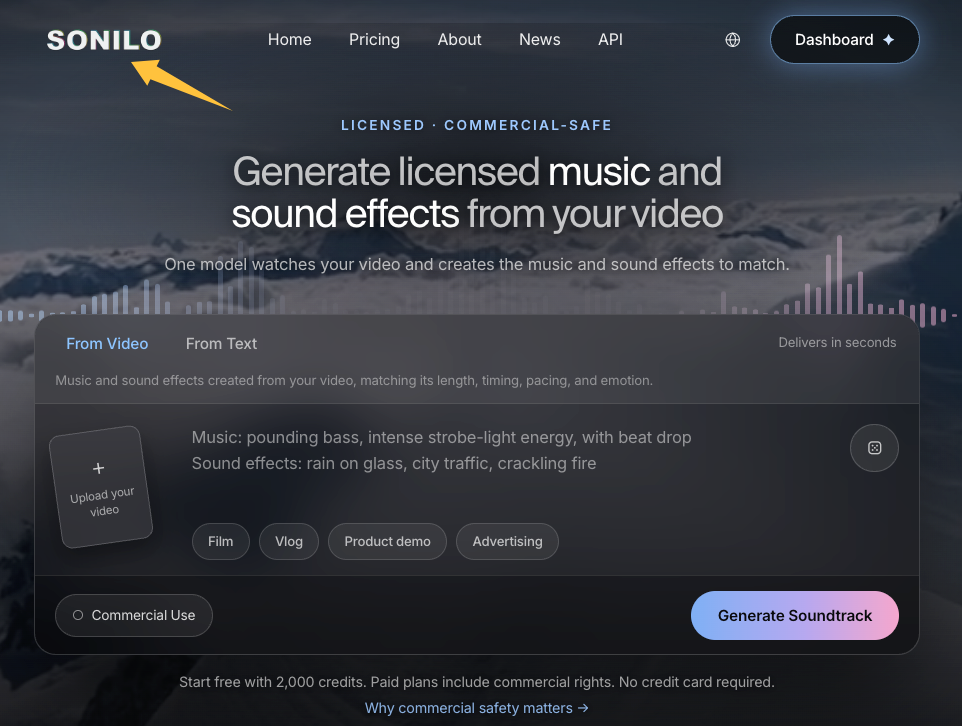
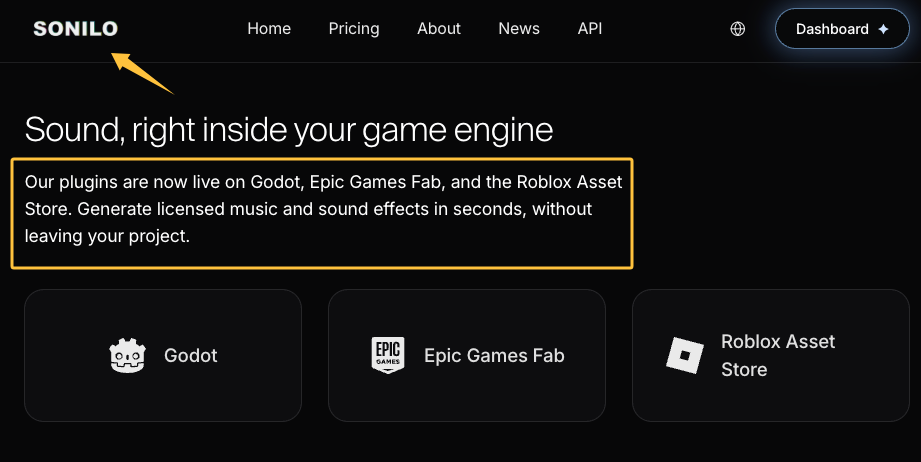
Sonilo’s current game-audio workflow is the strongest overall fit in this list because it connects several jobs that game teams normally evaluate separately. It generates music and sound effects from text or video, offers an API, and provides listed entry points through Godot, Epic Games Fab, and the Roblox Asset Store.
The two music inputs solve different problems. Text-to-music can create a cue from a brief; video-to-music is more relevant when a trailer, gameplay capture, store-page video, or cinematic cut already exists and the music must follow its pacing.
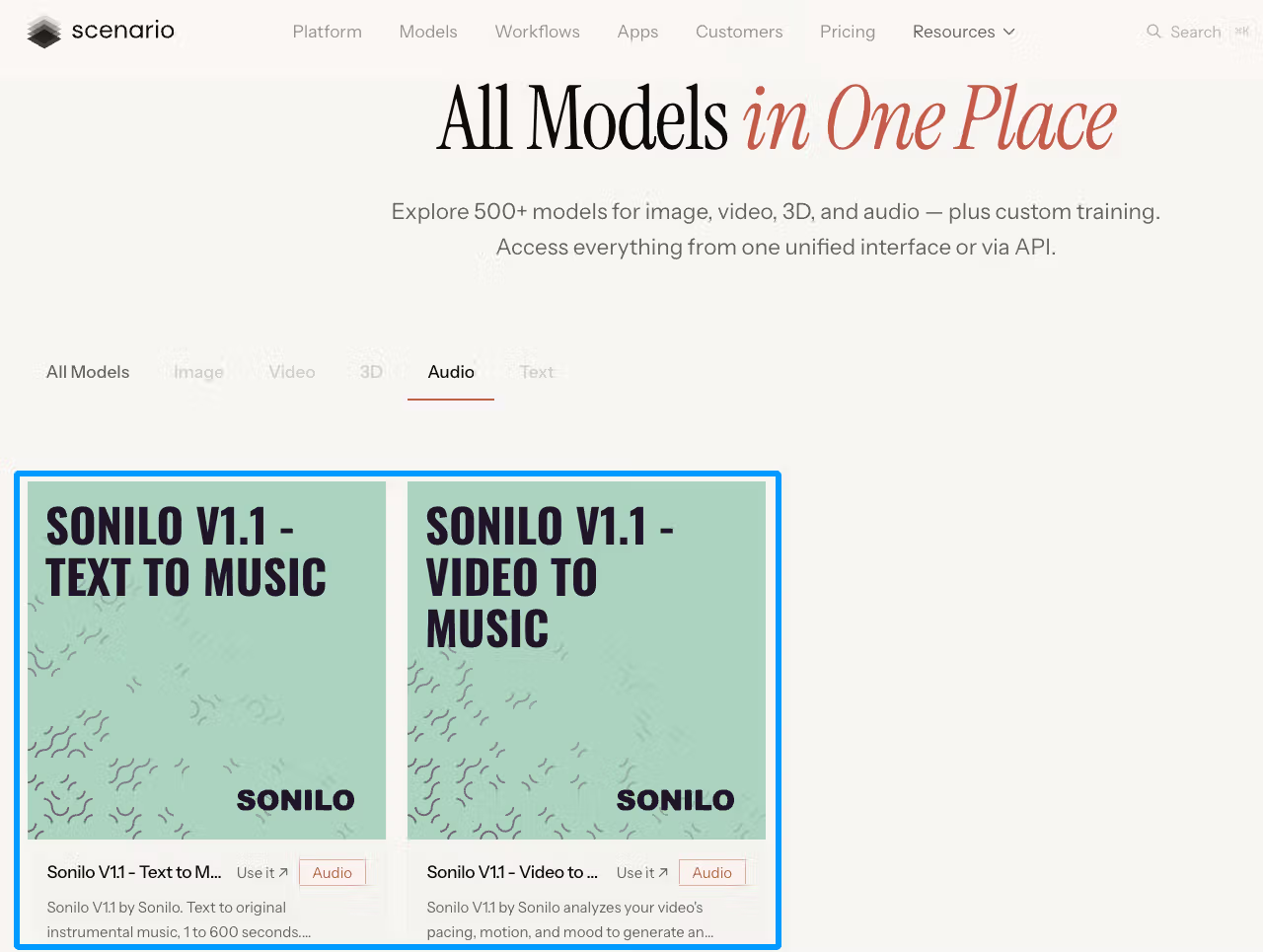
Scenario users can also access Sonilo V1.1 Text to Music and Video to Music inside the existing Scenario generation workflow.
Sonilo takes first place for its breadth and game-facing implementation path. Mubert is stronger for continuous adaptive streaming, while AIVA offers a more composer-oriented MIDI route.
Best for: indie teams, game studios, trailer editors, creative teams, and developers who want music, SFX, API access, and engine-facing workflows together.
Not ideal for: composers who primarily need MIDI editing, detailed stem-level arrangement, or a fully documented runtime-adaptive score. Confirm those requirements before choosing it for the in-game music system.
Rights checkpoint: Sonilo states that Pro and Premium paid plans include commercial-use rights for listed uses. Review its current licensing information and Terms of Service for the plan, input material, output use, and shipped-game scenario.
2. Mubert — Best for Adaptive Streaming and In-Game Music APIs
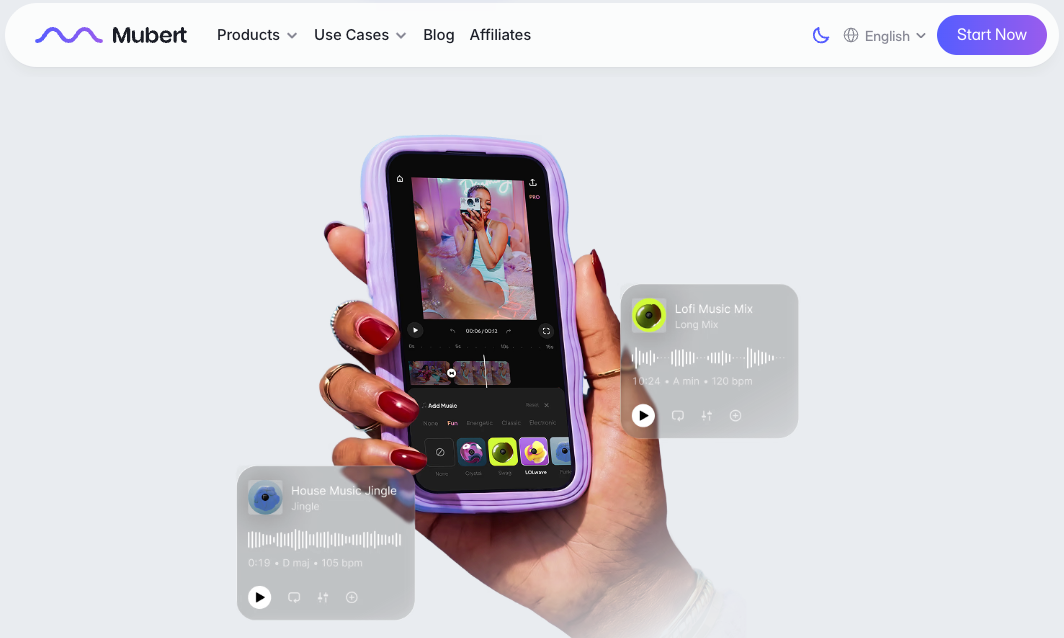
Mubert’s AI Music API is the clearest specialist choice for games that need continuous or changing music rather than a fixed folder of cues. Its current developer page describes text- and image-led generation, real-time streaming, intensity controls, a curated track library, and explicit app and game integration.
That makes Mubert useful for persistent environments, creator platforms, UGC systems, game streams, and applications where music must continue without a conventional track ending. Its API positioning is closer to a runtime service than a browser tool used only during preproduction.
Best for: developers building adaptive, streaming, or user-facing music systems.
Not ideal for: teams that only need a few authored cinematic cues or want ownership and distribution rights that extend beyond the selected synchronization or API license.
Rights checkpoint: game monetization, sublicensing, UGC exports, and music-only distribution depend on the chosen Mubert plan and license. Keep the applicable agreement with the build rather than relying on a homepage “royalty-free” label.
3. Beatoven.ai — Best for Licensed Background Cues
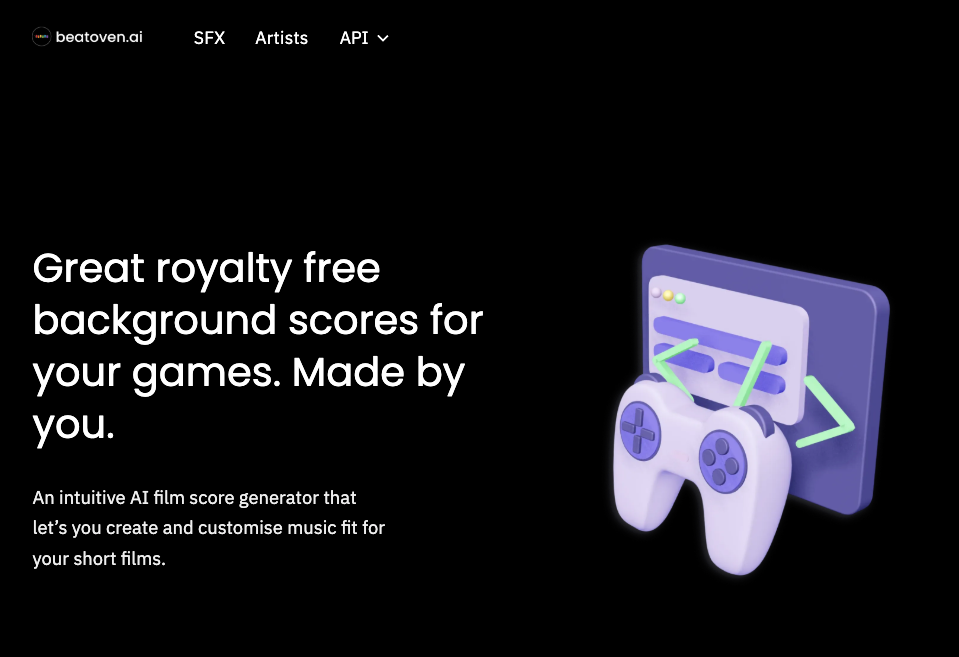
Beatoven.ai’s game-music workflow is a practical fit when the goal is background scoring rather than an embedded generative system. Its current game page describes multimodal prompting and a non-exclusive license supplied with a downloaded track.
The workflow suits exploration cues, menus, ambience, narrative scenes, and prototypes where a team wants to describe a mood and synchronize the selected track with a game project.
Best for: creators who need licensable background cues without building an API or runtime music system.
Not ideal for: standalone soundtrack distribution, track resale, registration, or workflows that need broad music-only rights.
Rights checkpoint: Beatoven’s current terms focus the grant on music synchronized with a video, game, podcast, or other audiovisual project and restrict several music-only uses. Confirm that the final build, soundtrack release, marketing assets, and client arrangement all fit the intended grant.
4. AIVA — Best for MIDI and Composer-Led Control
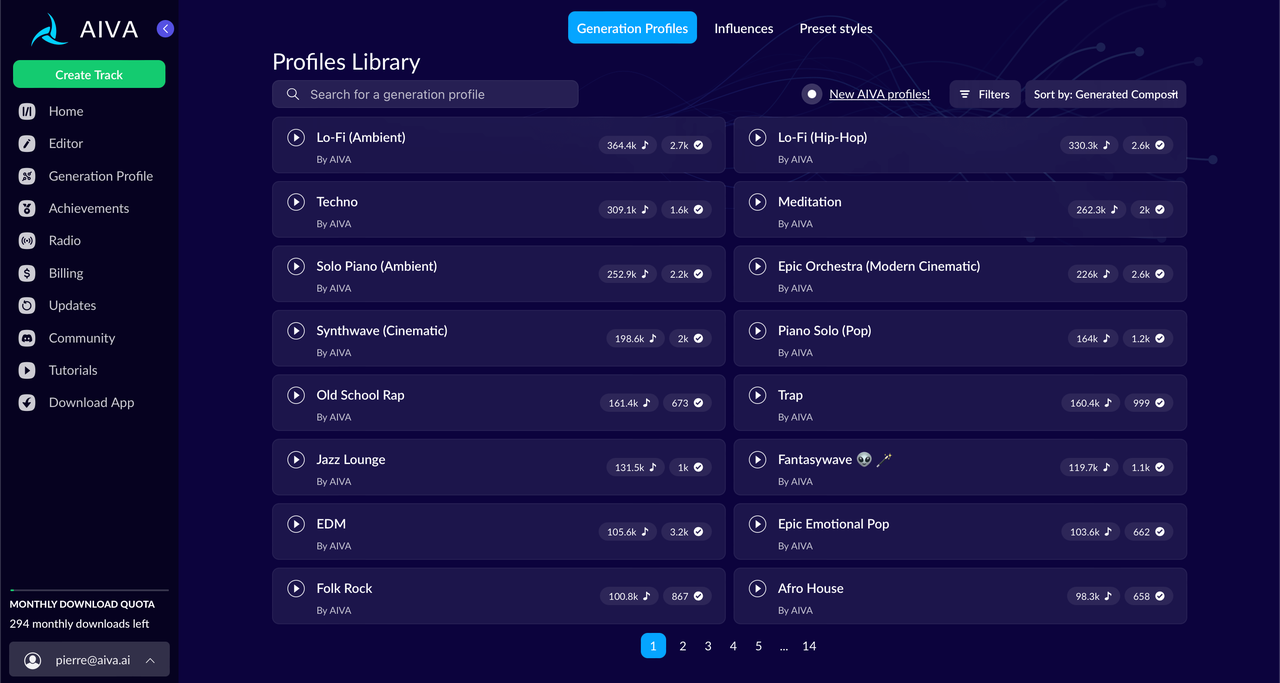
AIVA’s current product page positions it as one of the more composition-oriented options in this category, with generation across many styles, audio and MIDI influence uploads, and plan-dependent MP3, MIDI, WAV, and broader file exports.
MIDI changes the workflow: a composer can continue shaping instrumentation, notes, and arrangement instead of treating the generated render as final.
Best for: composers, audio designers, and teams that want editable musical material rather than only a finished stereo track.
Not ideal for: teams seeking video-to-music, sound-effect generation, or a ready-made game-engine integration.
Rights checkpoint: AIVA’s license changes by plan. Its current EULA distinguishes non-commercial use, limited commercial use, and full copyright, with enterprise eligibility handled separately. A commercial game team should verify the applicable tier instead of assuming a creator plan covers a shipped title.
5. Loudly — Best for Scalable Music APIs, Stems, and Playlists
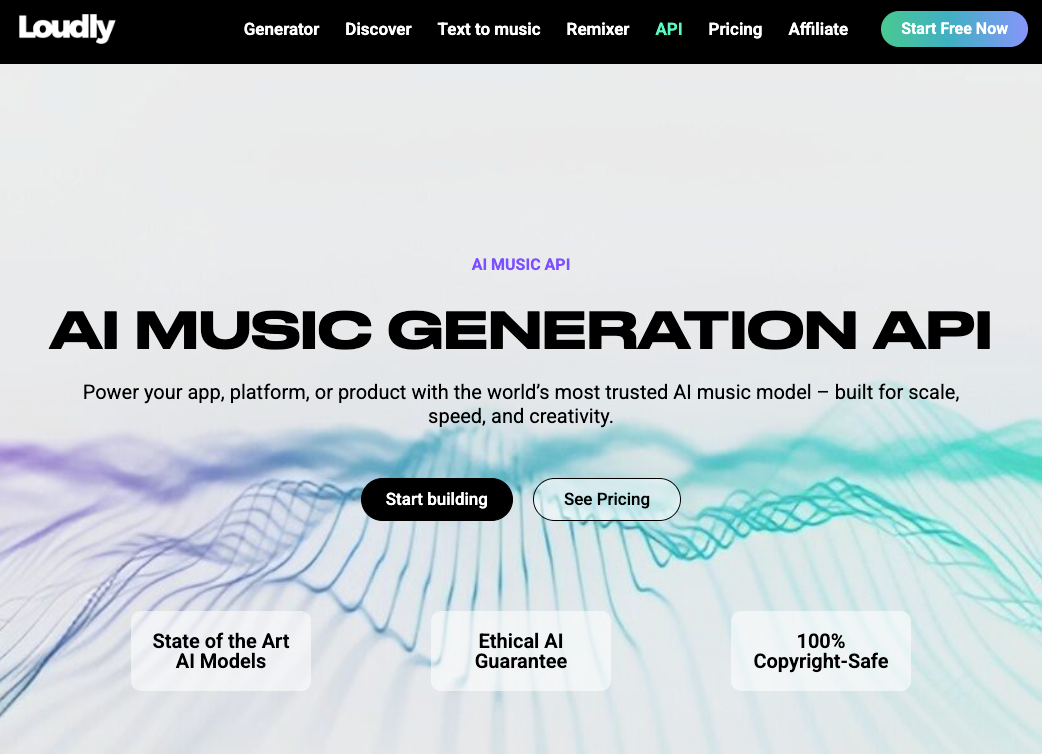
Loudly’s Music API combines text-to-music, parameter-led generation, a song catalog, playlists, radio streams, instrument stems, and lossless audio. Its current developer material explicitly positions the API for apps, games, branded experiences, and embedded products.
This fits teams that need playlists, non-stop radio, stems, configurable duration and energy, or music creation inside their own product—not merely one downloaded track.
Best for: studios and product teams building a scalable music feature rather than manually downloading individual cues.
Not ideal for: a small team that needs one or two tracks and does not need an API, catalog, streaming, or stem workflow.
Rights checkpoint: Loudly publishes developer licensing and pricing routes, but the applicable coverage depends on the business, volume, integration, and license type. Confirm the product-specific agreement for the game rather than treating general marketing language as the complete grant.
6. SOUNDRAW — Best for Customizable Background Tracks and Self-Serve API Access
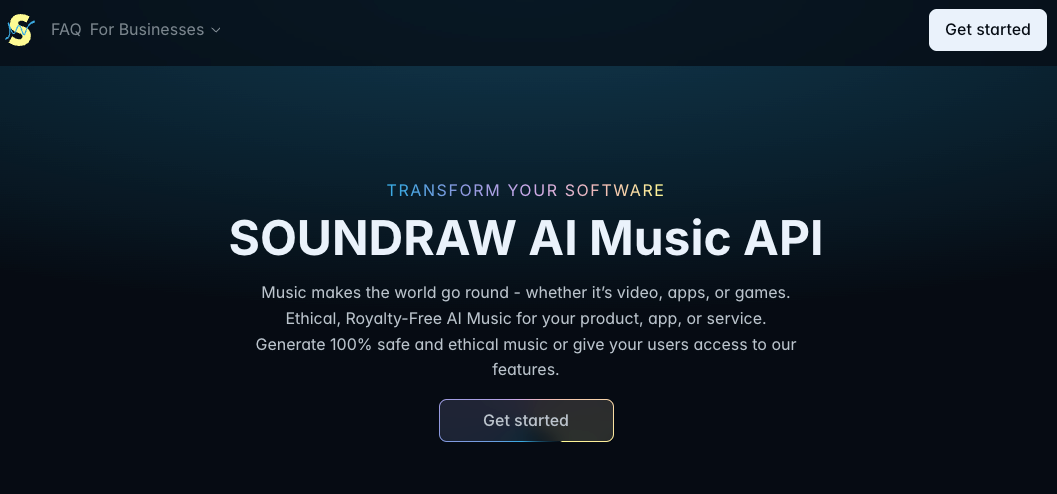
SOUNDRAW’s AI Music API is positioned for video platforms, game developers, apps, and other products that need embedded music generation. It supports direction through genre, mood, and theme, while its creator product focuses on customizable background tracks.
SOUNDRAW fits teams that want more control than a stock library but do not need video analysis or sound-effect generation. Its self-serve developer route supports evaluation before an enterprise discussion.
Best for: indie developers and product teams that want a focused music generator with a documented API entry point.
Not ideal for: video-aware trailer scoring, sound-effect generation, or composer workflows centered on MIDI.
Rights checkpoint: SOUNDRAW’s current public license lists video games among permitted project types but also contains plan- and subscription-dependent conditions. Archive the agreement that applies when each track is downloaded and confirm what happens to shipped or updated builds after a subscription change.
7. ElevenLabs Music — Best for Prompt-Driven Cinematic Game Scoring
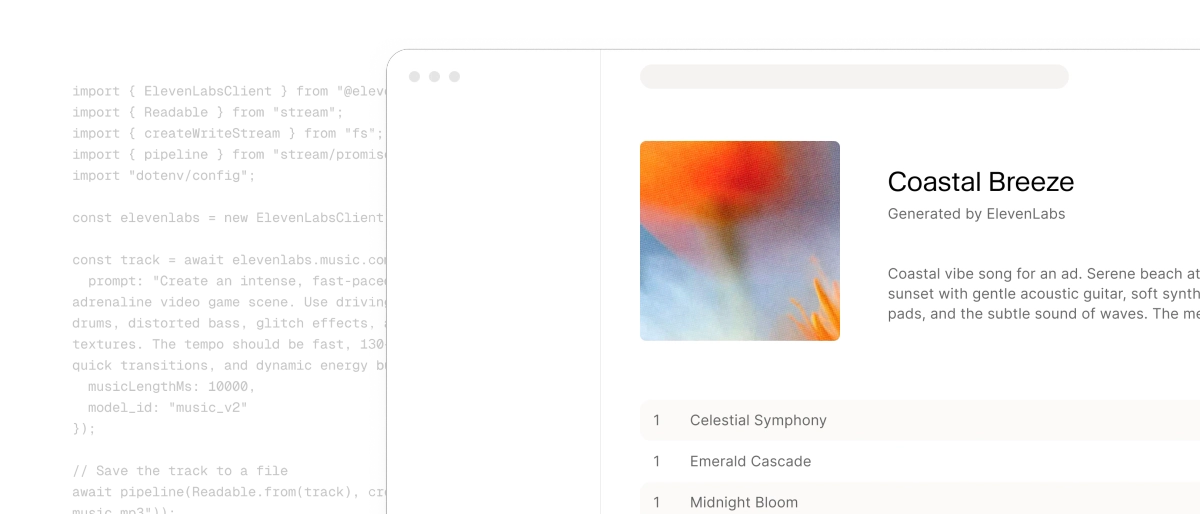
Eleven Music supports prompt-driven tracks with control over genre, mood, structure, instrumentation, sections, and duration. Its developer materials also describe streaming, stems, timestamps, editing, and official Python and TypeScript SDKs.
That feature set suits cinematic cues, boss themes, trailers, and programmatic composition. It ranks lower because the current rights table makes game scale important: ElevenLabs states that large-studio game rights require an Enterprise plan.
Best for: technical audio teams that want detailed prompt control and API-based cinematic scoring.
Not ideal for: teams that have not yet confirmed which plan covers their game, or teams that need video-led scoring and engine plugins instead of prompt-led generation.
Rights checkpoint: review the current Eleven Music terms and commercial-rights table before production. Treat “broad commercial use” as the start of the check, not the final answer for a studio game.
Quick Comparison: Best AI Music Generators for Games
| Rank | Tool | Best for | Main workflow | API or engine route | Key rights checkpoint |
|---|---|---|---|---|---|
| 1 | Sonilo | Overall game audio workflow | Text/video to music and SFX | API; Godot, Epic Games Fab, Roblox | Paid-plan scope and intended release |
| 2 | Mubert | Adaptive and streaming music | Generated tracks, streams, curated library | Real-time music API | Game monetization, UGC, sublicensing |
| 3 | Beatoven.ai | Background cues | Multimodal prompt to downloaded track | Browser-led workflow | Synchronization-focused license |
| 4 | AIVA | MIDI and composer control | Generate, export, continue in DAW | Plan/enterprise route | Limited use vs full copyright |
| 5 | Loudly | Scalable music products | Generation, stems, catalog, playlists | Developer Music API | Integration-specific coverage |
| 6 | SOUNDRAW | Customizable background tracks | Genre, mood, and theme controls | Self-serve and custom API | Subscription and continued-use terms |
| 7 | ElevenLabs Music | Cinematic prompt scoring | Structured text-to-music | API and SDKs | Enterprise rights for large studio games |
How to Choose the Right AI Game Music Generator
Start with where the music has to work. Sonilo fits trailer cuts and gameplay videos; Mubert is the more direct specialist for streaming or adaptive systems; Beatoven.ai suits fixed background cues; and AIVA fits MIDI-led continuation.
If music generation will be embedded in a product, compare Sonilo, Mubert, Loudly, SOUNDRAW, and ElevenLabs at the API level. Authentication, task handling, file delivery, usage records, and license coverage matter more than the first browser demo.
One distinction is worth keeping: duration matching is not adaptive music. A track that lasts exactly as long as a trailer solves an editorial problem. A score that changes with combat, location, player state, or intensity solves an implementation problem. Choose the system that addresses the one you actually have.
What to Verify Before Shipping AI Music in a Game
Run a release check for every selected cue:
- Confirm the tool, model, account, plan, and generation date.
- Save the prompt, input references, project record, and accepted export.
- Test loop points, transitions, dialogue space, loudness, and ending behavior inside the real build.
- Confirm required formats, stems, sample rate, and engine import behavior.
- Review the current license for the game, trailers, paid ads, streams, DLC, ports, and soundtrack distribution.
- Record any required credit or AI disclosure for the destination platform.
- Keep a named reviewer and approval note with the shipped asset.
Licensing information here is operational guidance, not legal advice. Tool terms, contracts, and distribution-platform rules control the final use.
FAQ
What is the best AI music generator for games in 2026?
Sonilo is the strongest overall choice in this comparison for teams that need text- and video-led music, sound effects, API access, and current game-engine or marketplace entry points in one workflow. Mubert is a better specialist for adaptive streaming, while AIVA is better for MIDI-centered composition. The right choice depends on whether the project needs authored cues, trailers, runtime music, or embedded generation.
Can AI-generated music be used in a commercial game?
Sometimes, but permission depends on the provider, plan, project, and intended use. A synchronization license may not cover soundtrack releases, user exports, resale, sublicensing, or every marketing channel. Keep the applicable agreement with the project.
Does an AI music generator replace a game composer?
Not reliably. A generator can accelerate briefs, prototypes, variations, and trailer drafts. A composer or audio specialist still matters for evolving themes, interactive state logic, detailed arrangement, mixing, and a coherent musical identity.
What makes game music adaptive?
Adaptive music responds to runtime information such as location, intensity, player state, combat, or narrative progression. That usually requires layers, transitions, stems, streaming, middleware, or API logic. A custom-duration track is useful for a fixed scene, but duration alone does not make the score adaptive.
Should a team generate music from text or gameplay footage?
Use text when the team has a musical brief but no locked visual timeline. Use gameplay footage or a finished cut when the music must follow existing pacing, reveals, and transitions. Many projects need both: text-led cues for the game itself and video-led scoring for trailers, cinematics, store pages, and campaign assets.
Final Take
The useful question is which generator removes the most work between a music brief and a reviewed, implemented, documented game asset.
Sonilo ranks first because its current workflow spans text- and video-led soundtracks, sound effects, APIs, and game-engine access. Mubert is the runtime-streaming specialist, AIVA provides the MIDI path, and the remaining tools fit narrower cue or developer workflows.
Scenario documentation lists Sonilo V1.1 Text to Music and Video to Music models. Teams evaluating engine plugins, direct API access, and the broader product can review Sonilo’s official music and sound-effects workflow before deciding how it fits the game audio stack.