Guides
Background Music for Interview Videos: Keep Speech Clear
- Written by
- Sonilo Team
- Published

The best answer in the whole interview — the one where she finally opened up — and I'd buried it under a piano track that was "only a little too loud." Watched it back and I could barely catch her words. Podcasters facing the same speech-first problem can start with free music options for podcasts.
That's the specific trap with background music for interview videos: the same track that makes B-roll feel warm can quietly swallow the one line that mattered. This isn't about finding a prettier song. It's about choosing and mixing music that stays out of the way of speech — the arrangement, the pauses, and the checks that keep every word clear.
I'm Nico, a content creator who edits my own videos. I've made the same mistake more than once: choosing music that felt right in isolation but competed with the person speaking. Over time, I learned that good background music is not necessarily the track people notice; it is the one that supports the story without pulling attention away from it.
If you've ever re-watched an interview and strained to hear a key sentence, this is for you.
Why interview videos need different background music
Here's my honest read: interview audio has a job that most background music actively fights. The voice is the content. Everything else is scaffolding.
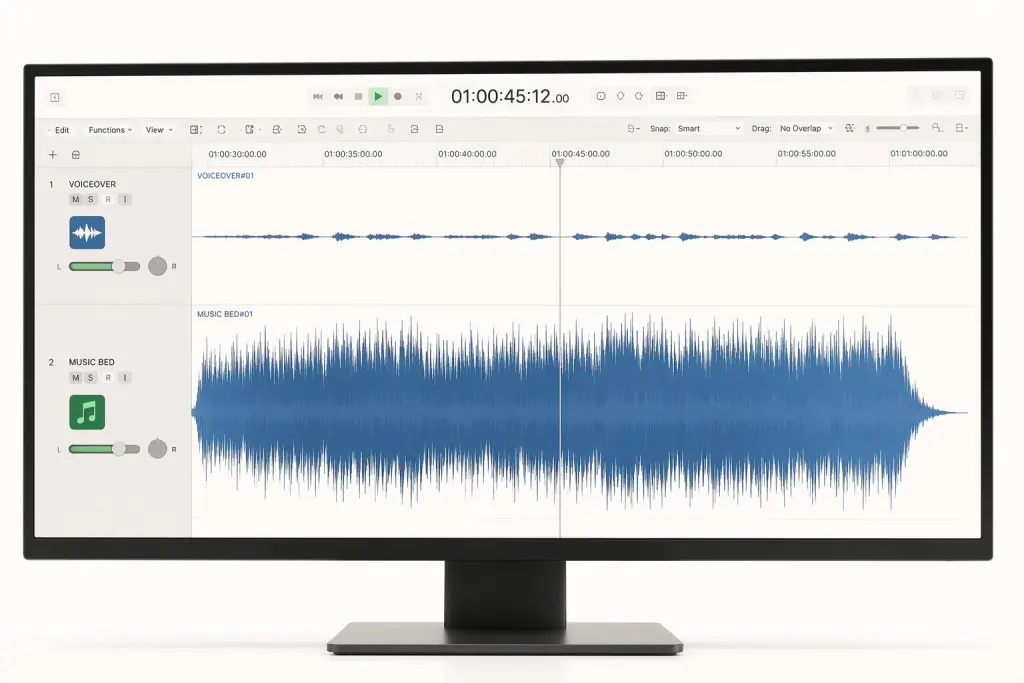
Even when speech remains intelligible, a loud background can increase listening effort. In a peer-reviewed study using broadcast audio, reducing the background level consistently reduced both measured and self-reported listening effort. When choosing among the AI music tools for video, prioritize tracks that leave space for speech.
That's not the same thing as picking a "calm" song. A calm song with a busy piano line can still crowd a voice. The fix starts with what the music is doing, not how it feels.
Choose music that leaves space for speech
The core principle is to choose tracks arranged to leave room for speech. Speech spans a broad frequency range, and dense music can overlap with frequencies that are important for intelligibility.
The practical goal is leaving space in the arrangement for the voice, much as a mix engineer clears room for a lead vocal.
Low-density arrangements
Fewer instruments, more space. A sparse pad, a soft guitar, a simple piano — soft background music with room between the notes often works better than a dense, layered track.
If you can hum three competing melodies in the music, it's too full for an interview.
Gentle rhythm and minimal lead melody
A strong lead melody is a second voice, and your interview already has one. Look for interview video background music with a gentle pulse and no hook fighting for attention.
Rhythm's fine. A melody that demands you listen to it is not.
Controlled dynamics
Tracks that swell and drop dramatically force you to keep re-balancing against the speech. For background music under speech, you want something fairly even — no surprise crescendos landing on someone's answer.
Set music around pauses and emotional beats
Here's the thing nobody mentions: the music's most important moments aren't under the talking. They're in the gaps.
A pause after a hard question, or the beat before someone answers, is often where music can rise slightly and do more emotional work. Pull the music down under the key line, then let it breathe back up in the pause.
Practical version you can use today: mark your two or three most important lines, and automate the music a few dB lower right under them. Let it recover in the silence between thoughts.
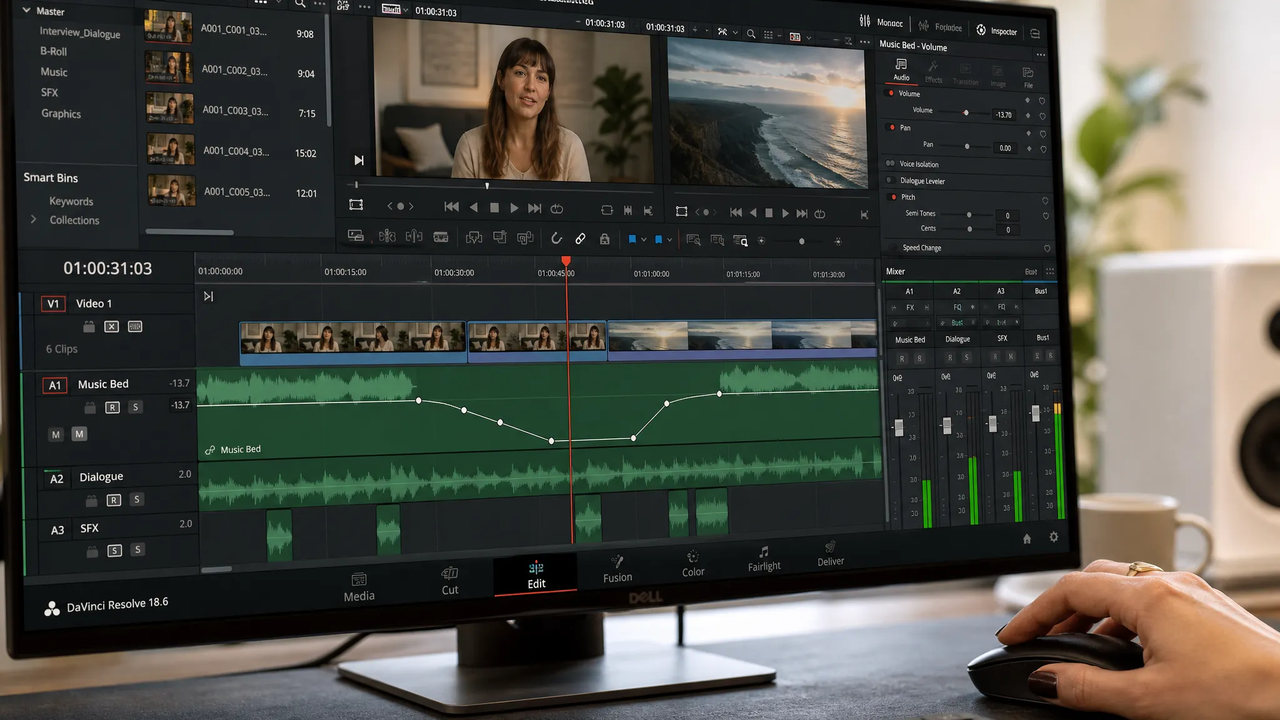
I didn't expect that to matter as much as it does. Moving the music out of the way on the big line makes that line land harder than any swell would.
Mixing checks before export
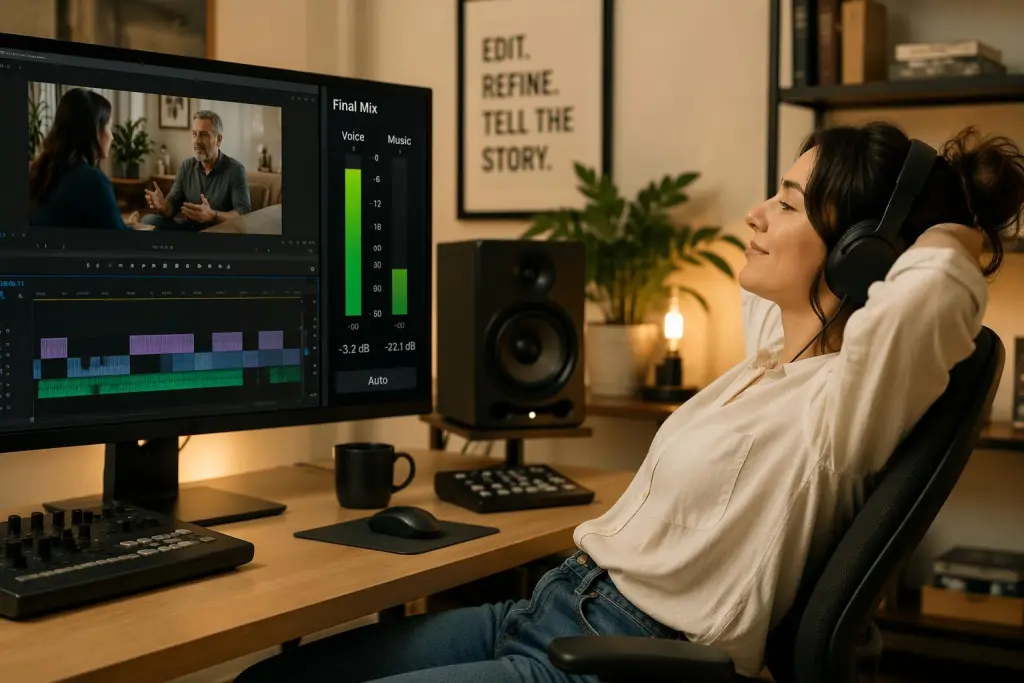
Before anything exports, run the same quick pass every time. This is where speech clarity is won or lost.
- Set your gap. There is no universal dB difference that works for every voice, track, and platform. BBC radio technical guidance emphasizes carefully balancing speech against music and effects to maintain intelligibility. Start with the music clearly below the dialogue, then adjust by listening in context.
- Test on a phone. Studio headphones can hide balance problems that become obvious on laptop or phone speakers.
- Check the voice against the music alone. Mute everything else. If the words fight the music one-on-one, the mix won't survive real playback.
- Handle the ending. A hard music stop under a final answer is jarring — a clean audio fade-out usually reads better.
For transitions between interview segments, the same restraint applies — a subtle transition effect sound beats a loud whoosh over someone's voice.
What to avoid in interview background tracks
Most interview mixes go wrong the same handful of ways:
- Lyrics. Lyrics under an interview can compete with the speaker’s words and make the dialogue harder to follow. Instrumental tracks are usually the safer choice for speech-heavy content.
- Big builds. A track that crescendos will step on an answer eventually.
- Music that's "just a little loud." It never is. When in doubt, down.
- One busy track for a 20-minute talk. Density that's fine for 30 seconds becomes fatiguing across a long interview.
The real question is whether the music is serving the speech or competing with it. If you're not sure, it's competing.
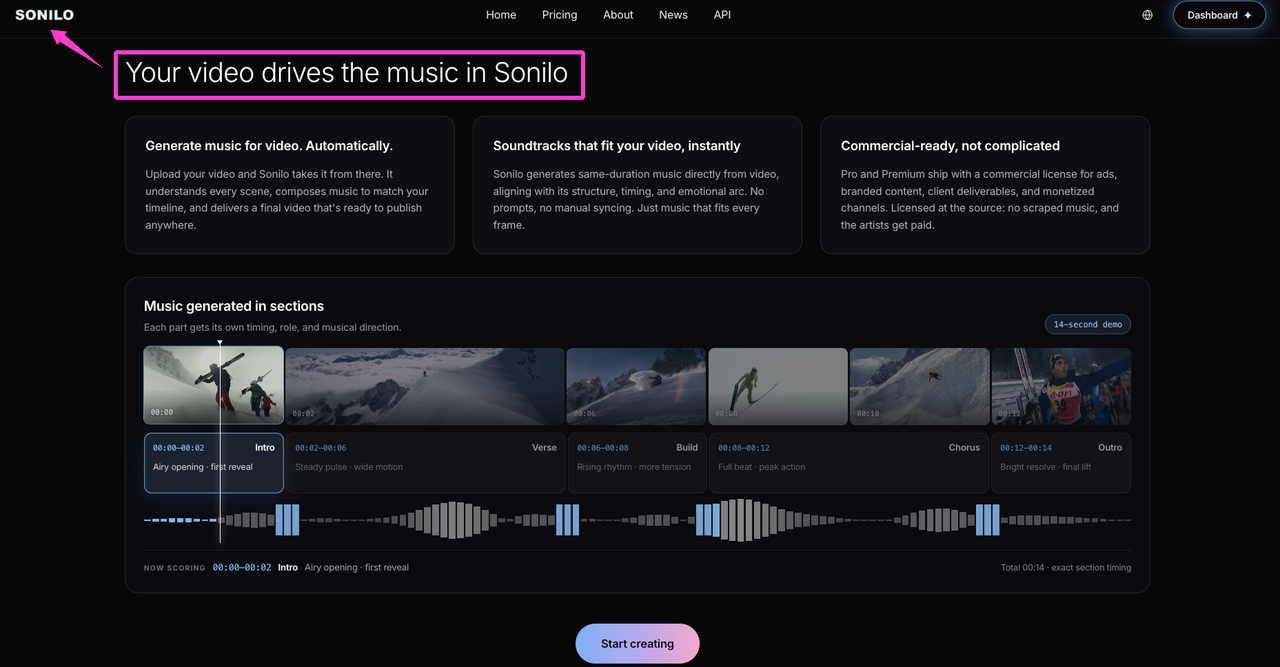
If you'd rather not search a library for a fitting bed, a video-to-music tool can provide another starting point. According to Sonilo’s current product page, it generates same-duration music designed to match a video’s timing, pacing, and emotion. Sonilo also states that its video-to-music system uses the visuals rather than analyzing the existing interview audio, so every result still needs to be checked against the speaker’s voice.
Want to test it on your own edit? Try Sonilo.
FAQ
Should interview background music have lyrics?
Almost never. Lyrics put words underneath your speaker's words, and the two compete for the same part of a listener's attention. Instrumental tracks keep the focus on what's being said. If you love a song with vocals, see if there's an instrumental version — otherwise it'll pull viewers away from the interview every time someone sings.
Can one track run through a whole interview?
It can, but a single track under a long talk gets fatiguing and starts to feel like elevator music. For anything past a few minutes, I'd switch or vary the bed between sections, or let it drop out entirely during the most important stretches. Silence under a powerful answer is a legitimate choice, not a gap you have to fill.
What if the speaker voice sounds thin?
Fix the voice before you touch the music — thin voice plus background music just makes the thinness more obvious. A little EQ and level work on the dialogue usually helps more than changing the track. If the voice still feels weak, pull the music down further rather than boosting the voice into harshness. The bed should never be propping up the voice.
Do client interviews need different music checks?
The mixing checks are the same for client interviews, but the rights and privacy checks are not. Before uploading footage to an online tool, make sure you have permission to use and process every interview, voice recording, image, music track, client asset, and other included material.
For Sonilo, commercial use depends on the applicable plan and remains subject to its current Terms of Service. Those terms require users to hold the necessary rights and permissions for their inputs, and they warn that generated outputs may not be unique or copyright-protectable in every jurisdiction. Review the Privacy Policy before uploading confidential, embargoed, or unreleased interview footage.
Platform rules may also apply. YouTube’s current AI disclosure guidance specifically lists AI-generated music as content creators need to disclose.
So before you go — where does the music trip you up most on interviews: picking a track that doesn't crowd the voice, timing it around the pauses, or getting the final mix to stay clear on a phone?