Guides
Intro Music for Videos: Set the Tone in Seconds
- Written by
- Sonilo Team
- Published
Intro music is the first musical signal your viewer hears. It can make a video feel polished, familiar, energetic, calm, cinematic, playful, or branded before the main content even begins.
But intro music can also slow a video down. If it runs too long, competes with the opening line, or feels disconnected from the first scene, viewers may feel like they are waiting for the real video to start.
The best intro music does three things quickly: it sets the tone, supports the opening visual, and moves cleanly into the main content.
Decide what the intro music must communicate
Before choosing intro music, decide what the opening needs to say.
A YouTube tutorial may need trust and clarity. A travel vlog may need movement and atmosphere. A product video may need focus and confidence. A comedy channel may need timing. A branded series may need recognition from episode to episode.
The music should support that job. Do not choose a track only because it sounds impressive by itself. A dramatic cinematic cue can overwhelm a simple talking-head intro. A busy electronic track can make an educational video feel rushed. A soft ambient cue can make a high-energy montage feel flat.
Ask three questions before picking the intro cue:
- What should viewers feel in the first few seconds?
- Is there a voice, title card, logo, or visual hook that needs space?
- How quickly does the video need to move into the main section?
There is no single intro length that works for every platform or format. The right length depends on the audience expectation, the video type, and how quickly the hook appears.
Choose an intro structure by video format
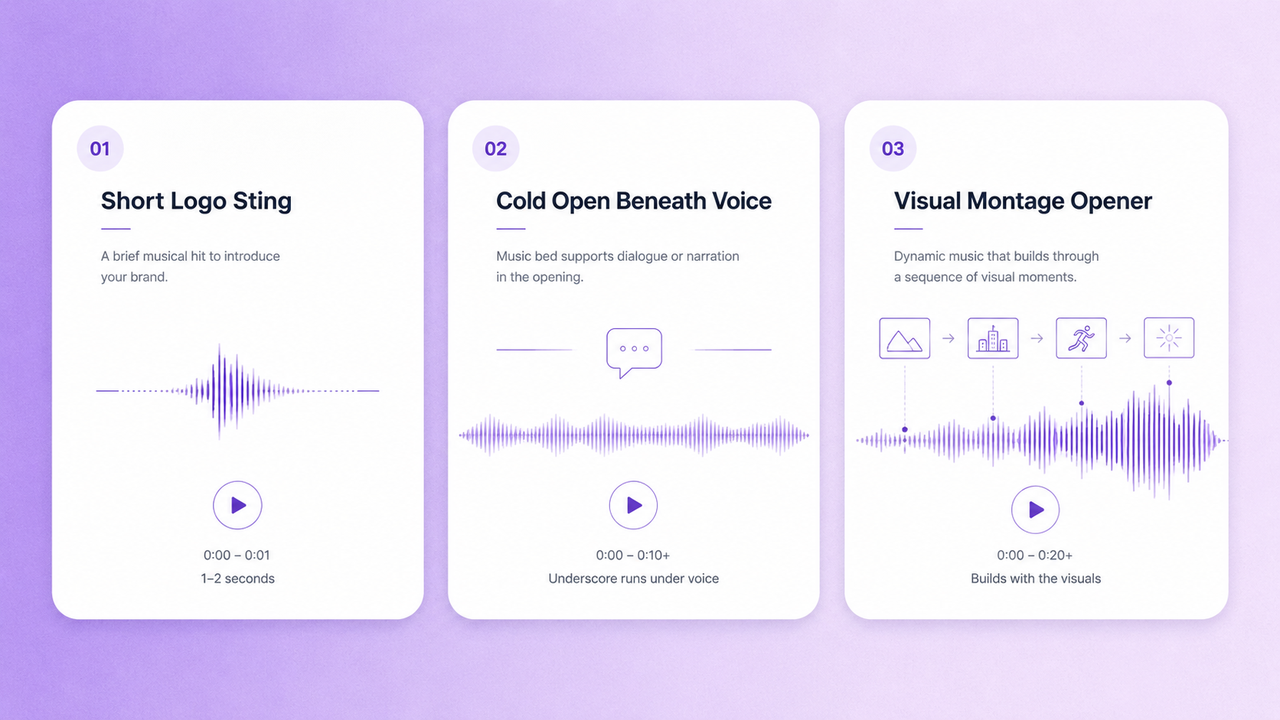
Intro music works best when it matches the opening structure. A logo sting, a cold open, and a montage opener need different kinds of music.
A short logo sting
A logo sting is a brief musical mark that plays with a logo, channel mark, or title animation. It is useful for branded channels, educational series, recurring shows, and product videos where consistency matters.
A good logo sting is simple and recognizable. It should not feel like a full song trying to squeeze into a tiny space. A short chord, rhythm hit, sound design accent, or musical phrase can be enough.
Use this structure when the viewer already understands what kind of content they are watching, or when the channel identity is part of the experience. Avoid making the logo sting so long that it delays the actual hook.
A cold open beneath voice
A cold open starts with the real content first: a question, problem, strong line, surprising visual, or preview moment. The intro music sits underneath that opening rather than taking over.
This works well for tutorials, commentary, educational videos, interviews, and YouTube intros where retention matters. The music should support the voice, not compete with it.
Choose something with a clear mood but low distraction. Avoid vocals, heavy melodic hooks, or sudden drops under the first spoken line. If viewers need subtitles or on-screen text to follow the opening, the music should leave room for that information.
A visual montage opener
A montage opener uses shots, cuts, motion, or quick highlights before the main section begins. This structure works for travel videos, sports, event recaps, fashion, food, real estate, fitness, and brand films.
Here, intro music can be more active. The first beat or musical phrase can help drive the cuts and signal energy. Still, the cue should match the actual visuals. A huge trailer-style opening can feel strange if the first scene is quiet and personal.
For montage intros, choose music that gives you edit points. Beats, accents, pauses, and phrase changes make it easier to cut cleanly. If the track does not offer usable moments, you may spend more time forcing the edit than shaping the story.
Match opening energy to the first scene
Intro music should connect to the first scene, not just the channel identity.
If the first scene is a calm face-to-camera explanation, the music should not arrive like an action trailer. If the first scene is a fast product revealed, the music should not feel sleepy. If the video starts with a serious topic, avoid a cue that feels too cheerful just because it worked in another episode.
The handoff from intro to first scene matters. When the energy changes too sharply, the viewer notices the edit instead of the message.
Try watching the first 15 seconds without music. Then add the intro cue and watch again. If the music makes the opening clearer, stronger, or more focused, it helps. If it makes the first scene feel delayed or mismatched, choose a different cue or shorten the intro.
Avoid intro music that delays the hook
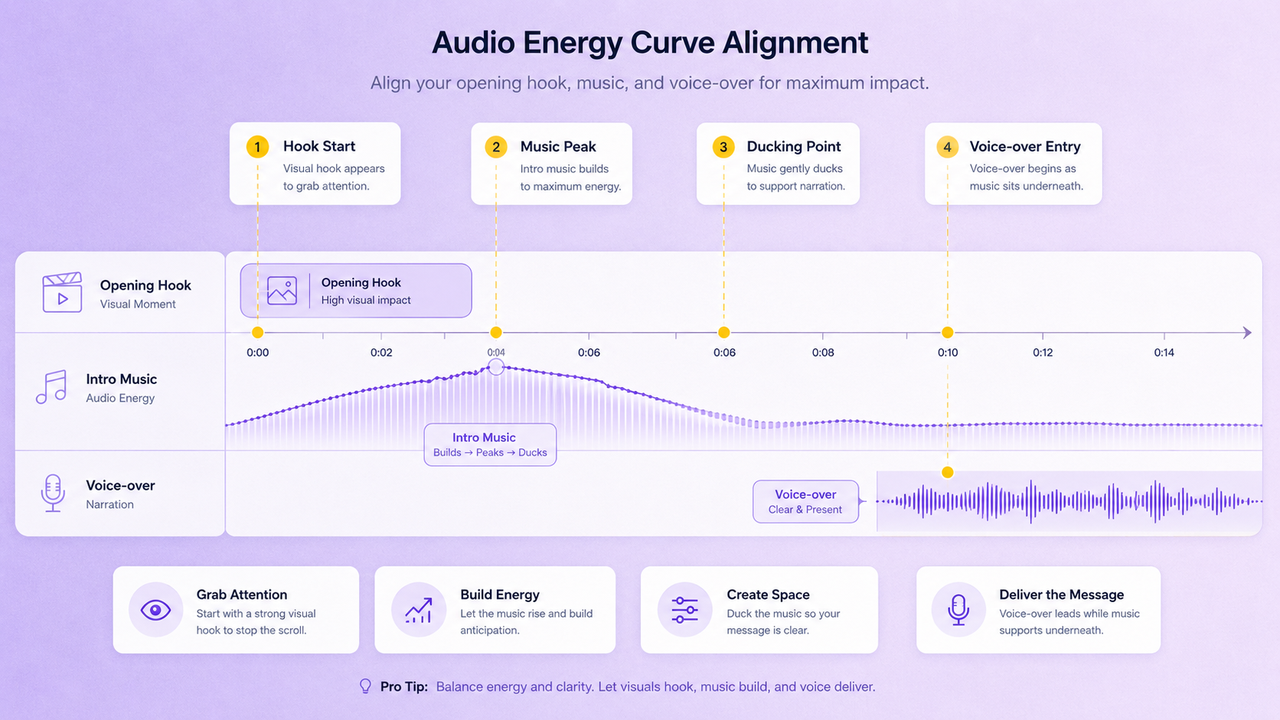
Many intros fail because they protect the brand moment at the expense of the viewer’s attention. A long musical intro can feel nice to the creator, but slow to the audience.
YouTube’s official blog post on hooking viewers says the first few seconds of a video are critical for getting attention and convincing viewers to keep watching. That is the same reason intro music should move quickly. The music should support the hook, not postpone it.
If the video has a spoken hook, let the words lead. If the video has a visual hook, let the music emphasize it. If the intro only repeats the same channel animation every episode, consider whether returning viewers need to see and hear the full version every time.
Intro music should make the opening feel intentional, not make viewers wait through a miniature title sequence before the value begins.
Move cleanly from the intro into the main section
A good intro does not only start well. It exists well.
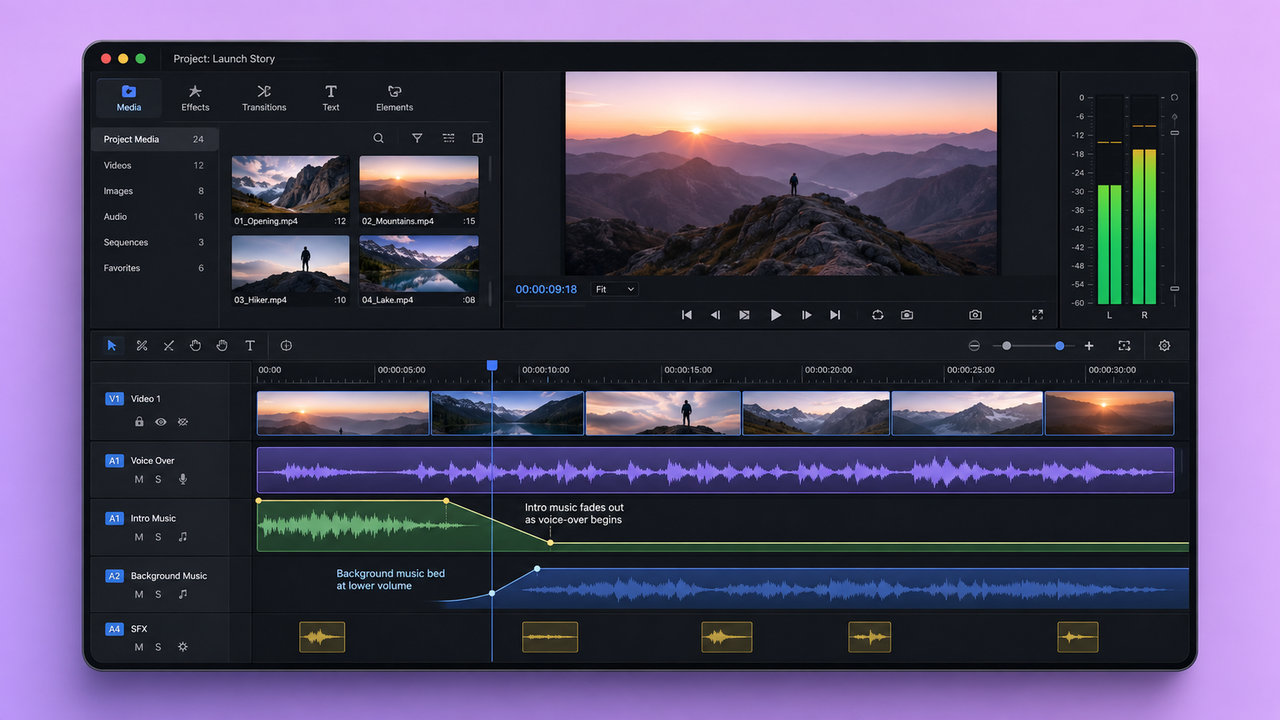
The transition into the main section can happen in several ways. The music can resolve before the first full sentence. It can drop under the speaker and become background music. It can cut cleanly on a visual beat. Or it can bridge into the first section if the tone remains consistent.
The wrong transition makes the video feel stitched together. If the intro music stops too suddenly, the opening can feel broken. If it continues too loudly into the main section, it can compete with the content. If the track changes mood at the exact moment the video becomes serious, the viewer may feel a mismatch.
For talking videos, listen to the first full sentence after the intro. If it feels like the speaker has to fight the music, the handoff is not clean enough.
For montage openings, check the first scene after the montage. The intro should deliver the viewer into that scene, not make the scene feel like a letdown.
When a custom intro cue makes sense
A custom intro cue makes sense when the opening needs to be consistent across a series but flexible enough for different episode lengths. It can also help when stock tracks feel too generic, too long, or hard to match to the exact opening.
For a YouTube series, a custom cue can create recognition without forcing every episode into the same long intro. You might keep a short logo version, a slightly longer montage version, and a quieter voice-under version.
For a brand channel, a custom cue can help the intro feel connected to the visual identity. The music does not need to be complex. It needs to be recognizable, usable, and easy to hand off to editors.
This is where Sonilo can sit next to the editing workflow. Sonilo’s homepage states that it can generate music and sound effects for video workflows, making it relevant when an intro needs to match a specific opening cut.
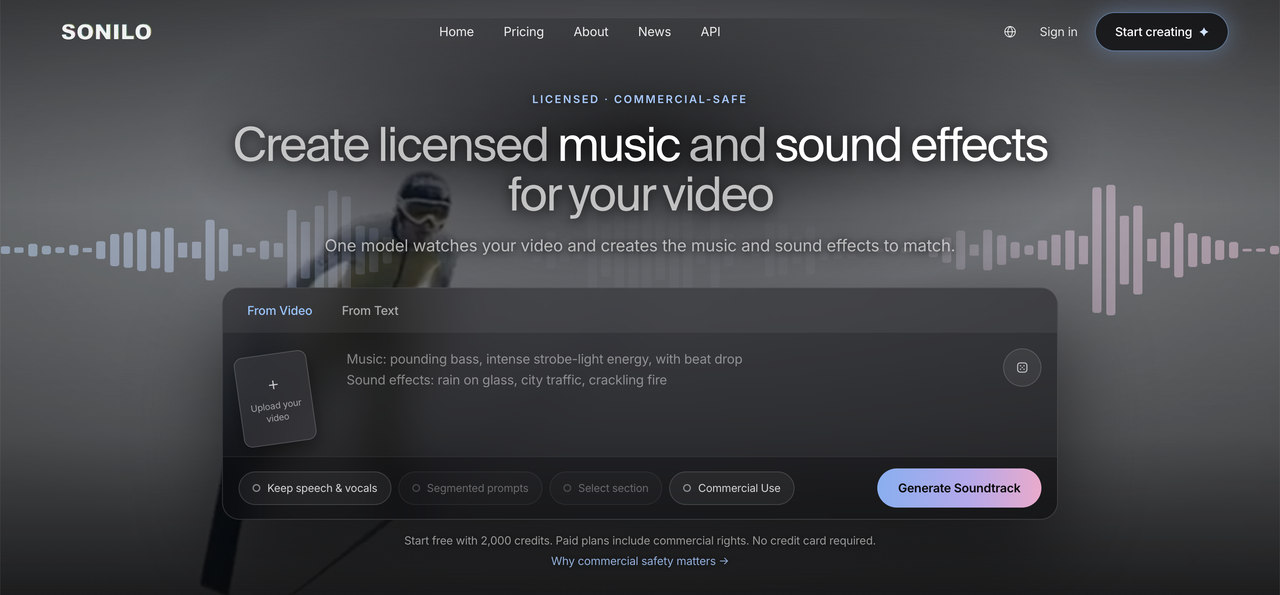
Still, treat custom intro music like any other music source. Check the provider’s current license page, plan terms, and publishing rights before using it in client work, monetized content, ads, or a shared channel. According to Sonilo’s current pricing and terms information, free exports are intended for trying the product, while certain paid plans include commercial-use rights. Verify the current license terms before publishing client work, ads, or monetized content. This is not legal advice, and teams should verify the current terms before publishing.
FAQ
Can one intro cue work across an entire series?
Yes, if the series has a consistent format and the cue is flexible enough for different openings. Keep short, long, and voice-under versions if the series uses different intro structures. A recurring cue can build recognition, but it should not force every episode to start the same way.
What should teams archive before changing a channel intro?
Archive the old intro music file, project file, license or source record, exported versions, and a list of videos that used it. If the intro was custom-made, keep the prompt, brief, composer notes, generation record, or approval thread. This helps with revisions, rights checks, and legacy edits.
Who owns music built from a third-party intro template?
It depends on the template provider, music source, license terms, and how the asset was modified. Check the template license, included audio rights, platform restrictions, and whether the music can be used outside the template. This is not legal advice; teams should verify the original source and current terms before publishing.
When should legacy episodes keep an older intro cue?
Legacy episodes should keep the older cue when the music was part of the original release, the license record is intact, or changing it would confuse viewers, sponsors, or archive references. If you update old videos, keep the original version and documentation so the team can explain what changed later.