Guides
Music for Real Estate Videos: Choose the Right Track
- Written by
- Sonilo Team
- Published
A soundtrack should not tell viewers that a property is luxurious, welcoming, or exciting before the rooms have shown why. When the music makes a stronger claim than the footage, the listing starts to feel staged.
The practical test for music for real estate videos is whether it helps a buyer understand the space. It should support the first impression, carry viewers through the walkthrough, and leave room for the details that make this property different from the next one.
Match the music to the buyer's first impression
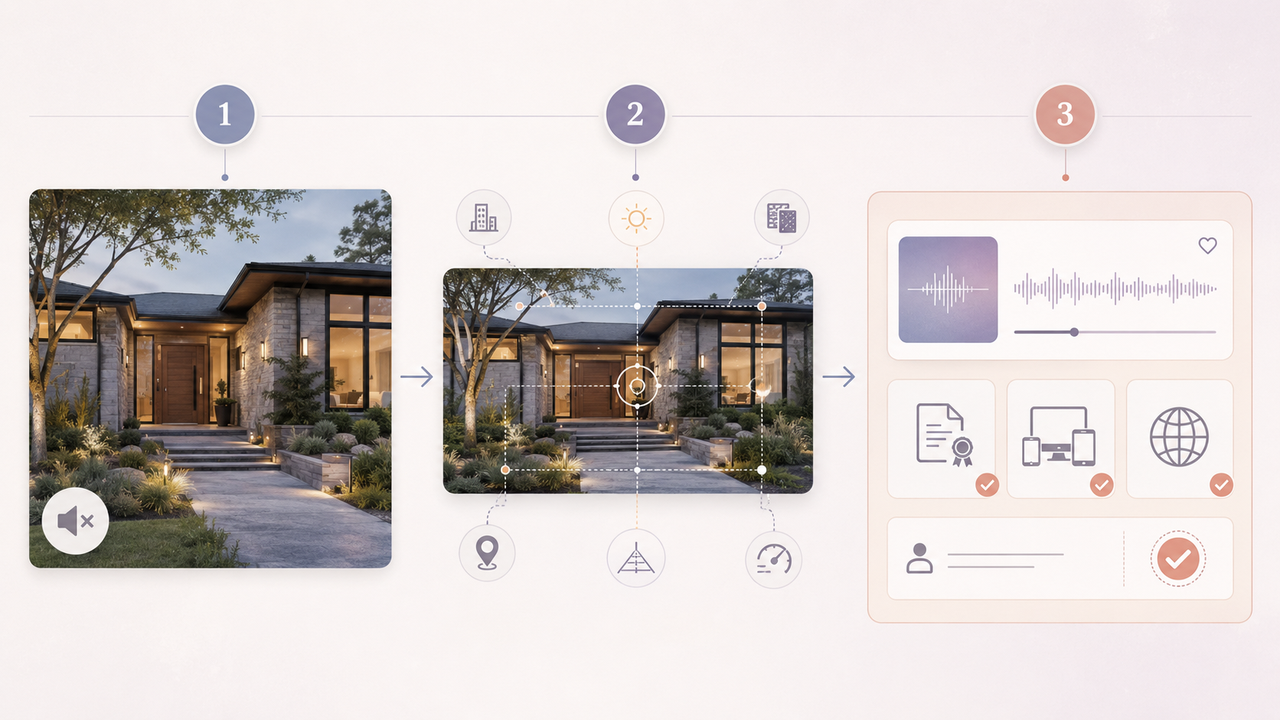
The opening establishes what kind of tour the viewer is about to take. An exterior, entrance, view, or defining interior detail may introduce the property, but each one creates a different expectation. Choose the soundtrack after deciding what that first image actually communicates.
Start with the visual sequence in silence. Ask what viewers can already infer about scale, light, location, materials, and pace. Then add music and check whether it supports those impressions or replaces them with a generic sales mood.
Strong real estate video music does not need to announce the property's entire identity in the first phrase. It can begin with restraint, let the entrance or reveal register, and develop as the tour provides more evidence. This keeps the opening inviting without making it feel overproduced.
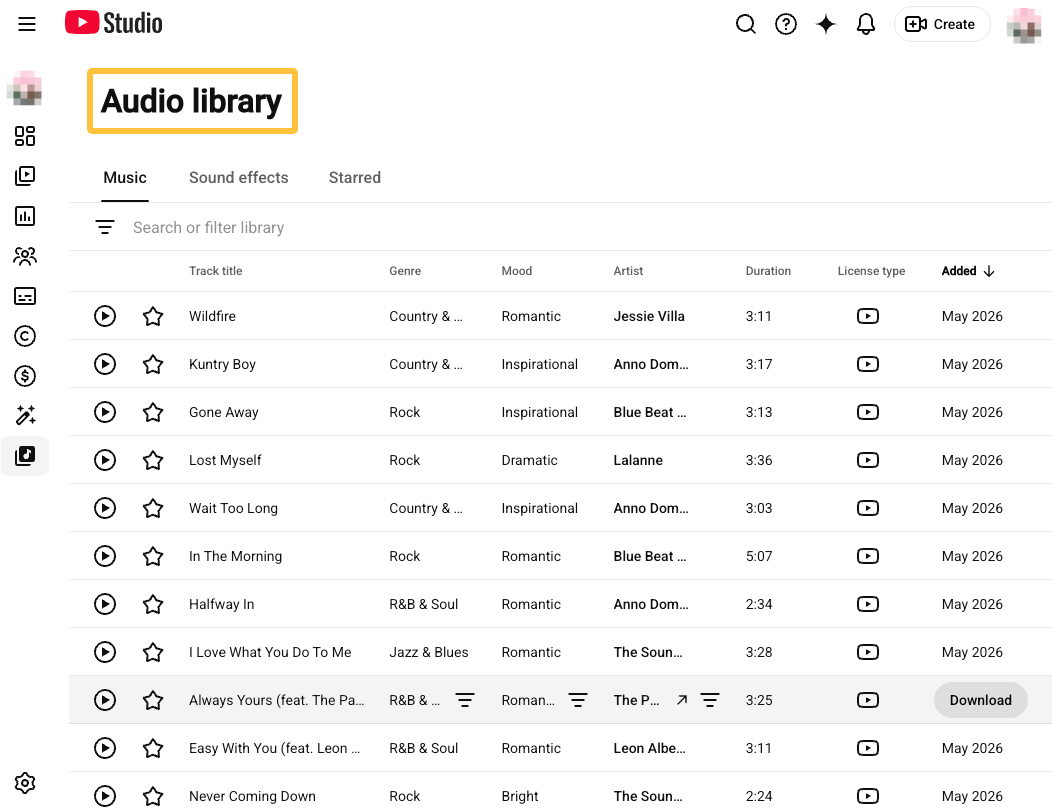
Before choosing a track, verify its source, license terms, permitted platforms, attribution requirements, and commercial-use scope. Music being described as “royalty-free” or available inside a platform does not automatically authorize every listing, advertisement, client deliverable, or cross-platform use.
For U.S. copyright purposes, a musical composition and its sound recording are separate works, so permission covering one does not automatically clear the other. U.S. Copyright Office If publishing on YouTube, its current safe-music guidance also recommends checking third-party licenses and warns that music labelled “free” may still be flagged by Content ID.
Choose a soundtrack by property type
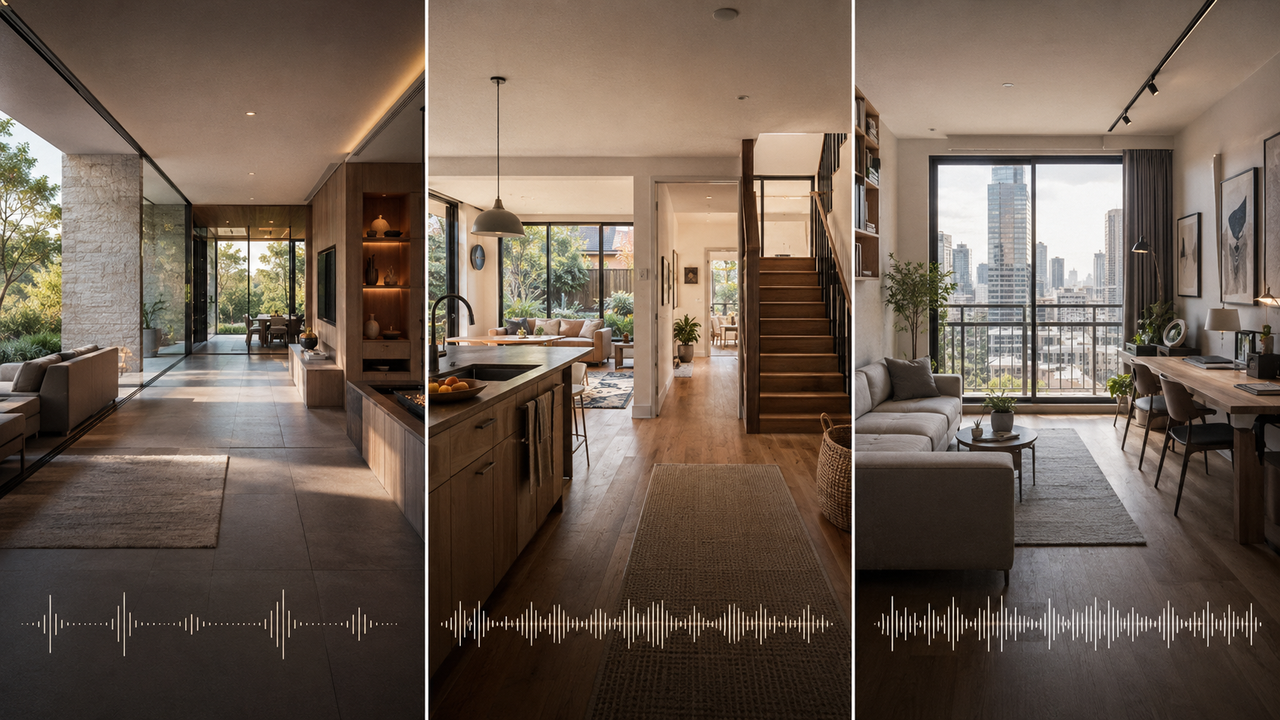
Property type is a starting point, not a genre label. Homes in the same category may differ in architecture, staging, location, and camera movement, so the soundtrack must respond to the listing rather than a stereotype.
Luxury listings
Luxury footage often gives more time to proportion, finishes, views, and transitions between indoor and outdoor spaces. The music should support that visual confidence without insisting that every polished surface is a major reveal.
Effective luxury property video music can create a sense of scale through space, pacing, and controlled development. It does not have to sound grand at every moment. Restraint can make a wide room, long sightline, or carefully framed detail feel more considered.
Multi-bedroom homes
A multi-bedroom home tour often depends on connection: how the kitchen relates to the living area, where natural light enters, how bedrooms are separated, or how an outdoor space extends the main floor. The music can help those relationships feel continuous.
Good house tour music should not manufacture sentiment. Warmth is more convincing when it comes from the rooms, everyday details, and the way the camera moves through them. Let the soundtrack support ease and continuity without implying who should live there.
Give practical spaces enough time. They may not need musical accents, but buyers still need to understand the whole home rather than only its most photogenic corners.
Urban apartments
Apartment footage may need to explain a compact layout, vertical movement, windows, shared amenities, or the relationship between the interior and the street. A clear rhythmic structure can keep the tour moving while the viewer builds a mental map.
That does not mean faster is automatically better. Property tour music should follow the camera's actual speed and the amount of information in each shot. Rushing through a smaller room can make it harder to understand, while holding a beat on a view or layout change can make the space feel more coherent.
Pace music around walkthrough movement
A walkthrough has its own physical rhythm. The camera approaches a doorway, enters, turns, settles on a feature, and moves on. Music should reinforce that movement without forcing every threshold or pan onto a beat.
Mark the main spatial transitions before editing the track. Use phrase changes for moves such as exterior to interior or social to private spaces; smaller movements can remain inside one passage.
Useful background music for real estate videos also leaves time for orientation. A slow pan across an open-plan room may need a stable section rather than rapid musical changes. A sequence of short detail shots can accept more rhythmic definition because the viewer is no longer trying to understand the full layout.
Protect the camera movement when a beat does not line up. Moving the music, adjusting an earlier transition, or choosing another phrase is usually more natural than speeding up a room entry or cutting away before the viewer understands the space. The property should determine the pace; the soundtrack should organize it.
Keep ambience and room tone believable
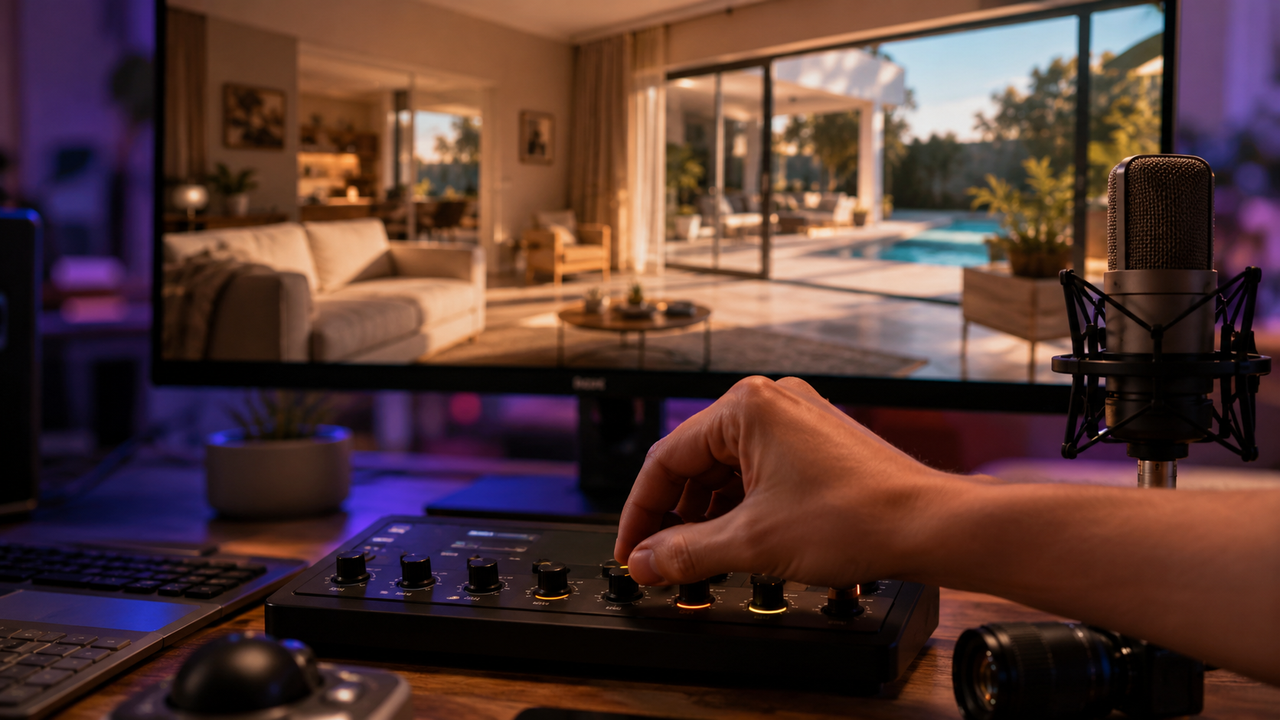
Real estate video is visual, but small environmental sounds help a space feel present. Footsteps, a door opening, light exterior ambience, water near a pool, or the quieter tone of an empty room can add depth when they are captured cleanly and used with restraint.
Do not cover every transition with music. Selected sounds can connect viewers to a threshold or an indoor-to-outdoor move, while removing all room tone can make natural footage feel detached.
If an agent voiceover explains features, the words take priority. Reduce musical density and level under important information, then restore energy during visual-only passages. The viewer should not have to choose between understanding the agent and feeling the soundtrack.
Ambience also needs to remain plausible. Loud street sound under a sealed interior, prominent birds in a dense urban scene, or exaggerated reverberation can weaken trust. Because a listing video is advertising, avoid added or altered sound that could imply a material feature or condition the property does not have. In the United States, the FTC states that advertising claims must be truthful, non-deceptive, and evidence-based. FTC advertising guidance
Avoid tracks that make listings feel staged or cheap
A property video feels staged when the soundtrack imposes an identity the footage has not earned. Constant triumph inflates ordinary reveals, while excessive sentiment or urgency makes neutral rooms feel manipulative.
Repetition creates a similar problem. Using the same track and edit pattern across every listing may be efficient, but it can flatten meaningful differences between homes. A reusable workflow is useful; a reusable emotional conclusion is not.
Review the video once with music and once without it. If the silent version presents a calm, clear property but the scored version feels rushed, exclusive, or overly sentimental, the soundtrack is changing the listing rather than supporting it. Adjust the arrangement, intensity, or timing before adding more visual effects.
When a fixed track repeatedly pulls room changes toward the wrong moments, a video-first soundtrack is another approach to test. According to Sonilo’s current product page, its workflow is designed to generate music from an uploaded edit and align it with cuts, pacing, and key moments. Compare each result against the actual property tour.

Before uploading listing footage, confirm that you have the necessary rights and remove confidential or sensitive details, such as personal documents, family photographs, license plates, and security information. Commercial use depends on the applicable plan, and Sonilo’s current Terms of Service and Privacy Policy state that uploaded content may be retained and used for service and model improvement. If publishing on YouTube, follow its current AI disclosure guidance.
FAQ
Should real estate videos use cinematic music?
Sometimes, but cinematic should describe the relationship between picture, pacing, and sound—not constant drama. It can support an architectural reveal or a clear beginning-to-end tour when the footage justifies that scale. If the music makes ordinary rooms feel exaggerated or draws attention away from layout and details, use a more restrained arrangement.
Can the same track work for every listing?
Rarely. A track may suit several listings with similar pacing and brand presentation, but it should be checked against each property's character and walkthrough structure. Reusing music without reviewing the fit can make a compact apartment, family home, and expansive listing feel emotionally identical even when buyers need different information from each tour.
How loud should music be under an agent voiceover?
Keep it low enough that every word remains effortless to understand on ordinary speakers. There is no universal volume setting because voices, arrangements, and playback devices differ. Reduce busy musical layers as well as level, test the mix without watching the screen, and restore more presence only during sections where the agent is not speaking.
What if the property tour has no narration?
Music can take a larger role, but it should not fill every second at the same intensity. Use phrasing to organize room changes, preserve selected ambience, and leave brief spaces around important reveals. Captions, natural sound, and the camera's movement can all carry information, so the soundtrack does not need to manufacture continuous excitement.