Inspiration
Best Music for Travel Videos in 2026: 5 Styles by Scene
- Written by
- Sonilo Team
- Published
The wide shot of a mountain road and the hurried walk to a train platform may belong to the same trip. They probably do not want the same musical push. When you choose music for travel videos from a finished cut, the useful question is not “What sounds like travel?” It is “What should this scene let us notice?”
I’m Nico. Here are five styles to audition, with reasons to keep—or drop—each one. These are editing choices, not a ranking of tested tracks.
Quick Picks for Five Travel Video Scenes
| Scene in the finished cut | Start auditioning | Listen for | Pass if… |
|---|---|---|---|
| Arrival and city highlights | Upbeat indie pop | A clear pulse with room for street sound | The music moves the sequence without making every shot feel like an ad |
| Landscape and slow reveal | Ambient electronica | A gradual swell rather than a constant peak | The reveal feels earned and the location remains audible |
| Personal, voice-led vlog | Acoustic folk | Sparse instruments around the voice | You can follow the story at a normal listening level |
| Fast movement montage | Percussive electronic | A rhythm that supports—not dictates—the cuts | Motion feels coherent even when shots vary in length |
| Departure or reflective ending | Minimal piano | Space between phrases and a usable resolution | The last image can breathe before the video ends |
The numbers are for navigation, not scores. One trip may need two cues, or no music during its best moment.
What Makes a Travel Soundtrack Fit the Edit?
The cut decides how long a place stays on screen, when someone speaks, and whether the ending is a joke or goodbye. Let that narrow the search before genre does.
Pacing, Scene Changes, and Track Structure
Mark major location changes and the last frame. Listen for sections that support those turns. A chorus halfway through a quiet museum walk may be exciting alone and awkward under this cut.
Do not force every cut onto a beat. A train slowing or someone finding a doorway may need time. If the rhythm makes you shorten those shots, the track is taking over.
Room for Narration and Location Sound
Travel videos carry footsteps, announcements, chatter, surf, laughter. Decide what must stay intelligible. Audition music under the actual spoken line; a busy melody can compete even at a lower level.
Location sound is part of the story. A music dip before an arrival announcement can identify a place better than another swell. For broader voice-led choices, see the vlog background music guide.
1. Upbeat Indie Pop for Arrivals and City Highlights
When It Fits
Try upbeat indie pop when the edit jumps from transit to first impressions: streets, cafés, friends meeting. A steady groove makes disparate clips feel like one chapter. Bright guitar or keys can carry optimism without a huge build.
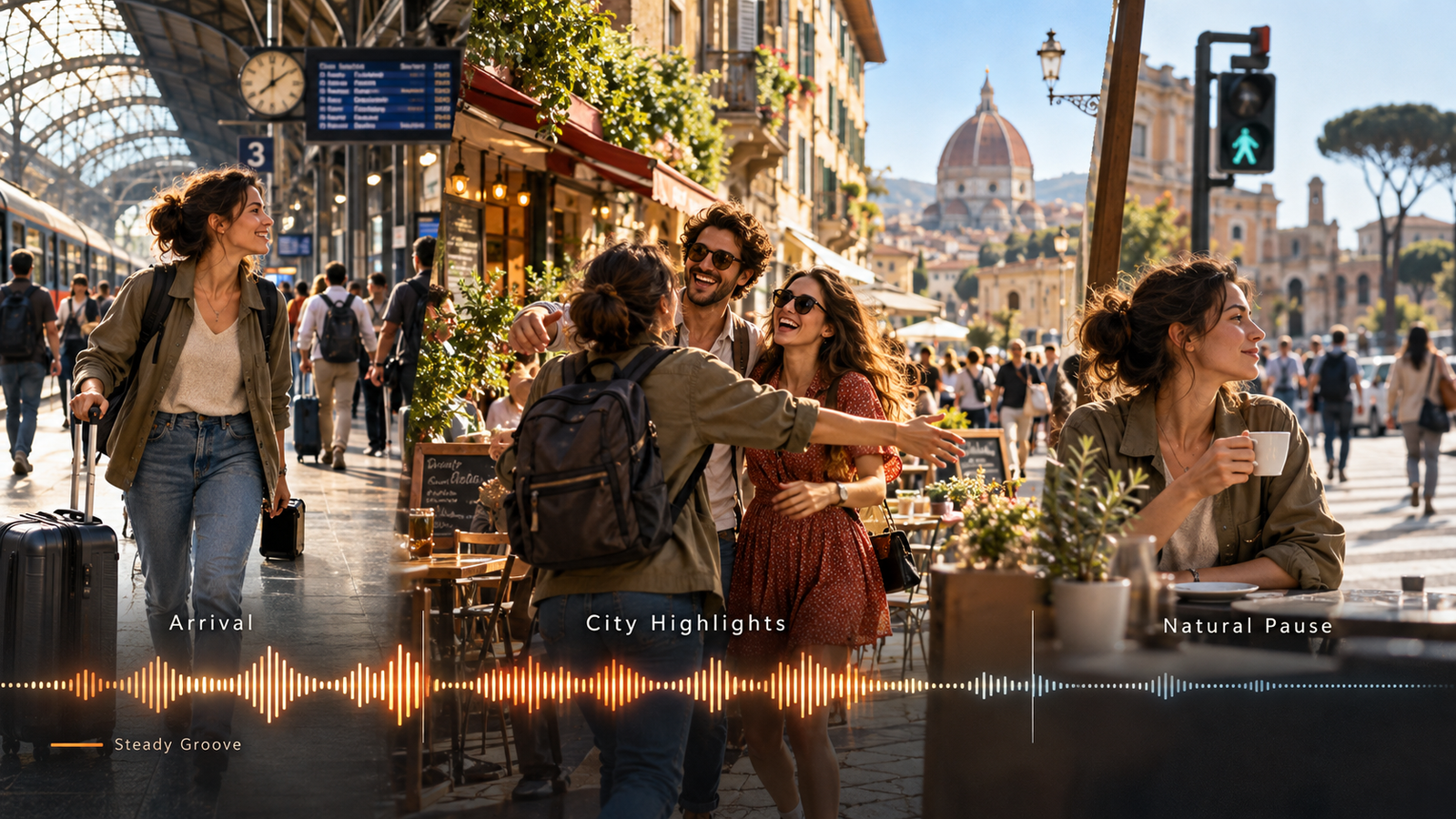
For travel reel music, does the groove begin soon enough, or does half the reel pass before it arrives? An instrumental may sit more easily under dialogue and street sound.
Where It Can Distract
The lift can oversell an ordinary pause. If a crosswalk and quiet meal feel equally celebratory, try a looser groove or leave shots uncovered. A sung hook may become a second narrator.
The edit's energy is a better guide than a destination stereotype.
2. Ambient Electronica for Landscapes and Slow Reveals
When It Fits
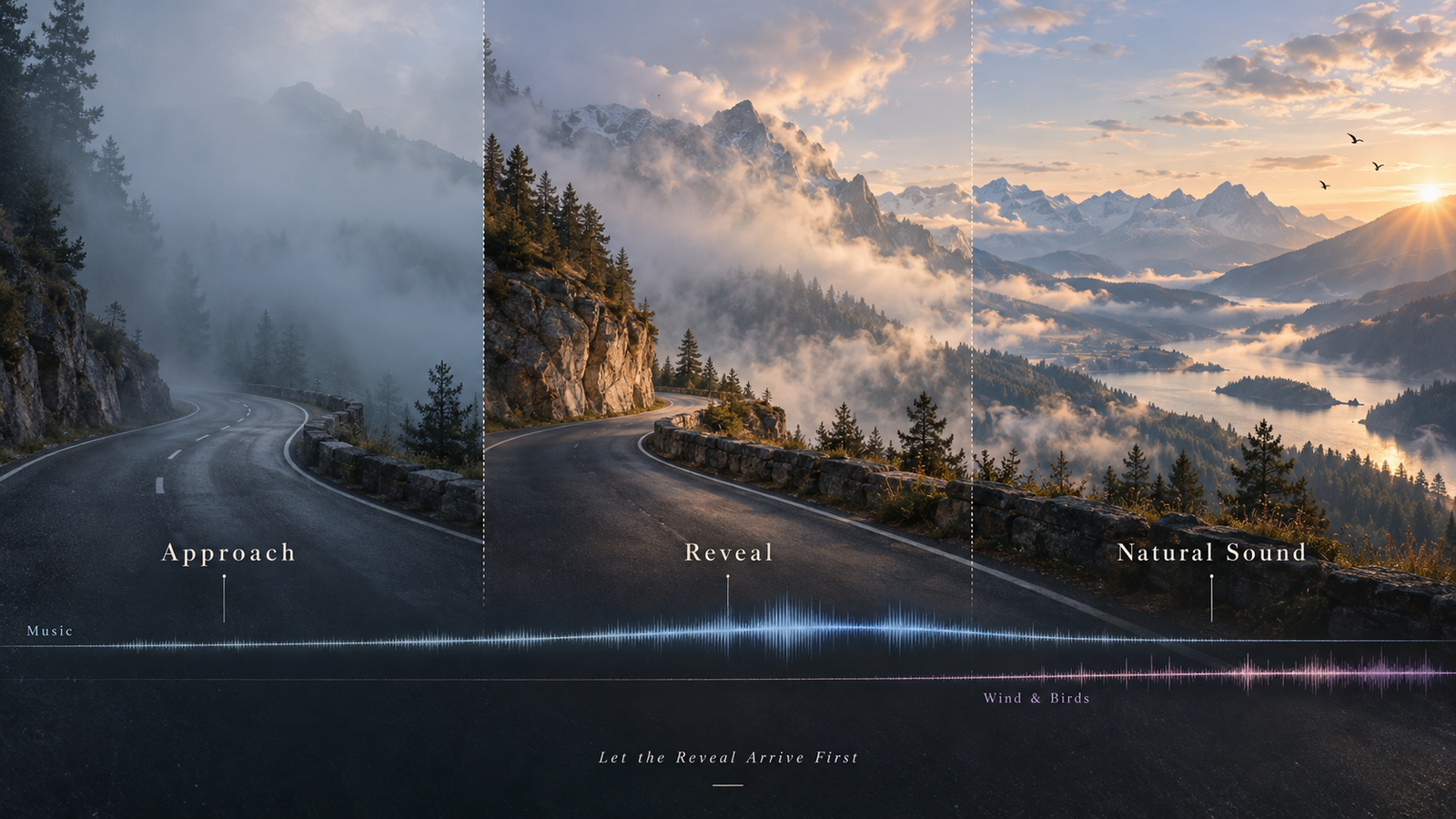
Ambient electronica suits long approaches: a coastline in fog, a mountain after a bend. Look for slowly developing texture and a subtle pulse.
This is cinematic travel music without oversized drums. Start playback before the reveal. If the swell peaks before viewers see anything, the soundtrack gives away the moment.
Where It Can Distract
An endless bed can make different places feel identical and bury wind, birds, or water. Give the environment a clean entrance. If the drone sounds grander than the footage feels, choose a smaller texture.
3. Acoustic Folk for Personal Travel Vlogs
When It Fits
Acoustic folk fits a person's day rather than a destination reveal: packing, walking with a friend, changing plans. Light guitar and unhurried phrasing leave room for speech.
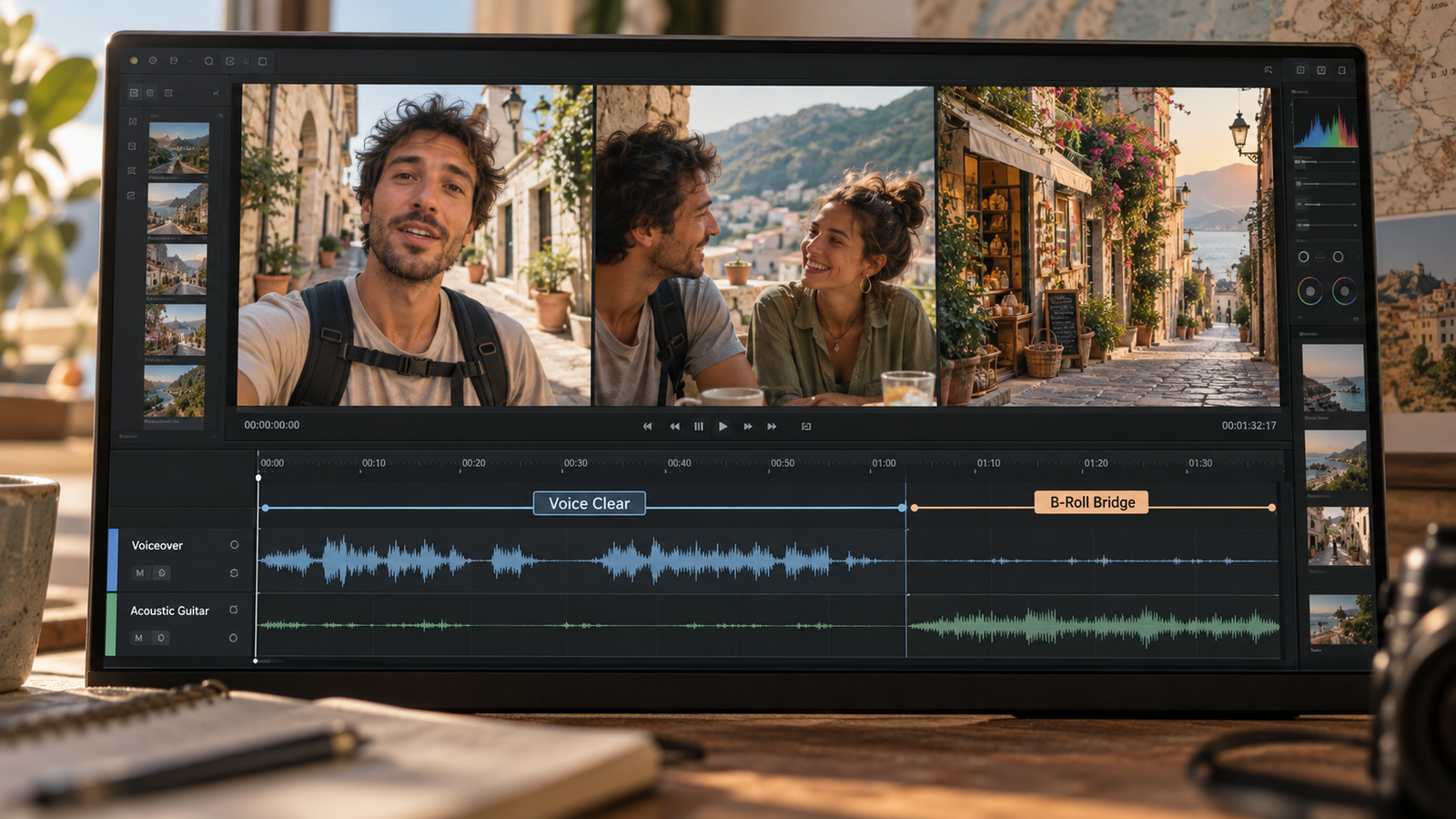
Audition it beneath the most conversational line. Listeners should hear a name or joke without effort. A little extra musical motion can bridge speech and B-roll.
Where It Can Distract
Warm acoustic music cannot supply intimacy the footage has not earned. A cheerful strum may misread a solitary moment; repeated phrases may pull focus from the words. Sometimes room tone is enough.
4. Percussive Electronic for Fast-Cut Movement
When It Fits
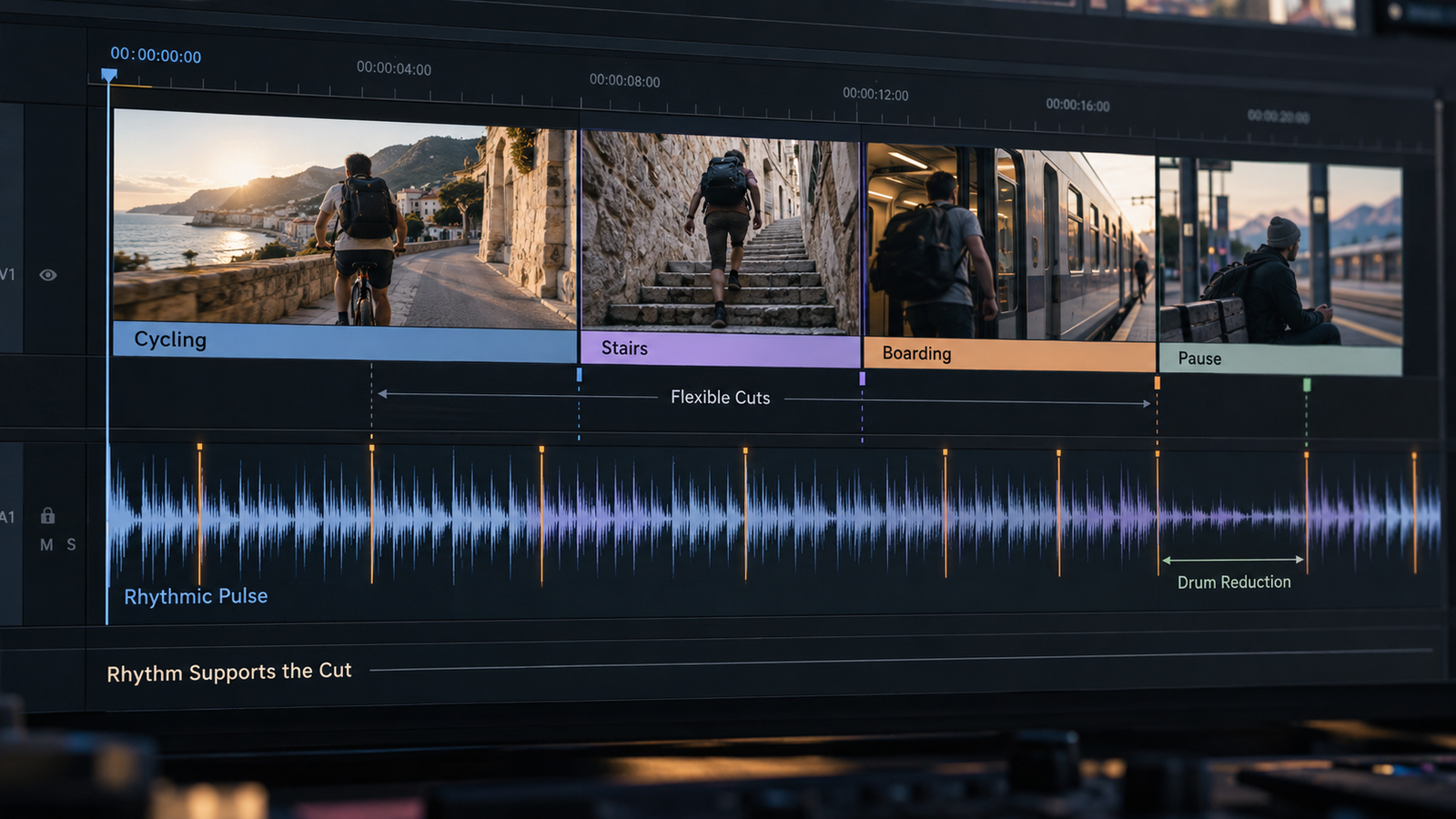
Use percussive electronic music for a travel montage of cycling, climbing stairs, or boarding transport. A rhythmic grid can connect different camera speeds.
Mark the turn or landing that matters. Does the track support it without a cut on every kick? A brief drum reduction can let one image register before the pace resumes.
Where It Can Distract
Dense percussion can erase tire noise and reactions. It also tempts editors to make every shot equally short. If the montage becomes exhausting, reduce musical density before speeding up the picture.
5. Minimal Piano for Reflective Endings
When It Fits
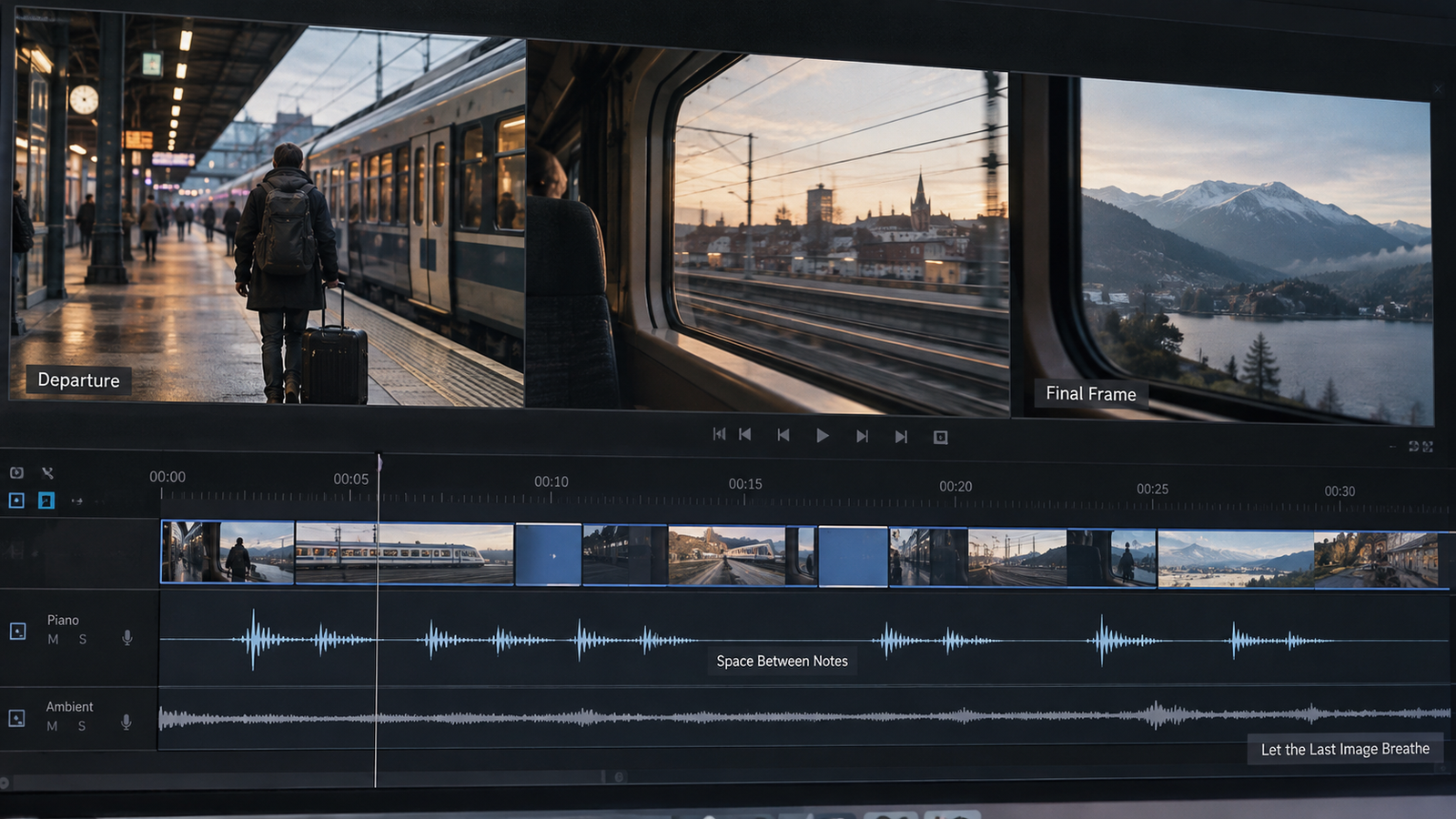
Minimal piano suits a final walk or view from the departure window. Sparse notes leave room for natural sound. Find a phrase that resolves near the last image; an unresolved chord can feel cut off.
A motif entering before the final scene can connect it to earlier images. Under a spoken reflection, the gaps between notes matter as much as the notes.
Where It Can Distract
Piano can demand wistfulness before the footage earns it. If the trip ends with laughter, a solemn cue rewrites the story. Try location sound alone once; does piano add meaning or merely sentiment?
How to Choose a Style for Your Finished Travel Cut
Here is a small audition method you can use without treating genres as rules. First, mark one scene change, one line of speech or location sound that must survive, and the final image. Then place two contrasting candidates under the same cut at a similar perceived level. Do not judge from the opening ten seconds alone.
Play through those three markers and ask: Did the music move with the picture? Could you hear what mattered? Did the ending land without an awkward trim? Reject a candidate for a specific failure, not because another genre sounds more “travel-like.” If the cue fails only at one transition, try a modest edit or a second cue before changing the whole soundtrack.
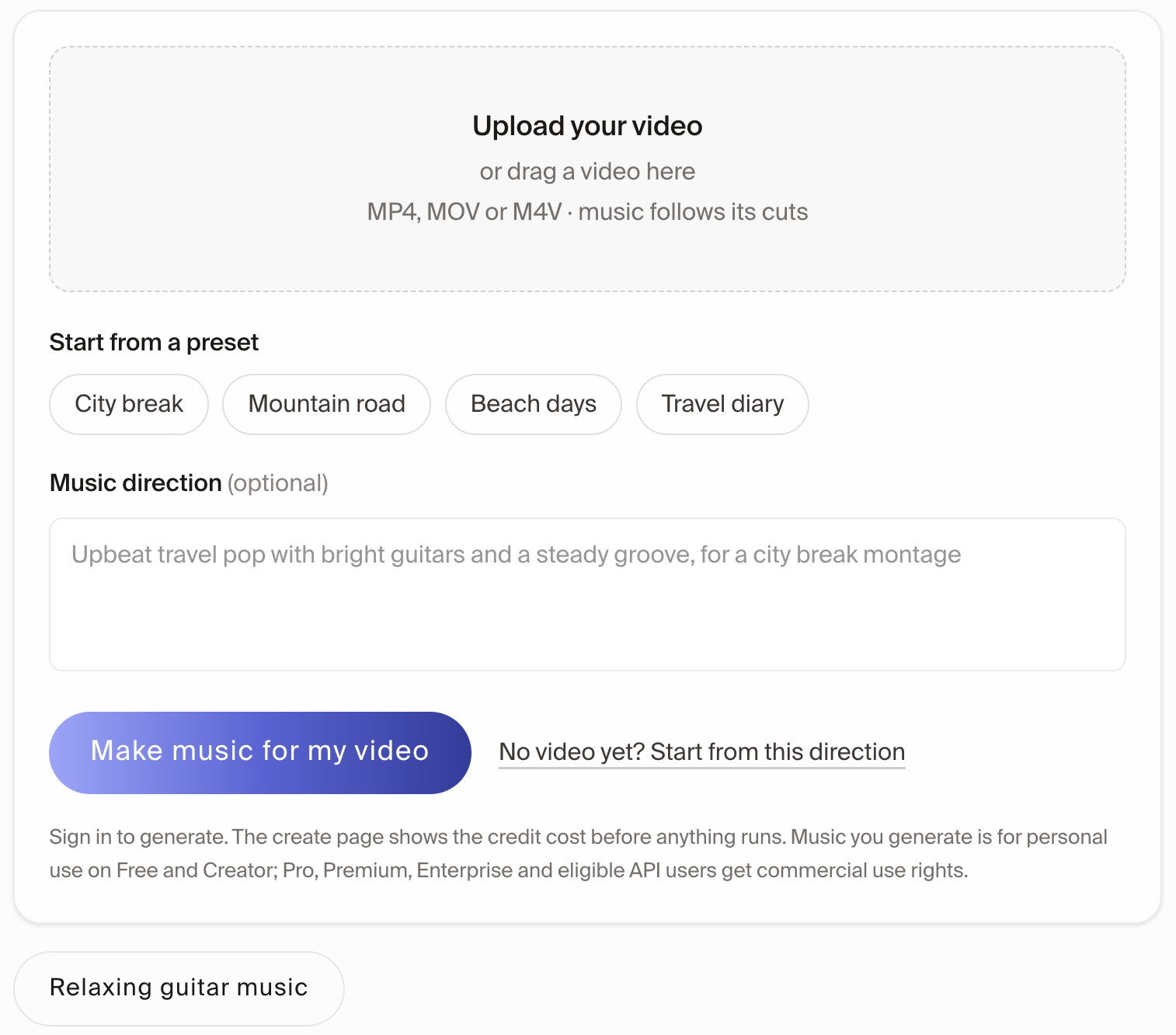
If stock tracks keep missing the cut's length or chapter changes, a video-led option is worth auditioning. Sonilo's travel-video music page is one product entry for that use case; its video-to-music workflow can use a finished or near-final cut and music direction. Compare any generated result on your timeline against the same markers. It is another candidate, not a reason to skip listening, mixing, or checking the applicable rights.
Conclusion
The best music for travel videos gives each scene the amount of movement, space, and closure it needs. City arrivals may welcome a pulse; a landscape may need patience; a voice-led day may need very little music at all. Choose against the finished picture and its original sound, then keep the cue that serves both—even when it is not the most impressive track on its own.
FAQ
This article provides general information, not legal advice. Check the licensor’s and platform’s current terms for your specific use.
Can I reuse a licensed track across several travel episodes?
Maybe, but only if the particular license covers multiple videos, channels, clients, and the intended use period. Keep the track ID, license text, purchase or download record, and the episodes where you used it. A subscription giving access today does not, by itself, answer whether a later episode is covered. Check that license before reusing the cue.
Can I use a song from an in-app library on another platform?
Do not assume so. A platform's music access can be limited to its own service, account type, or use case. YouTube's Audio Library terms discuss use in YouTube videos and direct off-platform questions elsewhere; TikTok's commercial-music guidance distinguishes music cleared for promotional posts from music outside its Commercial Music Library. For a cross-post, obtain rights that actually cover each destination.
Do I need permission for music captured from a street performer?
Potentially. Recording your own footage does not automatically settle rights in an audible song or performance. Before publishing a prominent performance—especially in a sponsored or client video—identify the song and performer, seek appropriate permission, or replace that portion of audio. The rights and exceptions depend on where and how you use the clip; YouTube's copyright guidance is a useful platform starting point, not a universal clearance.
What if my travel video gets a copyright claim despite a license?
Check which segment and claimant the notice identifies, then compare the claim with your saved license and permitted uses. A license does not prevent every automated match; YouTube explains when a Content ID dispute may be appropriate. Use the platform's process only when you have a valid basis, and keep the original file and rights records in case the licensor needs to help.
What if my chosen track ends before the travel montage does?
Try a different section of the track, a discreet loop with a crossfade, or a second cue at a genuine scene break. Listen through the join with headphones and phone speakers. If the repeated phrase calls attention to itself, the track is not a good fit. Do not stretch the picture merely to preserve a song you like.
Related Posts
- Music for Drone Videos: Match Motion and Scale
- How to Add Music to a TikTok Video
- Outro Music for Videos: End Without a Hard Cut
- Sound Effects for YouTube Videos: Choose, Sync, Mix