Inspiration
HappyShrimp Review: What We Know So Far (2026)
- Written by
- Sonilo Team
- Published
HappyShrimp 1.0 is a public-beta text-to-music product from Alibaba that can generate vocal songs and instrumentals from prompts. This review verified the official launch and public interface but did not generate or test outputs, so audio quality, reliability, exports, pricing, licensing, and video-production fit remain unreviewed. Action and trailer editors need a parallel, evidence-first approach for impacts: a practical explosion sound effect guide should cover layering, distance, and how to keep the hit from masking dialogue.
Alibaba published an official HappyShrimp 1.0 announcement on August 18, 2026, and linked to a live public beta. That changes what this HappyShrimp review can confirm. It does not remove the need for hands-on testing.
This updated review separates three evidence levels:
- Verified first-party facts: Alibaba's launch announcement and the public HappyShrimp beta interface.
- Public product evidence: visible creation modes, prompt controls, and public song pages.
- Still untested or undisclosed: audio quality, generation reliability, exports, licensing, pricing, regional behavior, and video-production fit.
Disclosure: Sonilo publishes this review and offers a separate video-first soundtrack product. HappyShrimp was not compared with Sonilo because no controlled generation test was performed for this article.
Quick Verdict During Public Beta
HappyShrimp 1.0 is no longer a forthcoming product. Alibaba's official launch post says the model entered beta and supports complete vocal songs and instrumental compositions from text.
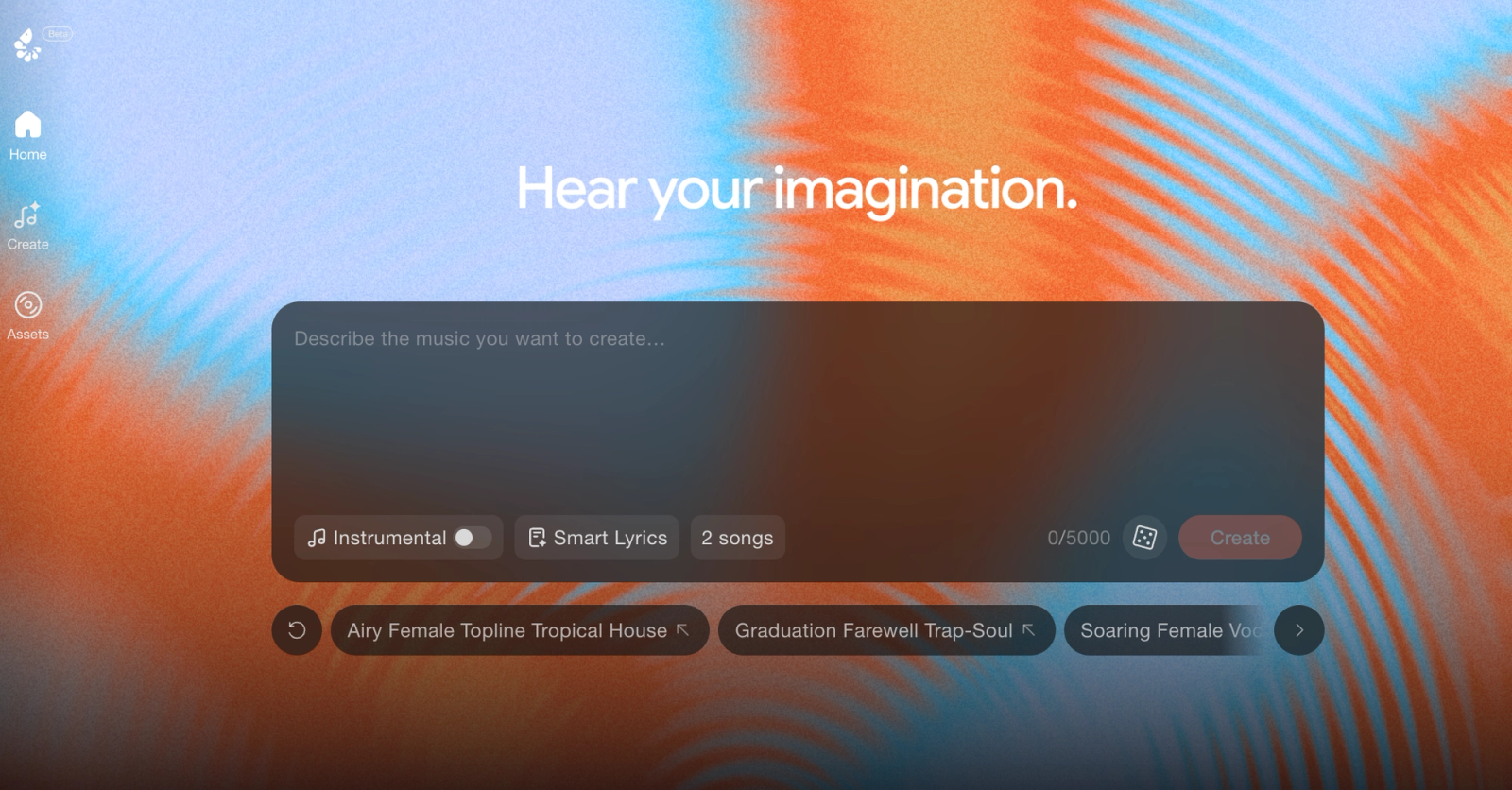
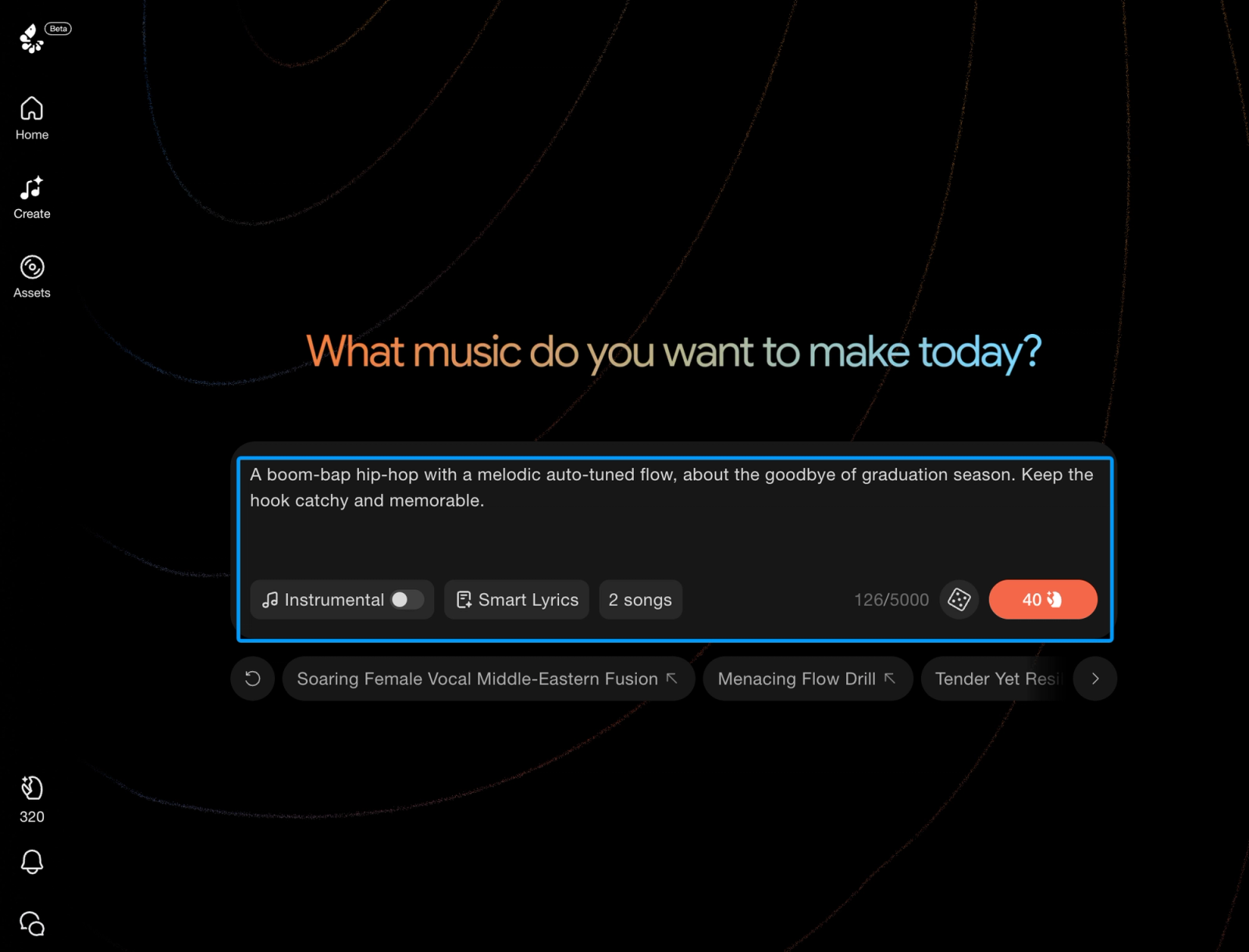
The current HappyShrimp beta page is publicly reachable. Its visible interface includes Instrumental and Smart Lyrics options, a prompt field, and two-song generation. Public song pages also show prompts, lyrics, and an AI-generated label.
That is enough to move HappyShrimp from a watchlist into a test queue. It is not enough to approve it for client or commercial video work.
This article did not sign in, generate music, play full outputs, download files, or test a video edit. Sound quality, prompt accuracy, timing, stability, and export behavior therefore remain unreviewed.
How This HappyShrimp Review Was Verified
The original article relied too heavily on launch reporting. This update uses a tighter source hierarchy and records what each source can establish.
| Evidence reviewed on August 27, 2026 | What it supports | What it cannot prove |
|---|---|---|
| Alibaba's official launch post | Beta status, developer, stated creation modes, genres, controls, and official access URL | Independent sound quality, reliability, or suitability for video production |
| Public HappyShrimp beta page | A live interface, visible prompt field, Instrumental and Smart Lyrics modes, and two-song creation option | Account eligibility, finished exports, usage limits, or regional consistency |
| Official public song pages | Public prompts, generated lyrics, AI labels, sharing, and a “Music recipe” presentation | How representative those outputs are or how the audio performs in an edit |
| Official-site search for pricing and terms | No product-specific pricing or usage terms were located in the reviewed public pages | That no terms exist inside a signed-in account or another regional interface |
This matrix is Sonilo's editorial verification framework, not an Alibaba scoring standard. It turns missing access into a defined evidence boundary instead of treating absence as product performance.
What Is Confirmed About HappyShrimp 1.0
Release and Official Access
Alibaba says HappyShrimp 1.0 was developed by its Alibaba Token Hub business group and launched in beta. The announcement links directly to www.happyshrimp.ai, which was live when reviewed on August 27.
The public page labels the product “Beta” and invites users to create music from a written description. It also advertises launch-period credits. That confirms an active product surface, but it does not establish a permanent free plan or future pricing.
The earlier Canadian HappyShrimp trademark filing remains useful historical evidence. It is no longer the strongest proof because Alibaba now provides a first-party announcement and live access point.
Current Music Creation Modes
Alibaba's launch post says HappyShrimp supports text-to-music generation for full vocal songs and instrumentals. Users may ask the system to create lyrics or supply their own lyrics for composition, arrangement, and vocal performance.
The company also says prompts can guide genre, narrative flow, instrumentation, vocal style, and emotional dynamics. Those are first-party capability claims. They should not be rewritten as independent findings about accuracy or control.
The public interface supports part of that description. It visibly offers Instrumental and Smart Lyrics modes. An official public song page also displays a prompt, generated lyrics, and an AI-generated label under “Music recipe.”
The page provides evidence that structured outputs and sharing exist. This review did not listen to that track, compare it with its prompt, or test whether the same controls behave consistently.
HappyShrimp Video-Readiness Matrix
Video creators need a different standard from listeners evaluating a finished song. The following matrix shows what can enter a test plan today.
| Video workflow question | Current evidence | Editorial status |
|---|---|---|
| Can it create instrumental background music? | Alibaba documents instrumental text-to-music, and the public interface shows Instrumental mode | Ready to test |
| Can prompts shape mood and musical direction? | Alibaba describes controls for genre, instruments, vocals, narrative flow, and emotional dynamics | Ready to test, not independently verified |
| Can it accept a finished video? | No video-upload workflow was identified in the reviewed official pages | Not confirmed |
| Can it match cuts or an exact edit length? | No scene analysis, cut detection, or duration-matching workflow was documented | Not confirmed |
| Can music be revised around narration? | No public timeline, stem, or narration-aware editing workflow was verified | Not confirmed |
| Can teams export production-ready files? | Public pages did not establish download formats, stems, project history, or API access | Needs signed-in testing and documentation |
| Can outputs be used commercially? | No product-specific public usage terms were located during this review | Do not assume |
This is the article's main original judgment: HappyShrimp currently looks testable as a text-first song and instrumental generator. It is not yet documented as a video-first soundtrack system.
What Is Still Unconfirmed
Access, Pricing, and Usage Terms
The public beta page advertises credits, but credits are not the same as a documented free plan. No verified product-specific pricing page was found during this review.
The reviewed public pages also did not establish:
- Download formats or audio quality
- Maximum and minimum output length
- Stem or separated-track exports
- Project history and revision controls
- API access
- Account and regional requirements
- Commercial-use permission
- Ownership, reuse, or distribution conditions
- Training-data disclosures
Do not interpret beta access as permission to publish commercially. Commercial permission, copyright ownership, exclusivity, and protection from platform claims are separate questions.
If you test with lyrics or client briefs, submit only material your team may provide. Avoid confidential inputs until the relevant data-use terms are clear.
This is general information, not legal advice. Review the terms presented to the relevant account before using output in client work, advertising, monetized channels, or music distribution. Obtain qualified advice when rights or contractual exposure is significant.
Video and Production Workflow
Alibaba's announcement describes a text-to-music product. Neither that announcement nor the reviewed public interface documents video upload, scene analysis, cut synchronization, or automatic duration matching.
That does not mean those features cannot appear later. It means a current review should not infer them from phrases such as “background music” or “music for videos.”
For a real production test, the next update should use one fixed video brief and record five outcomes:
- Whether an instrumental follows the requested mood.
- Whether its major changes fit the visual structure.
- Whether the arrangement leaves room for narration.
- Whether the ending can land at the required duration.
- Whether the file, project record, and usage terms support delivery.
This is a proposed test method, not a completed benchmark.
Why a Public Beta Is Not a Soundtrack Verdict
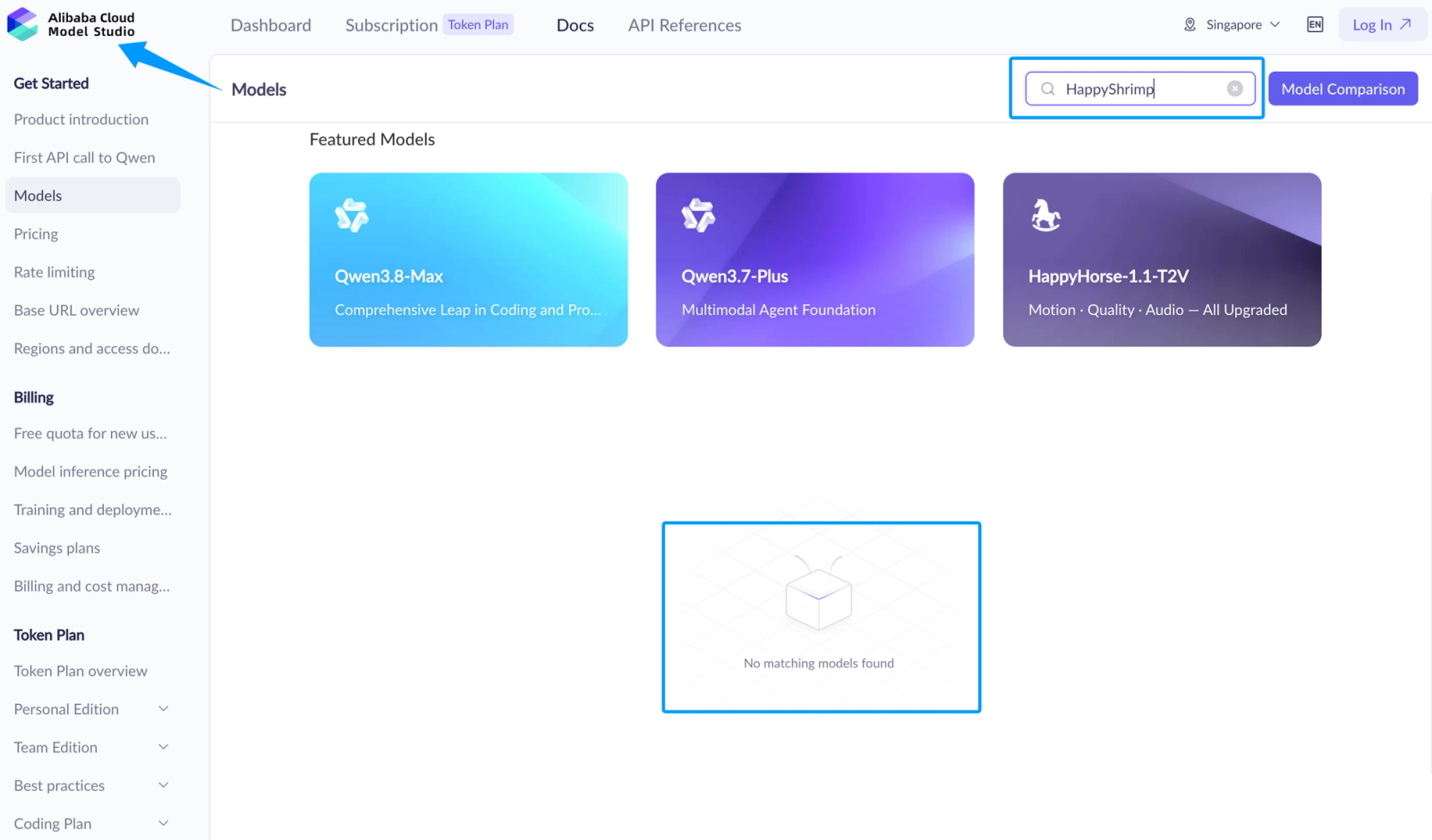
An official launch confirms that a product exists. A public interface confirms that creators can reach a generation surface. Neither fact proves that the music works inside a real edit.
Alibaba's own examples and creator notes are useful demonstrations of intended capability. They are still first-party selections. They cannot establish average output quality, failure rates, prompt consistency, or performance against other tools.
A credible hands-on update should disclose the tested account, date, interface, prompts, output count, video brief, and scoring method. It should also publish negative results rather than selecting only the strongest track.
Until that test exists, the responsible verdict is narrow: HappyShrimp is available and worth evaluating, but its production value for video remains unproven here.
Who Should Test HappyShrimp Now
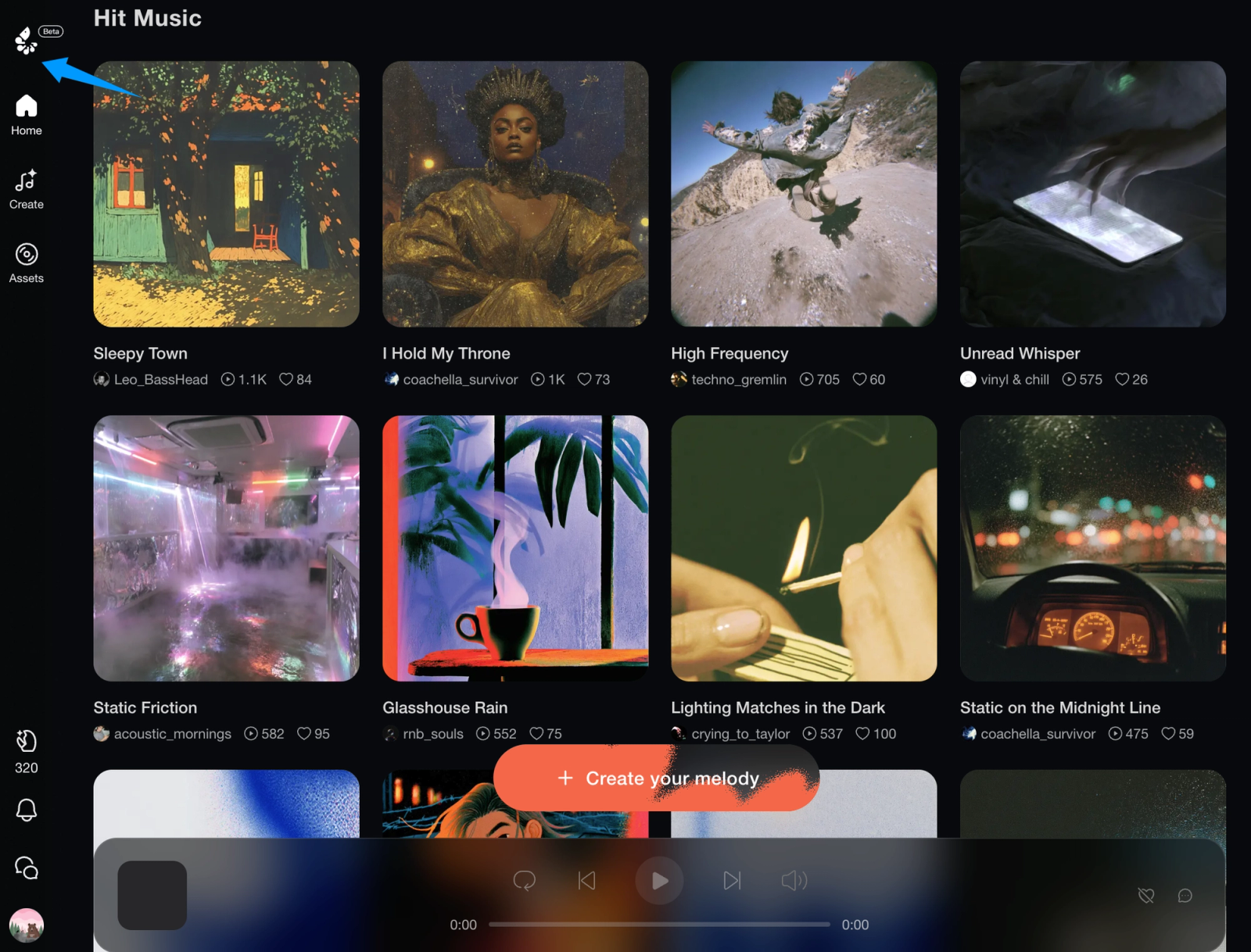
The beta may be relevant to songwriters, music producers, short-form creators, and editors who want text-generated instrumental directions. It is most useful to people who can evaluate experiments without depending on them for an immediate client deadline.
Teams should keep it outside an approved production stack until they can verify exports, repeatability, account access, and applicable terms. A launch-period credit balance should not decide a commercial workflow.
The product becomes easier to compare when Alibaba publishes clearer documentation for output limits, downloads, revisions, pricing, rights, and regional access.
Limitations of This Beta Review
This update reviewed Alibaba's official announcement, the public beta landing page, and public HappyShrimp song pages on August 27, 2026. It also searched the reviewed official pages for product-specific pricing, usage terms, and video-workflow documentation.
No account was created. No music was generated, played in full, downloaded, or placed under a video. No claims about sound quality, generation speed, stability, soundtrack fit, or commercial safety have been independently verified.
The article should be updated after a controlled generation test or when Alibaba publishes new product documentation. The revision record should state what changed instead of silently replacing the beta evidence.
FAQ
Is HappyShrimp publicly available now?
Yes. Alibaba's August 18 announcement identifies HappyShrimp 1.0 as a beta and links to the official public website. The landing page was reachable on August 27, 2026. Account access, credits, and regional behavior may still differ, so availability should be verified from the intended account and location.
Was HappyShrimp tested for this review?
No. This update verified the official launch, public interface, and public song pages without signing in. It did not generate, play, download, or edit a track. The article therefore evaluates evidence and workflow readiness, not audio quality or product performance.
Does HappyShrimp accept video input?
No official video-input workflow was identified in the reviewed launch post or public beta page. The confirmed beta centers on text-to-music creation. References to instrumental or background music do not prove scene analysis, cut matching, narration awareness, or exact-duration scoring.
Can HappyShrimp music be used in commercial videos?
That was not established by the public pages reviewed for this article. Beta access and free credits do not define commercial permission. Check the terms shown to the relevant account and intended region before client, advertising, monetized, or distribution use. This answer is general information, not legal advice.
What would justify a full HappyShrimp review score?
A score needs repeatable tests rather than selected public examples. The review should use fixed prompts and the same video brief, record successful and failed outputs, test downloads and revisions, and document the applicable terms. Without that method, a numeric score would imply evidence the article does not have.