Guides
What Makes the Best AI-Generated Music for Video in 2027?
- Written by
- Sonilo Team
- Published
For creators researching the best AI generated music 2027, the strongest video soundtrack will not necessarily be the track that sounds most impressive by itself. For video, the better track is often the one you stop noticing as a separate object. It supports the scene, clears space for speech, and reaches the final frame without calling attention to the edit.
An audio demo only has to hold your attention. A working soundtrack has to share it.
This is not a forecast of which model, product, or musical style will lead in 2027. It is a practical standard for judging AI-generated music for video after the file enters a real timeline.
Disclosure: Sonilo publishes this guide and is the product example discussed below. Its capabilities are described from current official pages rather than independent comparative testing.
What makes AI-generated music best for video
I would judge soundtrack quality through five connected questions:
| Check | What a usable result should do |
| Scene fit | Support the emotion and purpose of the scene without overstating either |
| Timing | Respond naturally to visual movement, transitions, and major story beats |
| Narration space | Leave enough musical room for dialogue or voiceover to remain effortless to follow |
| Ending | Resolve, fade, or stop in a way that feels intentional at the final duration |
| Source record | Come with enough information to trace the generating tool, plan, terms, and exported file |
No single check can carry the track. Strong timing cannot rescue the wrong mood, and a clean ending cannot fix music that fights the narration. Rights information guides usage decisions; it does not make weak music fit.
A provider’s commercial-use license is also not the same as copyright ownership or exclusivity. In the United States, the U.S. Copyright Office says copyright protection for generative-AI output depends on sufficient human-authored expressive contribution; rules may differ in other jurisdictions.
The real standard is the combined result. Does the soundtrack help the finished cut communicate more clearly without creating extra editorial work elsewhere? That is the actual test.
Why impressive music can still fail as a soundtrack
Some AI soundtrack examples sound polished in isolation. They may have a memorable lead, a dramatic build, or a dense arrangement that makes a strong first impression. The same qualities can become problems once the track has to coexist with images and speech.
Too much vocal attention
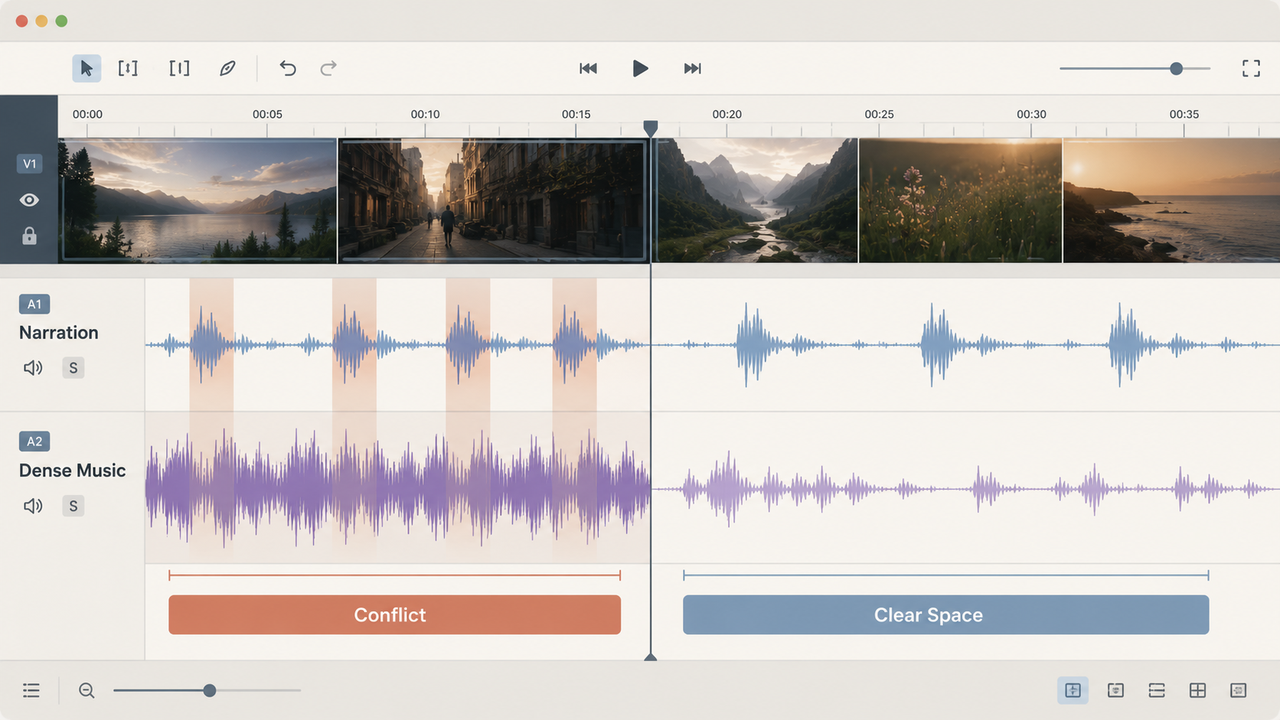
A vocal phrase does not need intelligible lyrics to pull focus. Chops, breaths, chants, and lead-like textures can occupy the same attention channel as a narrator. Turning the music down may reduce the conflict, but it can also drain the track of the energy that made it appealing.
For narration-heavy work, start by asking whether the arrangement leaves space before reaching for the volume control. An instrumental version, lighter texture, or less active midrange may solve the problem more cleanly than another round of level automation.
Poor scene mood fit
A track can match a broad label and still miss the scene. “Inspiring” music under a careful product explanation may feel pushy. “Cinematic” music under a quiet travel moment may make an honest image feel staged. Even technically polished video background music can distort what the viewer is supposed to feel.
Judge mood by story function rather than genre name. Is this scene introducing, explaining, building tension, releasing it, or giving the viewer a moment to absorb what just happened? The track should serve that job. It does not need to announce the emotion before the scene earns it.
Awkward endings or loops
Length matching is more than delivering a file with the correct duration. A track can end on the right frame and still sound as if someone closed the door halfway through a sentence.
Listen for what happens in the final few seconds. Does the harmony resolve? Does the rhythm give the last shot room to land? If the edit needs a loop, can the repeated point pass without a sudden cymbal tail, disappearing bass note, or duplicated build? A clean ending should feel designed for the cut, not repaired after generation.
How to judge AI music inside the edit
Do not approve a soundtrack from the generator preview. Export it, place it under the actual video, and review the complete mix on the timeline. The visual sequence changes what the music means, while speech, sound effects, and room tone reveal conflicts that an audio-only preview cannot show.
Use the same cut and playback conditions for every candidate. Change one variable at a time so louder or brighter does not get mistaken for better.
Check scene and mood alignment
First watch the cut at a comfortable level without stopping. Mark the moments where the music seems to tell a different story from the image. A cheerful lift during a reflective pause or a dark pulse beneath neutral information can change the scene more than expected.
Then mute the track and watch the same section again. What is the scene doing on its own? Bring the music back and ask whether it clarifies that function or replaces it with a stronger, less accurate emotion. The best soundtrack fit usually feels supportive rather than corrective.
Check pacing against visual changes
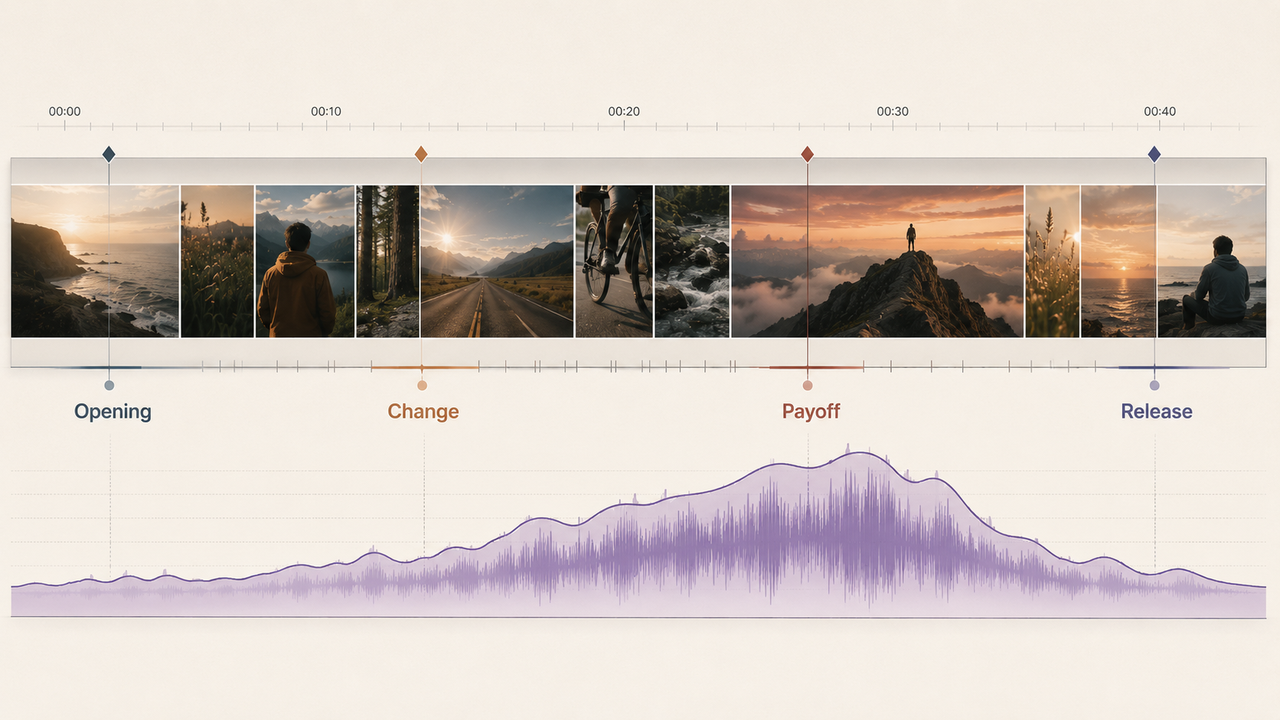
Next, look beyond obvious beat matching. Not every cut needs a hit, and forcing every transition onto the beat can make the edit feel mechanical. The more useful question is whether the musical energy moves with the visual energy.
Mark the opening hook, first meaningful change, main payoff, and final release. The soundtrack need not strike each frame, but its phrases should connect those moments. If its biggest lift arrives after the visual payoff, the structure is wrong.
Check narration space and music density
Play the busiest spoken section, not the easiest one. Listen for effort: if you have to concentrate to follow the narration, the mix is already asking too much from the viewer.
Lowering the track is a useful test, but not the only fix. Check whether melodic movement, percussion, vocal textures, or frequent fills are competing with key words. If the music loses its purpose as soon as it is quiet enough for speech, replace or regenerate it with less density. Voice clarity should come from arrangement and mixing together.
Check the ending at the final duration
Review the final section with the finished picture, including logos, end cards, and any last spoken line. A soundtrack may need to resolve before the last frame, carry through it, or leave a brief pocket of silence. Those are different editorial choices.
Avoid keeping a weak ending only because the rest of the track works. Try a shorter variation, a regenerated ending, a natural fade, or a different candidate. If the repair takes longer than testing another result, the track is no longer saving time.
When to replace an AI-generated track
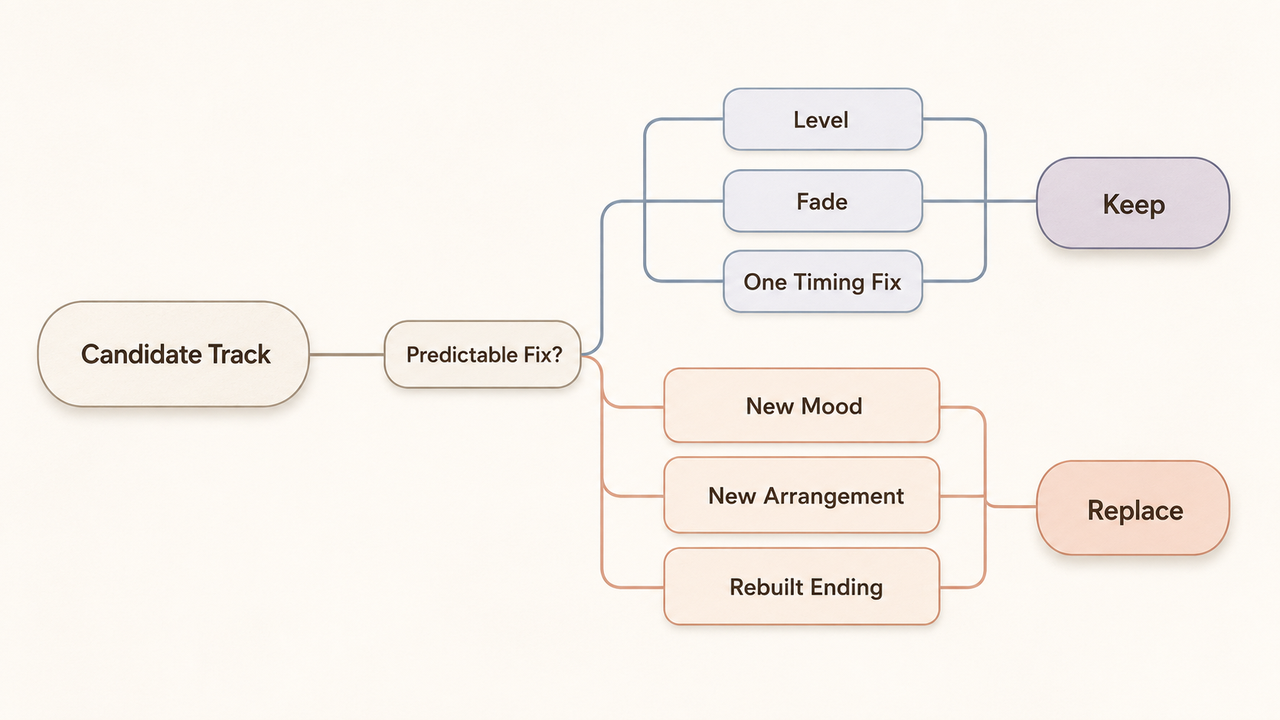
Replace the track when fixing it starts changing the video around the music. Warning signs include moving a strong visual cut to accommodate a musical phrase, compressing narration to escape a busy section, hiding an abrupt ending under excessive sound effects, or accepting the wrong mood because the generation took time.
One small edit is normal. A chain of compensating edits usually means the candidate is not a good fit.
Keep the track only if the remaining work is predictable: a level adjustment, a clean fade, or one deliberate timing change. If you need a new arrangement, a different emotional direction, and a rebuilt ending, generate another option and compare the total revision cost.
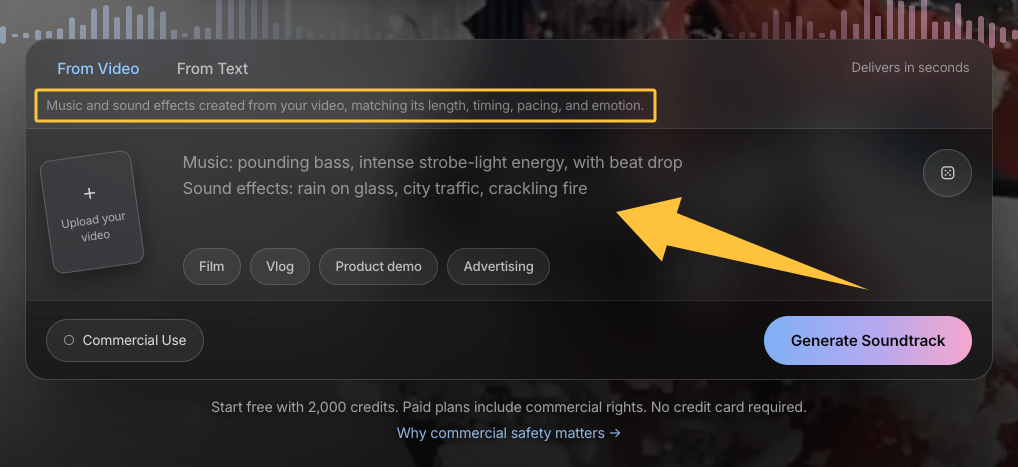
For a video-first test, Sonilo’s current product page says its workflow is designed to generate music from an uploaded video and align it with cuts, pacing, reveals, and scene changes. This is Sonilo’s official product positioning rather than independent performance evidence, so treat the result as a candidate and run the same in-edit checks above.

Before publishing, review Sonilo’s current licensing information and Terms of Service for the plan and intended use. Before uploading client, confidential, or unreleased footage, confirm that you have permission and review its Privacy Policy, which currently says uploaded content may be used for model training by default without a separate opt-out across standard tiers. Do not upload restricted material unless that use has been authorized or covered by an applicable written agreement.
FAQ
Who signs off on final audio QA before export?
Assign one named person who can review the finished mix in context, not just the music file. On a small project, that may be the editor. On a team project, it may be the lead editor, producer, or audio owner. The sign-off should cover speech clarity, soundtrack timing, ending behavior, and the presence of the required source and rights records.
What should editors save after generating soundtrack options?
Save the selected export, useful alternates, the tool and plan used, generation date, prompt or input settings, and any available project or job ID. Keep the official licensing or terms URL and a dated copy of relevant information when the project requires an audit trail. Use clear filenames so another editor can connect each soundtrack option to the correct cut without guessing.
How should teams respond to a platform copyright claim?
Pause assumptions and preserve the notice first. Identify the exact audio, project, generating account, plan, export record, and terms that applied when it was created. Then follow the platform’s current claim or dispute process only when the team has evidence supporting its response, and contact the music provider when clarification is needed. For material financial or legal risk, ask a qualified professional; this article is not legal advice.
When should a human audio specialist review the cut?
Bring in an audio specialist when dialogue remains difficult to understand after basic balancing, the project needs detailed loudness or delivery compliance, or the soundtrack requires structural editing rather than a simple fade. Human review is also sensible for high-stakes client, broadcast, theatrical, or multi-language work where a small mix problem can affect the entire delivery.
The best result is not the track that wins the solo audition. It is the one that survives the timeline. Where does AI-generated music usually break down in your edits: mood, narration space, timing, or the ending?