Guides
What Suno Tags Mean for Video Background Music
- Written by
- Sonilo Team
- Published
Video editors and music generators describe the same soundtrack in different units. One uses cuts, pauses, and final frames. The other often starts with mood, genre, instruments, and vocals.
Searches for Suno tags sit at that translation point. The words can describe a musical direction, but the finished edit decides whether it works.
Quick Definition for Video Creators
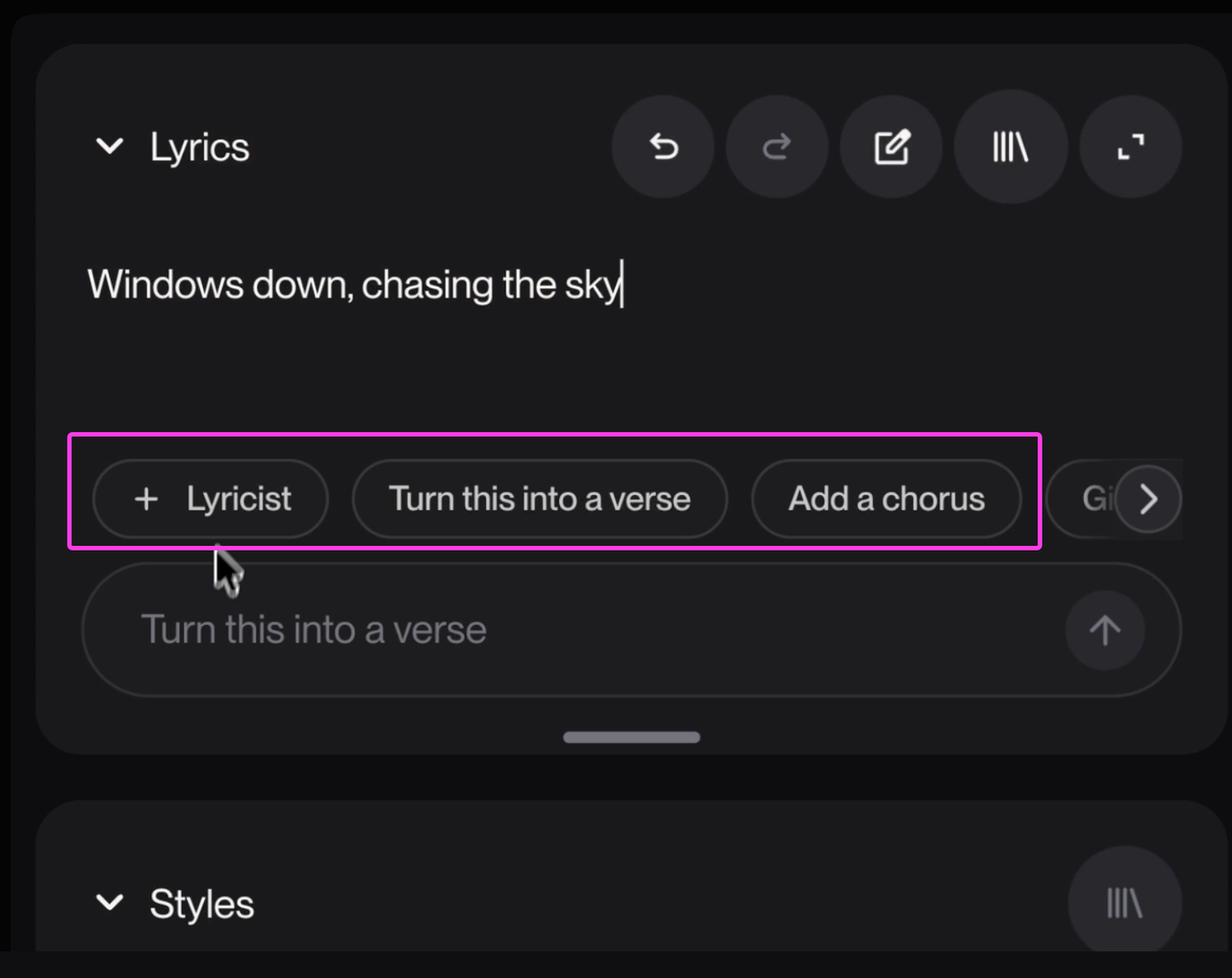
“Suno tags” is an informal umbrella term. Searchers may use it for genre and mood words, instrument descriptions, vocal directions, or bracketed labels placed around lyrics.
Suno’s current official language is more specific. Its creation pages refer to Styles, Style of Music, detailed style instructions, and song structure labels. Searches for Suno music styles often point to this broader group of controls.
The company also supports style-based song discovery through ‘Styles.’ Its prompt helper can expand short style inputs into fuller descriptions.
They are creative directions, not one guaranteed command system or a timeline map.
What Suno Tags Are Trying to Control
Most Suno style tags try to influence one or more musical layers:
- the genre or production tradition;
- the emotional color;
- the instruments and texture;
- the perceived energy;
- the presence and character of vocals;
- the broad structure of the song.
As of August 26, 2026, Suno’s current Styles guidance refers to genres, moods, and other musical descriptions. Its detailed style instructions can also use conversational language instead of a short comma-separated list.
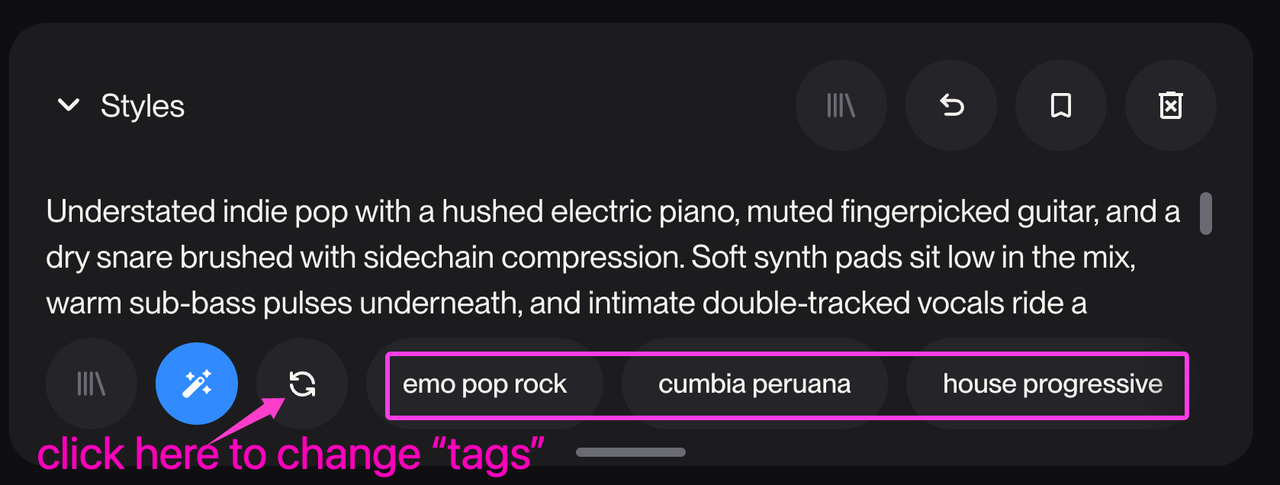
A compact label and a full style instruction may aim at the same quality, but they are not identical inputs. Both sit within Suno prompting.
Suno metatags usually means something narrower in community discussions: bracketed cues associated with lyrics or song sections. Searches for Suno lyrics tags commonly point to the same idea.
Suno’s July 2026 lyrics update calls examples such as Verse and Outro “song structure labels.” Use that official wording instead of assuming every community metatag is a documented control.
Why Video Creators Search for Tags
“Cinematic” is easier to write than explaining scale, tension, percussion, and harmonic movement separately.
Tags also help teams review soundtracks. Shared definitions can keep one editor’s “soft” from becoming another editor’s “empty.”
The problem appears when that vocabulary is mistaken for a fit test. A track can match every requested descriptor and still change too late for the reveal. It can also introduce a vocal hook under the most important line of narration.
Tag Concepts That Affect Background Music
Mood labels
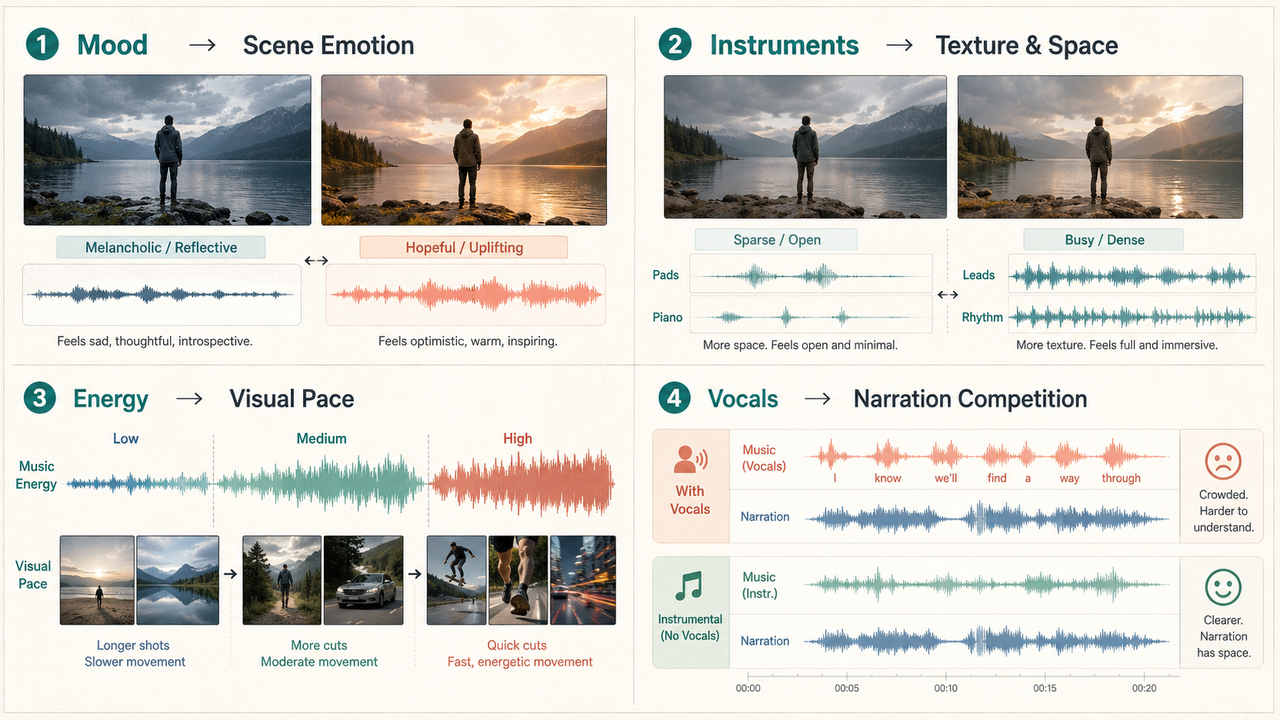
Mood labels describe the emotional direction: calm, tense, hopeful, playful, reflective, or another broad feeling. They help narrow the first generation, especially when the video has one stable tone.
A scene rarely has only one emotional job, though. A hopeful track may feel right overall but soften a serious opening. Check whether the mood changes with the visual story, not only whether the label sounds accurate.
Instrument labels
Instrument descriptions influence color and perceived scale. Piano can feel intimate or dramatic. Synth pads can create space, while bright percussion can make an edit feel faster.
The instrument name alone does not describe its role. A sparse guitar pattern may leave room for speech, while a busy guitar lead can dominate it. Listen for density, register, and movement as well as the named instrument.
Energy labels
Energy language helps distinguish a steady background bed from a track with strong builds and releases. This affects montages, product reveals, intros, and fast social edits.
Energy is not the same as tempo. A slow track can feel intense because of rising layers. A faster track can stay unobtrusive when its arrangement remains light and predictable.
Vocal and lyric cues
Vocal and lyric cues affect whether the result behaves like a song or background music. This is especially important beneath interviews, explainers, tutorials, and voice-led short videos.
Suno’s current Reuse Prompt guidance separates Lyrics from Style of Music. The platform also supports instrumental generation. Those controls can guide the musical direction, but the result still needs testing against the real voice track.
Where Tag Thinking Breaks Down for Video
Tags describe musical intent. They do not automatically describe the relationship between music and picture.A video soundtrack has additional constraints:
- the opening must support the hook without delaying it;
- musical changes should land near meaningful visual changes;
- the arrangement must leave space for speech and original sound;
- the final phrase should resolve near the last frame;
- revisions must remain practical after the picture changes.
No genre, mood, or instrument label contains that timing map. Even a chosen duration only controls the endpoint. It does not guarantee that the build, pause, or strongest accent will arrive where the edit needs it. When the next step is timeline placement and mix hierarchy, use the how to add music in Premiere Pro cleanly guide.
Use tag language to shortlist a direction. Judge the result inside the timeline with the complete mix playing.
When Video-to-Music Is a Better Starting Point
Style-first generation fits projects where the music can lead and the edit can move around it. A visualizer, music-led montage, or early concept cut may benefit from that freedom.
Video-to-music becomes more direct after the cut has a fixed rhythm. According to Sonilo’s current product page, an uploaded edit can guide music around cuts, pacing, and voiceover; however, its current Privacy Policy says it does not analyze the audio track in uploaded videos, so verify voiceover handling before relying on it. An optional prompt can still shape the mood, but the video supplies the timing context.
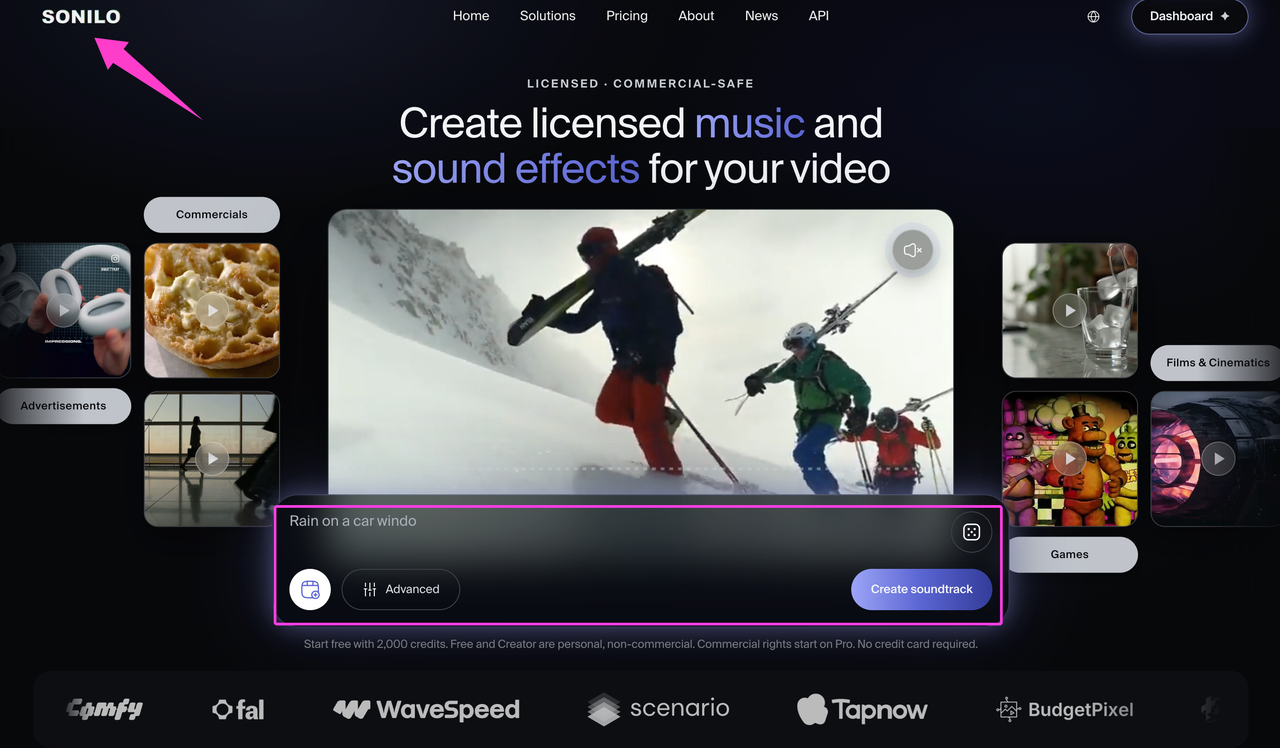
Sonilo publishes this article and is the video-first product discussed in this section.
That does not make tags useless. It changes their job. Style language describes the sound, while the video communicates where the sound must move, hold back, or finish.
If the edit contains client, confidential, or unreleased material, confirm that you may upload it. Review the service’s current Terms of Service and Privacy Policy before providing the file.
For a locked cut, test the soundtrack against four moments: the opening, the main visual change, the densest narration, and the final frame. If style words keep producing the right genre but the wrong timing, starting with the video may remove a round of manual fitting.
FAQ
Can a channel style guide describe music without exact tags?
Yes. Define the recurring role of the music instead. Record acceptable energy, instrument families, vocal presence, narration space, and ending behavior. These traits remain useful across future projects, even when a platform renames a field or interprets a style word differently.
Should tag notes be stored beside approved audio files?
Store them with the approval record, not only in a generation history. Include the source tool, date, version, project scene, reviewer, and the reason the track passed. The note should explain the decision rather than pretend the same words will reproduce the file exactly.
What if teammates use different words for the same sound?
Translate subjective words into audible traits. Replace “warm” with details such as soft attack, low percussion density, muted high frequencies, or acoustic instrumentation. Keep the team’s preferred term as a label, then attach the shared definition beneath it for later reviews.
Can tag research help organize a music mood board?
Yes. Group references by scene function first, such as opening, explanation, reveal, or ending. Add mood, instruments, energy, and vocal presence as secondary fields. This prevents the mood board from becoming a genre collection with no connection to the edit.
Should editors translate tag language for non-music teammates?
Translate it into consequences the team can review. “Sparse arrangement” can become “dialogue stays clear.” “Slow build” can become “energy rises before the product reveal.” Keep the musical term in the notes, but pair it with the visible or audible result expected in the video.